Who needs this and when
- Treatment plant designers – for proper selection and integration of UV sterilizers into the process chain.
- Operations engineers – to understand maintenance and process control specifics.
- Water treatment technologists – for assessing UV disinfection effectiveness.
- Industrial facility managers – when upgrading wastewater treatment to reduce environmental risks.
- Automation specialists – to implement process monitoring and control.
- Plant operators – during commissioning of UV disinfection units.
- Environmental auditors and regulators – for evaluating microbiological compliance of discharged effluent.
Technological fundamentals of integrating UV sterilizers in wastewater treatment
Ultraviolet disinfection works by damaging microbial DNA and RNA, preventing reproduction and reducing microbial loads. In wastewater with high organic content, turbidity, and suspended solids, UV effectiveness depends largely on the flow’s transparency and uniform UV dose distribution.
When integrating multi-lamp sterilizers, hydraulic parameters such as flow velocity, turbulence, and even water distribution within the disinfection chamber must be considered. Improper installation or neglect of these factors leads to shadow zones where microbes receive insufficient UV exposure.
Field verification includes measuring UV intensity with specialized sensors, water turbidity, flow rate, and pressure at the unit’s inlet and outlet. Microbiological testing post-disinfection provides an objective measure of performance.
Neglecting these aspects results in reduced disinfection efficiency, requiring higher lamp power or more frequent replacements, and risks non-compliance with discharge standards.
Design should allow adjustable lamp output and built-in UV intensity monitoring, with accessible components for maintenance. Automation with alerts for declining disinfection efficiency is highly recommended.
Selecting and designing multi-lamp UV sterilizers for wastewater
The primary selection criterion is the required UV dose, which depends on wastewater characteristics. Industrial applications typically use doses between 30 and 60 mJ/cm² to ensure reliable disinfection. Multi-lamp systems provide necessary capacity and redundancy, crucial when water quality or flow varies.
Design must consider not only system throughput but also physical-chemical water properties—turbidity, suspended solids, color, and organic load—that absorb UV and reduce effective dose. Ignoring these leads to underperformance.
Verification starts with analyzing raw water parameters: turbidity, flow, and transparency. UV intensity is then monitored via built-in sensors. Declining readings necessitate inspection of quartz sleeves and lamp condition.
Systems with modular lamp activation save energy and extend lamp life. Otherwise, frequent overloads increase operational costs.
Leverage experience from similar installations, choose modular expandability, and implement automatic parameter monitoring. Ensure convenient access for maintenance and lamp replacement.
Installation and integration of UV equipment into existing treatment systems
UV disinfection units should be installed downstream of mechanical and biological treatment steps to minimize turbidity and organic matter that impede UV penetration.
Installation must guarantee sealed and correctly positioned disinfection chambers to ensure uniform flow through all lamps. A common error is ignoring hydraulic resistance, which alters flow velocity and reduces UV exposure time.
On-site checks include leak testing, flow uniformity, stable pressure and temperature, and proper lamp cooling. UV sensor and control device functionality must be verified.
Improper installation can cause water bypassing lamps, equipment overheating, and component failure, lowering disinfection efficiency and increasing microbial contamination risk.
Strict adherence to manufacturer guidelines, use of original components, and designing for maintenance without halting the main treatment process are essential. Staff training on operation and monitoring is also critical.
Automation and monitoring of UV disinfection efficiency
Automating UV disinfection ensures consistent microbiological safety and reduces operational costs. Control systems typically include UV intensity sensors, flow meters, turbidity and temperature sensors.
UV sensors inside the chamber provide continuous lamp output monitoring. If intensity falls below set thresholds, the system can raise power or trigger alarms, preventing ineffective operation.
On-site checks verify sensor accuracy, signal integrity, and calibration. Monitoring data should integrate with SCADA or facility control systems for prompt response.
Lack or failure of automation risks unnoticed lamp degradation, leading to regulatory non-compliance, fines, and re-treatment costs.
Implement self-diagnostic control systems with alerts, and schedule regular maintenance and sensor calibration to enhance reliability and resource efficiency.
Case study: integration errors of a multi-lamp UV sterilizer at an industrial facility
Initial conditions:
A large industrial site installed a multi-lamp UV sterilizer post-biological treatment to meet microbiological discharge standards.
Symptoms:
- Elevated colony-forming units after UV treatment.
- Frequent alarms signaling UV intensity drops.
- Increased lamp replacement and maintenance costs.
- Uneven flow distribution in the sterilizer chamber.
Root causes:
Hydraulic integration was flawed—installation ignored pressure and flow velocity changes, causing shadow zones with insufficient UV exposure. Lack of automated control and delayed quartz sleeve cleaning led to reduced UV intensity and disinfection failure.
Verification checklist:
- Hydraulic parameters at UV unit inlet and outlet.
- Quartz sleeve and lamp cleanliness.
- UV sensor functionality and signal accuracy.
- Flow distribution uniformity within the chamber.
- Presence and operation of automatic control and alerts.
- Consistency between design data and actual water parameters.
- Turbidity and transparency levels.
- Maintenance frequency and quality.
Solution:
- Redesigned hydraulic layout considering flow resistance and velocity.
- Added sensors for flow distribution monitoring.
- Established regular quartz sleeve cleaning and lamp replacement schedules.
- Implemented automated monitoring with alerts and self-diagnostics.
- Provided staff training on operation and control.
- Reassessed microbiological indicators post-implementation.
Implementation:
- Conducted hydraulic tests before and after modifications.
- Installed additional control and adjustment components.
- Organized technical service with scheduled inspections.
- Developed response protocols for alarms.
- Integrated monitoring with plant control systems.
- Delivered on-site personnel training.
Outcome:
Microbial contamination levels decreased within regulatory limits. Automated control ensured stable operation and timely maintenance, lowering operational costs and improving disinfection reliability.
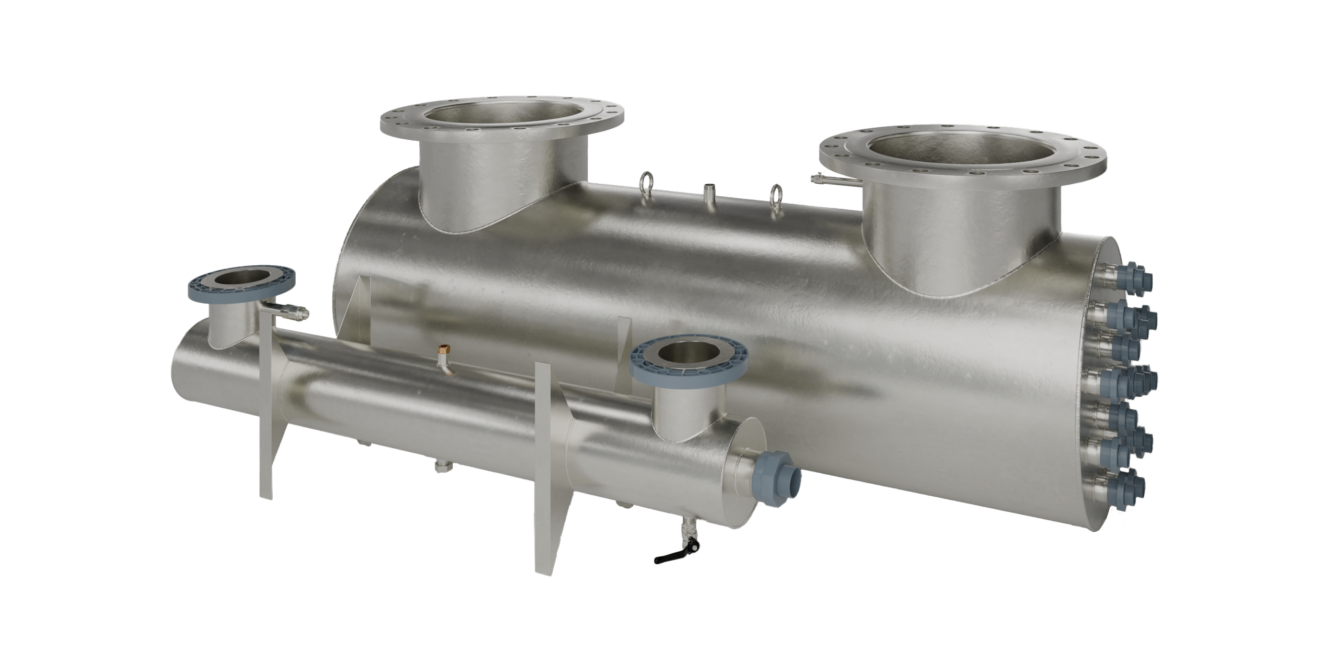
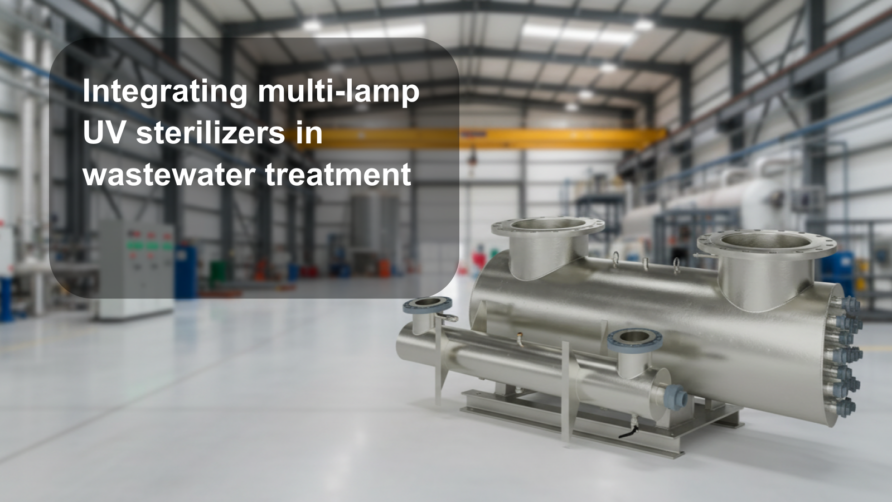
Multi-lamp UV pressure units in a stainless steel housing are used for water treatment. They can be made of AISI 316 or AISI 304 steel, with any performance parameters suitable for your system.
Common mistakes in UV sterilizer implementation for wastewater
Frequent issues reducing UV disinfection effectiveness include:
- Underestimating turbidity and color impact on UV transmission.
- Skipping hydraulic calculations and incorrect system connection.
- Neglecting regular maintenance, especially quartz sleeve cleaning.
- Using equipment without UV intensity automatic control.
- Delayed lamp and component replacement causing power loss.
- Incorrect lamp power and quantity selection leading to resource waste.
- Lack of staff training and operational protocols.
These errors lower disinfection performance, increase costs, and raise compliance risks.
Pre-implementation checklist for UV wastewater disinfection
- Assess raw wastewater quality (turbidity, color, organics).
- Confirm hydraulic parameters and flow uniformity.
- Calculate required UV dose with safety margin.
- Select multi-lamp system with expansion capability.
- Ensure automatic UV intensity monitoring is included.
- Design for easy maintenance and lamp replacement access.
- Schedule regular quartz sleeve cleaning.
- Implement alert systems for performance drops.
- Train personnel on operation and monitoring.
- Integrate with facility monitoring systems.
- Verify project compliance with applicable standards.
- Conduct pilot testing before full-scale commissioning.
Frequently asked questions before purchasing and implementing UV sterilizers
How to determine the required UV dose for wastewater?
Calculate based on water properties (turbidity, color), required disinfection level, and standards. Industrial doses usually range from 30 to 60 mJ/cm² with margin.
Can UV sterilizers be used without prior treatment?
No. High turbidity and suspended solids significantly reduce UV effectiveness. UV disinfection is applied after mechanical and biological treatment.
How to monitor UV disinfection effectiveness on site?
Use UV intensity sensors, microbiological testing, and water transparency monitoring. Regular maintenance is essential.
What to do if lamp output decreases?
Replace lamps per schedule, clean quartz sleeves, and check cooling systems. Automated controls help detect issues early.
What are key advantages of UV disinfection over chlorination?
UV disinfects without chemicals, avoids harmful byproducts, and requires no dechlorination, reducing operational costs and environmental impact.
How to integrate a UV sterilizer into an existing treatment system?
Install after main treatment stages, consider hydraulic conditions, ensure uniform flow, and provide automatic parameter control.
Is staff training necessary for UV equipment operation?
Yes. Without proper understanding of operation and monitoring, disinfection efficiency can drop and equipment failure risk rises.
Summary
Effective integration of multi-lamp UV sterilizers into wastewater treatment systems is essential for stable and efficient disinfection. Success depends on accounting for water physical-chemical properties, hydraulic parameters, and implementing automated control. Proper design, maintenance, and staff training are critical. The next step involves on-site data collection and pilot testing to validate design and develop operational protocols.