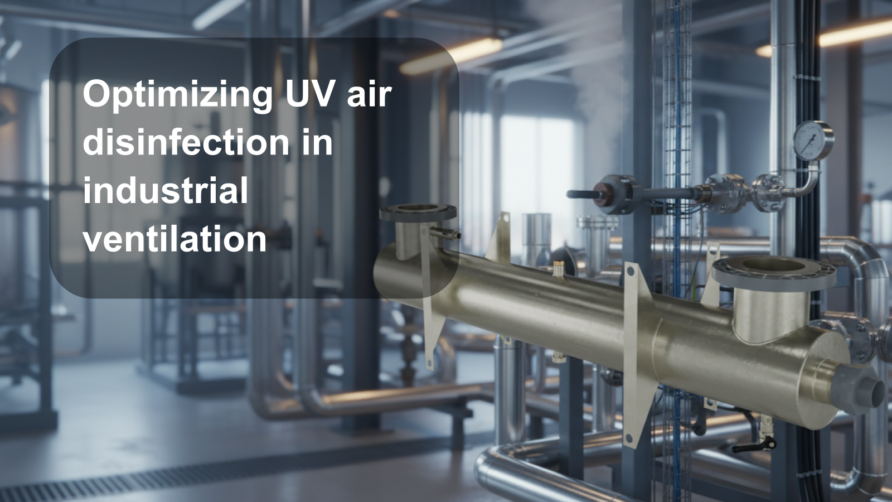
In industrial environments, air quality directly impacts the stability of production processes and the reliability of equipment. Microbial contamination in the air can lead to product spoilage, reduced lifespan of ventilation components, and increased risk of operational failures. For engineers and technologists, implementing air disinfection systems requires a tailored approach that considers the specific production conditions and airflow characteristics. This article explores effective use of UV irradiators for air disinfection, common pitfalls to avoid, and methods to verify performance on-site. For example, improper placement of UV units in a metalworking plant led to biofilm buildup inside ducts and decreased ventilation efficiency.
Understanding the principles of UV operation for recirculating aquaculture systems (RAS) and ventilation systems allows optimization of disinfection processes, reduction of operating costs, and enhancement of engineering infrastructure reliability.
Who needs this and when
- Ventilation and HVAC engineers — to ensure sanitary air quality and maintain regulatory parameters.
- Production technologists — to reduce microbial load affecting manufacturing processes.
- Industrial hygiene specialists — for chemical-free regular air disinfection.
- Food and pharmaceutical manufacturers — where airborne cleanliness is critical.
- Facility maintenance teams — to optimize ventilation system service schedules.
- Engineering system designers — during new builds or modernization projects.
- Managers of closed-loop water systems (RAS) — to control air quality in humidified environments.
How UV irradiators work and their impact on air quality
Ultraviolet radiation at approximately 254 nm effectively damages the DNA and RNA of microorganisms, disinfecting air streams within ventilation ducts. As air passes through the UV exposure zone, pathogenic microbes lose viability, reducing biological contamination risks. Key factors that determine disinfection efficacy include airflow velocity, exposure time, and radiation intensity.
In practice, excessively high air speeds or incorrect lamp installation result in insufficient UV dose. This leads to partial disinfection, failing to control microbial contamination and potentially creating a false sense of safety. Correct operation is verified by measuring UV intensity at the unit’s outlet and comparing microbial counts before and after irradiation.
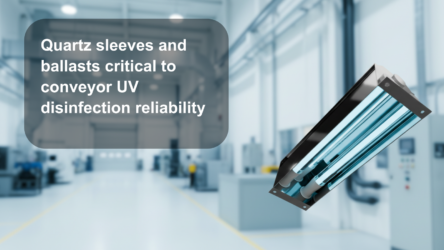
Neglecting these parameters causes ineffective operation, increased energy consumption, and higher maintenance costs without improving air quality. UV lamps also require regular replacement and cleaning of protective quartz sleeves to maintain output.
Successful implementation depends on selecting appropriate lamp types for RAS and ventilation systems based on airflow volume and facility specifics. Use of sealed, moisture-resistant housings is recommended, especially in high-humidity conditions.
Selecting UV lamps for air disinfection systems
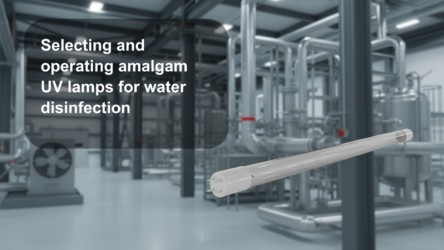
Choosing UV lamps for RAS and ventilation requires matching technical parameters to deliver the required radiation dose. Important characteristics include lamp power, wavelength, design, and service life. Standard germicidal lamps emitting at 254 nm are optimal for air disinfection but must be protected against moisture and dust to preserve performance.
Insufficient consideration of operating conditions—such as temperature, humidity, and particulate matter—causes rapid lamp output degradation. On-site, this manifests as reduced UV intensity and lower disinfection levels. Lamp condition can be monitored using UV-filtered lux meters or specialized sensors, alongside tracking operating hours per manufacturer specifications.
Using lamps unsuited to the environment increases failure rates and risks damaging electronic ballasts, raising repair costs and lowering system reliability. It is important to ensure quick lamp replacement capability and maintain a stock of spare parts.
To optimize performance, select lamps considering air volume, air exchange rates, and sanitary requirements. Lamp housings should offer vibration and corrosion resistance, particularly in aggressive industrial atmospheres.
Proper placement of UV irradiators in ventilation ducts
Air disinfection efficiency depends not only on lamp power but also on correct placement within the ventilation system. UV irradiators are installed in supply or recirculation ducts where exposure time is maximized and radiation distribution is uniform.
Airflow must pass through zones of maximum UV intensity, achieved by optimal spacing between lamps and duct surfaces. If irradiators are too close to duct walls or spaced too far apart, areas with insufficient UV dose form, reducing disinfection effectiveness.
On-site verification includes visual inspection and measuring UV intensity at multiple duct locations. Monitoring airflow velocity and ensuring absence of obstacles that cause turbulence or stagnant zones is critical. Incorrect placement leads to uneven disinfection, promoting biofilm and contaminant accumulation.
Maximizing results requires aerodynamic calculations during design and post-installation UV intensity testing. Easy access for lamp maintenance and replacement should be provided.
Case study: UV irradiator placement errors in a metalworking facility
Initial conditions:
A metalworking plant installed UV air disinfection units within the supply-exhaust ventilation ducts without considering airflow dynamics and velocity.
Symptoms:
- Biofilm accumulation on duct interiors.
- Reduced disinfection confirmed by microbial sampling.
- Increased wear on fans due to contamination.
- Higher costs for ventilation cleaning.
Causes:
Incorrect UV lamp placement caused uneven irradiation and “cold spots” with low UV intensity. High air velocity at installation points prevented sufficient exposure time. Lack of dust and moisture protection accelerated lamp degradation.
Checks to perform:
- UV intensity profile along duct length.
- Airflow speed and direction.
- Uniformity of lamp distribution.
- Integrity and cleanliness of quartz sleeves.
- Condition of electronic ballasts.
- Presence of airflow stagnation zones.
- Humidity and dust levels in ducts.
- Maintenance schedule adherence.
Solutions:
- Recalculate airflow dynamics and select optimal lamp locations.
- Increase number of irradiators for uniform coverage.
- Use lamps with moisture and dust protection.
- Ensure convenient access for cleaning and lamp replacement.
- Implement UV intensity monitoring systems.
- Optimize airflow speed to achieve required exposure time.
Implementation:
- Remove old lamps and install new units per revised design.
- Adjust ventilation airflow for optimal speed.
- Train personnel on UV equipment maintenance and monitoring.
- Establish protocols for regular lamp cleaning and replacement.
- Conduct periodic microbiological air quality testing.
- Track lamp operating hours and maintenance activities.
Results:
Post-implementation, air quality improved with a 90% reduction in microbial load confirmed by laboratory tests. Ventilation equipment operated without clogging, and maintenance costs decreased.
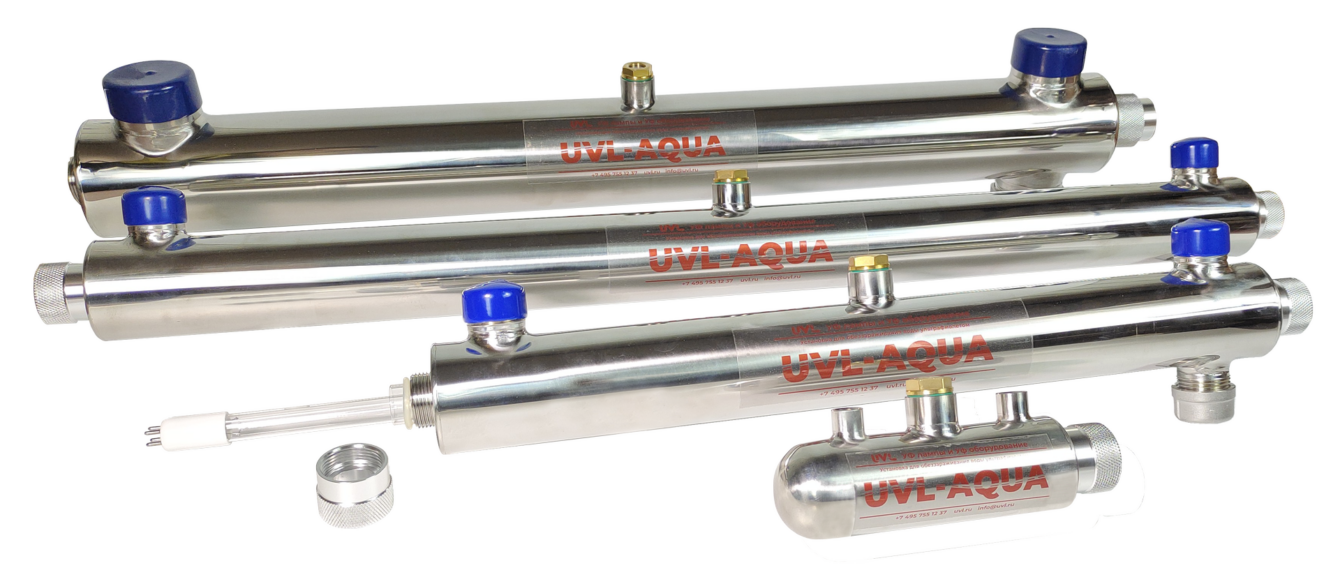
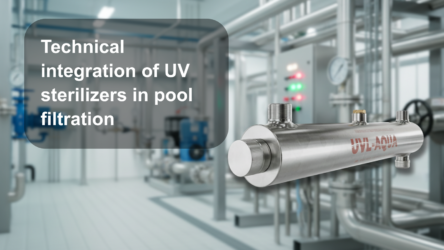
Stainless steel housing units provide water disinfection up to 99% SA in the water treatment system. They are connected to the pipeline using pipes of various cross-sections. Upon request, it is possible to produce a unit with the required parameters.
Common mistakes in UV air disinfection implementation
A frequent error is selecting equipment without accounting for airflow volume and speed, reducing disinfection effectiveness. Neglecting regular lamp replacement and cleaning leads to diminished UV output. Improper irradiator placement creates untreated air zones. Lack of operational parameter control and microbial monitoring delays detection of system failures. Using unsuitable lamps and components shortens equipment life and raises maintenance expenses. Failure to consider humidity and dust effects accelerates lamp degradation and compromises safety.
Hence, successful deployment requires a comprehensive engineering approach considering all operational factors.
Checklist before installing a UV air disinfection system
- Verify airflow volume and velocity in ventilation ducts.
- Plan optimal UV irradiator placement based on aerodynamic analysis.
- Select lamps with adequate power and protection against moisture and dust.
- Ensure easy access for lamp maintenance and replacement.
- Install sensors to monitor UV radiation intensity.
- Develop a schedule for lamp cleaning and replacement.
- Organize microbiological air quality monitoring post-installation.
- Account for humidity and contamination impacts on equipment lifespan.
- Provide vibration and corrosion protection at mounting points.
- Design automation systems for operation control and fault alarms.
- Train staff in equipment operation and maintenance.
- Maintain spare lamps and parts inventory.
Frequently asked questions before purchase and installation
How to determine the required UV lamp power for my facility?
Lamp power depends on airflow volume and speed, plus the necessary disinfection frequency. Calculations consider exposure time and radiation intensity to deliver the required dose.
Can the same lamps be used for water and air disinfection?
Although lamps may be similar, air applications require moisture and dust protection, while water systems demand hermetic sealing and chemical resistance. Specialized lamps for each application are recommended.
How often should UV lamps be replaced?
Typically, lamps last 1.5–2 years under continuous operation. Replacement is advised before lamp output falls significantly, even if visible light persists.
What if duct humidity is high?
Use lamps with moisture protection and sealed housings. High humidity reduces effectiveness and accelerates equipment wear without such measures.
How to monitor disinfection effectiveness?
Regularly measure UV intensity and perform microbiological air analyses before and after irradiation. Monitoring systems and maintenance logs are essential.
Is it possible to retrofit UV irradiators into existing ventilation?
Yes, but a technical audit is necessary to select optimal installation points, avoid turbulence, and maintain airflow characteristics.
What risks arise from poor maintenance?
Reduced disinfection efficiency, increased microbial contamination, accelerated equipment wear, and higher repair and cleaning costs.
In summary, optimizing air disinfection systems with UV irradiators is a complex engineering challenge requiring proper equipment selection, precise installation, and ongoing maintenance. The key success factor is ensuring the necessary UV dose considering airflow and operating conditions. The next step is gathering technical data and conducting pilot tests to evaluate effectiveness and refine maintenance protocols.