Disinfecting pool water is a critical step in maintaining water quality and safety. Ultraviolet (UV) sterilizers have become an increasingly valued addition to conventional filtration and chemical treatment methods. For engineers and technologists, understanding how to properly integrate a UV sterilizer into an existing pool system is essential to ensure consistent and uniform disinfection without interruptions or failures.
This article explores the technical aspects of UV sterilizer integration, highlighting key points for installation and commissioning, methods to verify correct operation on-site, and common issues that reduce effectiveness. A real-world case study illustrates typical problems and step-by-step solutions, providing guidance for informed decision-making when selecting and implementing UV sterilization equipment for pools.
In practice, improper sizing or mismatched equipment dimensions often lead to insufficient UV dose and inadequate water disinfection. Frequent operational faults are also commonly caused by incorrect installation and maintenance procedures. A solid grasp of these technical factors helps avoid such issues.
Who needs this and when
- Pool operations engineers seeking improved disinfection quality without increasing chemical use.
- Water treatment technologists integrating UV disinfection into existing filtration setups.
- Engineering system designers developing new or upgrading existing pool installations.
- Facility managers responsible for meeting microbiological safety standards.
- Maintenance specialists tasked with accurate diagnostics and equipment support.
- Production engineers aiming to minimize downtime and reduce operational costs.
- Clients with chemical usage restrictions, such as pools housing live animals or children’s facilities.
Technical fundamentals of integrating UV sterilizers into pool filtration systems
A pool UV sterilizer operates by exposing microorganisms circulating in the water to germicidal UV radiation. Installed downstream of mechanical filtration, it reduces microbial load and decreases reliance on chemical disinfectants. Achieving the required disinfection level depends on delivering the correct UV dose and ensuring uniform exposure of the water.
Physically integrating the UV unit requires precise coordination with the hydraulic scheme: pipe diameter, flow rate, pressure, and water temperature all affect sterilization efficiency. Excessive flow velocity causes water to pass too quickly through the reactor, reducing UV dose and compromising disinfection quality.
On-site verification involves measuring water flow before and after the sterilizer and using portable instruments to monitor UV dose. The control system must be configured to shut off the UV lamp if flow stops, preventing overheating and premature equipment failure.
Neglecting hydraulic balancing can cause serious problems: inadequate disinfection leads to microbial growth and biofilm formation risk, while excessive pressure may damage the housing and cause leaks. Incorrect lamp power selection or mismatched reactor dimensions complicate installation and increase failure probability.
It is recommended to select the sterilizer model based on filtration system capacity and water parameters. Protection against cavitation and ensuring uniform flow through the reactor should be incorporated. Installation must comply with sealing and electrical safety requirements, including integration of flow and UV dose monitoring systems.
Installation and commissioning features of pool UV sterilizers
Installing a UV sterilizer requires strict adherence to technical conditions that directly impact disinfection effectiveness. The unit housing should be positioned in a zone with stable hydraulic conditions—avoiding sudden pressure fluctuations and turbulence—to maintain uniform UV radiation distribution inside the reactor.
When connecting to the piping system, pipe diameter and material must be considered to prevent leaks and corrosion. The quartz sleeve protecting the lamp must be shielded from mechanical damage, and electrical connections performed according to safety standards with automatic shutdown in case of no flow.
Installation checks start with visual inspection: verify all joints for tightness, correct placement of flow sensors, and UV radiation monitoring devices. Functional testing under operating conditions includes measuring actual UV dose and verifying control system responses.
Installation errors—such as incorrect pipe diameter, lack of backflow protection, or inappropriate sensor selection—reduce lamp lifespan, cause frequent faults, and degrade disinfection quality. Electrical wiring mistakes may lead to shutdowns or total equipment failure.
It is advisable to involve specialists experienced with pool UV sterilizers during installation. Use certified materials and components, follow procedural steps carefully, and perform comprehensive testing before commissioning.
Case study: improper selection and installation of a UV sterilizer in a sports pool
Initial conditions:
A high-usage sports pool with a filtration flow of 150 m³/h. A 2.0 kW non-ozone UV sterilizer was installed by a contractor without precise consideration of equipment dimensions and hydraulic parameters.
Symptoms:
- Frequent flow alarm activations.
- Poor microbial water quality indicators.
- Quartz sleeve damage after 900 hours of operation.
- Sterilizer housing overheating.
- Reduced filtration system performance.
Root causes:
Incorrect lamp length and housing diameter led to mechanical installation issues. Lack of proper flow control and backpressure protection caused overloads and damage. Flow velocity exceeded design values, lowering UV dose and disinfection effectiveness.
Verification checklist:
- Confirm lamp and housing dimensions match technical specifications.
- Measure pressure and flow rate upstream and downstream of the sterilizer.
- Check presence and functionality of flow sensors and automatic shutdown systems.
- Ensure all connections are leak-tight.
- Inspect quartz sleeve and lamp condition.
- Review electrical wiring and overheating protection.
- Validate UV dose parameters at outlet.
- Confirm housing materials’ compatibility with water conditions.
Resolution steps:
- Redesign and replace lamp with correctly sized model.
- Install flow regulators to maintain optimal hydraulic conditions.
- Implement automatic shutdown on no-flow situations.
- Provide additional operator training on equipment use and maintenance.
- Use corrosion- and cavitation-resistant housing materials.
- Establish routine UV dose monitoring and preventive maintenance.
Implementation:
- Remove old sterilizer and prepare piping.
- Install new equipment per project documentation.
- Calibrate flow and UV dose sensors.
- Conduct commissioning tests measuring key parameters.
- Formalize operation and maintenance procedures.
- Monitor system performance during initial weeks and adjust as needed.
Outcome control:
Post-implementation microbial control stabilized, alarms ceased, and lamp lifespan met specifications. The pool water environment remained safe without increasing chemical treatment, confirmed by regular laboratory analyses.
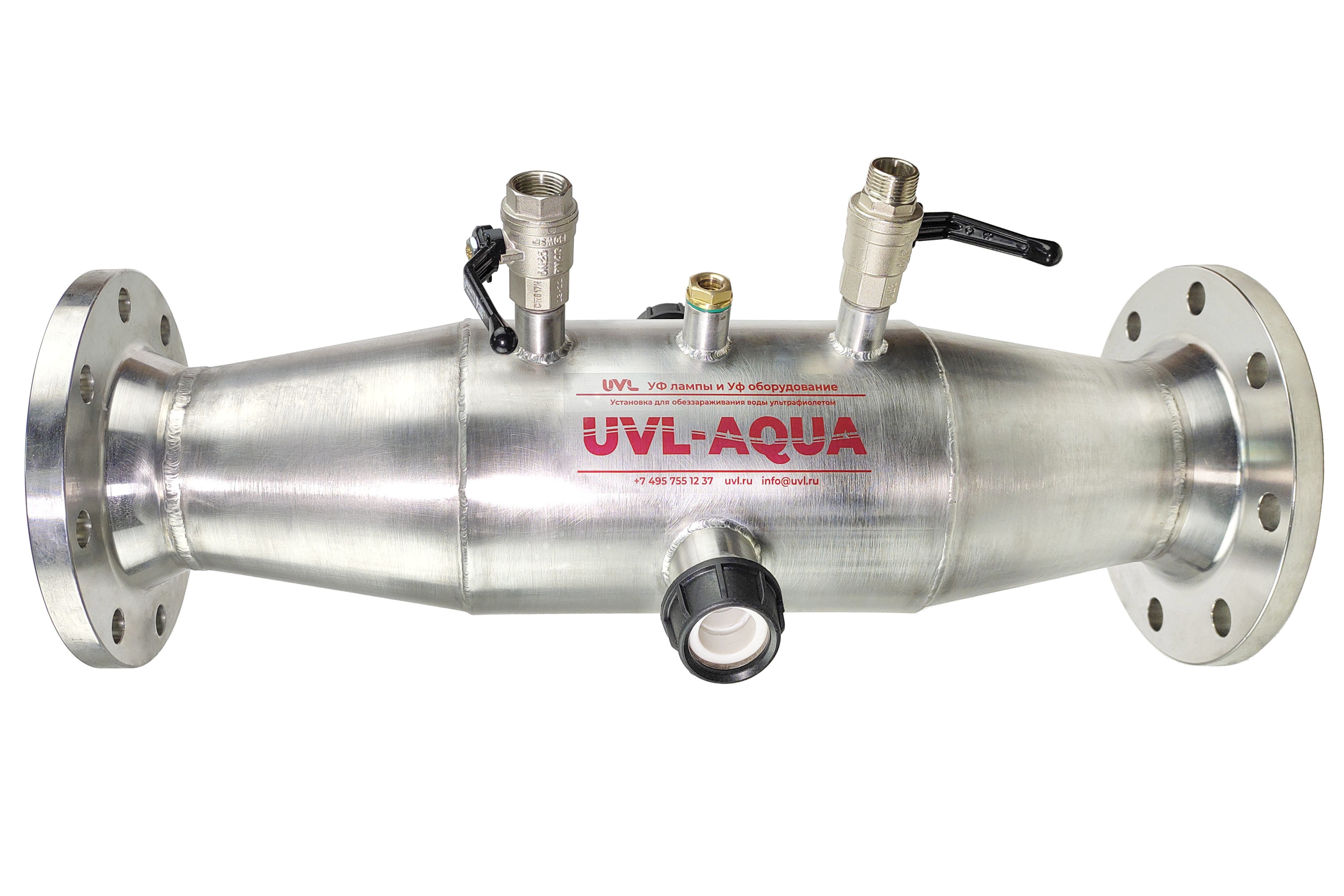
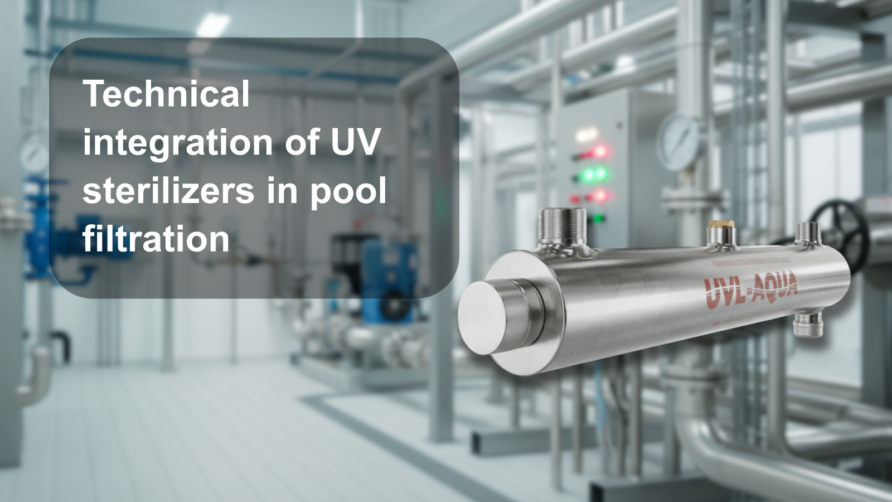
Medium pressure UV units in a stainless steel housing, used in areas where water treatment with ultraviolet radiation in the range of 200 to 400 nm is required. Designed for larger swimming pools. Ultraviolet light helps to neutralize trichloramines (derivatives of chlorine), which significantly improves the quality of pool water.
Common mistakes in integrating UV sterilizers into pool filtration systems
Typical issues stem from incorrect power and size selection, resulting in incompatibility with existing hydraulics. Flow velocity control is often neglected, causing either insufficient exposure time or stagnant zones.
Installation errors—such as loose connections, missing cavitation and pressure surge protection—lead to leaks and equipment damage. Insufficient attention to automatic shutdown during no-flow conditions shortens lamp life and increases failure risk.
Lack of regular UV dose monitoring and maintenance reduces disinfection efficiency, increases microbial loads, and forces higher chemical use. Poor operator training exacerbates risks of improper operation.
Pre-installation checklist for pool UV sterilizer integration
- Verify sterilizer power matches water volume and flow rate.
- Ensure hydraulic compatibility with piping and filtration components.
- Confirm lamp base type and dimensions fit housing.
- Provide flow monitoring and automatic shutdown systems.
- Check housing materials for corrosion and cavitation resistance.
- Allow easy access for lamp replacement and maintenance.
- Perform commissioning with UV dose measurement.
- Train personnel on operational and safety procedures.
- Develop maintenance and monitoring protocols.
- Confirm availability of documentation and quality certifications.
Frequently asked questions before purchase and installation
How to determine the required UV sterilizer power for my pool?
Power is selected based on pool volume and filtration flow rate to ensure sufficient UV dose at maximum flow.
Can a UV sterilizer be installed in an operational system without full dismantling?
Yes, with careful planning and dimension matching, installation can be done with minimal modifications, provided hydraulic and electrical safety requirements are met.
How to monitor UV disinfection effectiveness on-site?
Use UV dose sensors, conduct regular microbiological water tests, and verify flow sensor and control system functionality.
What happens if water flow exceeds design velocity through the sterilizer?
The UV dose decreases, leading to insufficient disinfection and increased risk of microbial growth.
How often should UV lamps be replaced?
Replace lamps according to manufacturer guidelines or when output power declines, typically after 900–1200 operating hours.
Which housing materials are best for pools with seawater or aggressive environments?
Stainless steel AISI-316 is preferred for its corrosion and cavitation resistance, enhancing equipment durability.
Can UV sterilizers be combined with chemical treatment?
Yes, UV disinfection reduces chemical demand but usually does not fully replace it; a combined approach is often optimal.
Integrating a UV sterilizer into a pool filtration system requires a comprehensive approach considering hydraulic, technical, and operational parameters. The key to successful implementation is precise matching of equipment to site conditions and proper installation and monitoring. The next steps involve gathering system data, conducting pilot tests, and developing a project plan with maintenance and operation recommendations.