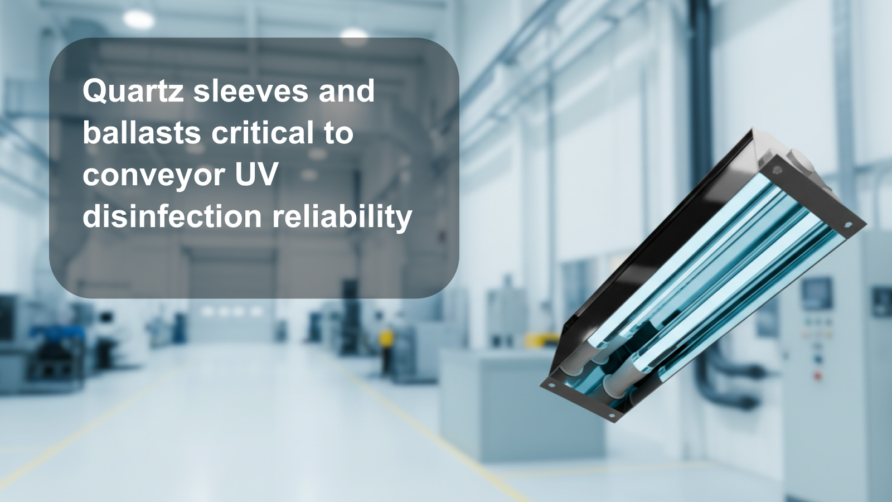
In modern industrial production of hygienic products and sanitary items, effective disinfection on conveyor lines is a crucial step. Conveyor UV irradiators disinfect packaging and surfaces by reducing microbial load without chemical agents. However, the stable operation of these systems largely depends on the correct selection and maintenance of quartz sleeves and electronic ballasts (EB). Improper choice or installation of these components leads to reduced irradiation efficiency, frequent downtime, and higher maintenance costs. This article explains why quartz sleeves and EBs are not mere accessories but critical components of conveyor UV irradiators, how to inspect them on-site, and the risks of neglecting their condition. In practice, issues manifest as frequent lamp failures and decreased UV dose, ultimately impacting disinfection quality.
Who needs this information and when
- Design engineers — for proper integration of UV irradiators within constrained conveyor spaces.
- Production technologists — to monitor dose stability and comply with hygiene standards.
- Maintenance specialists — for timely diagnostics and component replacement.
- Project managers — to minimize downtime and operational risks.
- Engineering firms — during development of integrated UV disinfection systems.
- Quality auditors — for equipment compliance assessment.
- Procurement teams — to understand technical requirements of UV system components.
Why quartz sleeves are critical for stable irradiator performance
A quartz sleeve is a transparent protective barrier around the germicidal lamp that shields it from contamination and mechanical damage while allowing UV radiation to pass through. Quartz is chosen for its high UV transparency, ensuring maximum UV energy output. During conveyor operation, sleeves are exposed to dust, moisture, mechanical impacts, and temperature fluctuations. Contamination or cracks reduce UV intensity and increase lamp failure risk.
On-site inspection involves visual checks for cracks, clouding, or deposits—absence of these indicates acceptable condition. Measuring UV intensity with specialized sensors helps detect decreased sleeve transmissivity. Monitoring sleeve surface temperature is essential, as overheating accelerates material degradation.
Neglecting sleeve condition results in lamps operating under higher heat and contamination, shortening lifespan and lowering disinfection efficacy. Consequently, products on the conveyor receive insufficient UV dose, increasing microbial risk and non-compliance with sanitation requirements.
It is recommended to use high-quality quartz sleeves with enhanced thermal resistance and anti-static surface treatment. Regular monitoring and cleaning of sleeves are mandatory maintenance procedures. Remote monitoring systems for UV intensity and temperature can improve operational control.
The role of electronic ballasts in managing and protecting conveyor UV irradiators
Electronic ballasts (EB) regulate stable power supply to germicidal lamps, enabling soft start, maintaining operating current, and protecting against overloads. In conveyor systems where lamps operate continuously under high load, using quality EBs is critical to prevent malfunctions.
Correct EB operation can be verified by status indicators on control cabinets and lamp operating hour counters. Inspection includes checking for absence of EB housing overheating and stable output voltage. Programmable modules allow integration with enterprise IT systems for remote monitoring.
Using outdated or non-regulated ballasts subjects lamps to frequent inrush currents at startup, reducing lamp life and causing unexpected failures. Lack of overload protection increases risk of damage to lamps and power supplies, resulting in production stoppages.
For reliable conveyor UV irradiator operation, EBs with soft start, operating hour monitoring, and remote control functions are recommended. Implementing such systems enhances operational safety and lowers repair costs.
How correct selection of quartz sleeves and EBs influences disinfection quality
A conveyor irradiator must provide uniform and stable UV radiation on product surfaces. Quartz sleeves directly affect lamp protection and UV transparency, while EBs control power stability and lamp operating duration. Their combined performance determines the delivered disinfection dose.
On-site quality control includes measuring UV intensity in the treatment zone and monitoring equipment parameters. If output power drops, first check quartz sleeve condition and EB functionality, as these components are most prone to wear and installation errors.
Ignoring these factors leads to uneven disinfection and process disruptions, increasing microbial contamination and requiring reprocessing. Such failures reduce productivity and increase operational expenses.
Proper selection and routine inspection of quartz sleeves made from quality materials, combined with modern EBs featuring diagnostics and protection, are key to stable and effective conveyor UV irradiator performance.
Case study: Reduced disinfection efficiency due to damaged quartz sleeve
Initial conditions:
A hygienic product manufacturer implemented a conveyor UV system with irradiators equipped with quartz sleeves and EBs. After several months, technologists observed decreased disinfection efficiency and increased defect rates.
Symptoms:
- UV intensity dropped by over 30%
- Frequent alarm activations on control cabinets
- Increased product processing time
- Elevated temperature on irradiator surfaces
- Higher lamp replacement frequency
Cause analysis:
Damage to quartz sleeves caused partial shading and impaired heat dissipation, leading to lamp overheating. EBs lacking overheating protection failed to prevent lamp failures. Additionally, absence of regular sleeve inspection and cleaning allowed contaminant buildup, further reducing UV light transmission.
Inspection checklist:
- Visual inspection of quartz sleeves for cracks and contamination
- UV intensity measurement in treatment area
- Temperature control of lamp and sleeve surfaces
- EB parameter verification (voltage, current, indicators)
- Lamp operating hour data analysis
- Ventilation and cooling system assessment
- Cable connection and integrity check
- Compliance check against design specifications
Solutions implemented:
- Replacement of damaged quartz sleeves with thermally enhanced versions
- Installation of EBs with overheating protection and soft start
- Establishment of regular cleaning and inspection protocols
- Training personnel in monitoring and diagnostics
- Optimization of irradiator cooling systems
- Deployment of remote monitoring for operational parameters
Implementation steps:
- Scheduling sleeve replacement minimizing line downtime
- Installing new EBs and verifying compatibility
- Configuring monitoring and alarm systems
- Organizing routine technical inspections and cleaning procedures
- Implementing equipment condition tracking systems
- Training maintenance staff on updated procedures
Outcome monitoring:
Post-implementation, UV intensity stabilized, defect rates decreased, and lamp replacement frequency halved. The control system enabled prompt detection of deviations and prevented failures.
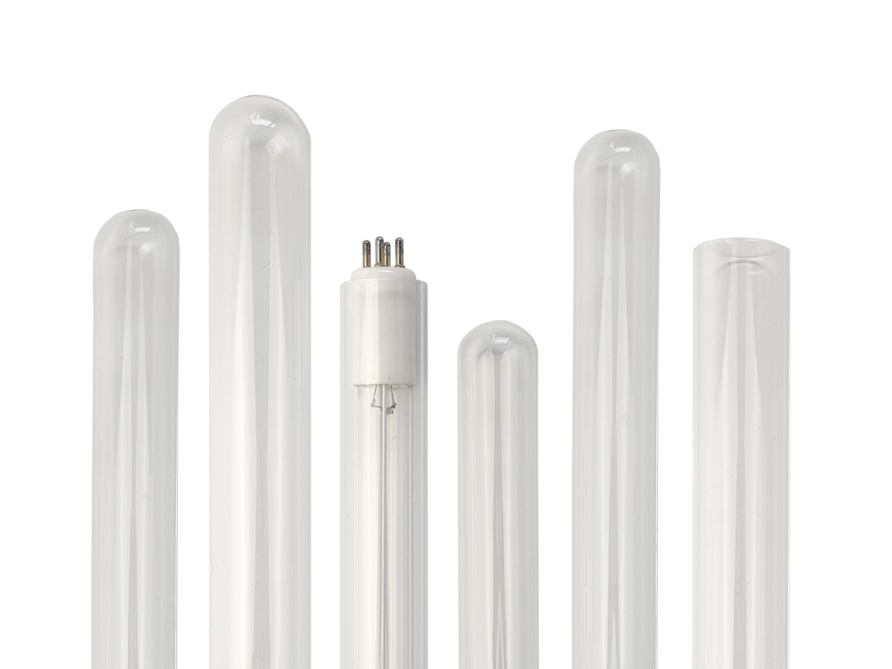
In our company, you can purchase quartz covers for UV sterilizers. These components protect the UV lamps and ensure their efficient operation. The UVL catalog offers a wide range of quartz flasks suitable for various models of UV systems, ensuring reliable and long-lasting performance.
Common mistakes when working with quartz sleeves and electronic ballasts
A frequent error is using low-quality sleeves that quickly become cloudy or crack due to temperature and chemical exposure. Improper installation and lack of sealing allow dust and moisture ingress, reducing effectiveness and increasing failure risk. Neglecting routine sleeve cleaning leads to contaminant accumulation and diminished UV transmission.
Regarding EBs, common mistakes include selecting equipment lacking protection and monitoring features, resulting in overloads and premature lamp failure. Absence of integration with control and operating hour tracking complicates diagnostics and maintenance planning. Incorrect wiring and incompatible power parameters also cause unstable irradiator operation.
Finally, insufficient personnel training and lack of maintenance protocols exacerbate technical risks and increase operating costs.
Pre-installation checklist for conveyor UV irradiators with quartz sleeves and EBs
- Verify quality and thermal resistance of quartz sleeves
- Ensure convenient access for sleeve cleaning and replacement
- Select EBs with soft start and overheating protection functions
- Confirm EB compatibility with lamp power and voltage requirements
- Design adequate cooling systems to prevent overheating
- Implement monitoring systems for lamp and EB status
- Align installation dimensions with conveyor line and process needs
- Establish regular inspection and cleaning protocols
- Train staff in UV equipment diagnostics and maintenance
- Include technical documentation and reporting for audits
- Verify integration of irradiator control with enterprise IT systems
- Plan for spare parts and consumables availability
Frequently asked questions before purchasing and deploying
— Why are quartz sleeves so important for conveyor irradiators?
Quartz sleeves protect lamps from contamination and mechanical damage without reducing UV transmission. Their quality directly impacts disinfection dose stability.
— How do electronic ballasts affect lamp lifespan?
EBs regulate current and voltage, providing soft start and overload protection, which reduces stress on lamps and extends their service life.
— How to know when a quartz sleeve needs replacement?
Visual signs such as cracks, cloudiness, or heavy contamination, combined with measured UV intensity decline, indicate the need for replacement.
— Can standard ballasts without monitoring functions be used?
While possible, this increases the risk of hidden failures and premature equipment breakdown. Ballasts with diagnostics and protection are recommended.
— How often should quartz sleeves and EBs be maintained?
Inspection and cleaning should occur at least monthly; EB performance and UV intensity measurements are advised quarterly or per maintenance schedule.
— What are common installation errors?
Improper sealing of sleeves, incorrect mounting dimensions, and inadequate cooling lead to reduced effectiveness and accelerated wear.
— How to remotely monitor irradiator operation?
Modern EBs support integration with IT systems, enabling real-time monitoring of operational parameters, lamp hours, and fault alerts.
In conclusion, reliable operation of conveyor UV irradiators is impossible without careful selection and maintenance of quartz sleeves and electronic ballasts. These components directly influence disinfection efficacy and equipment longevity. The key criteria are material quality and monitoring capabilities. The next steps involve collecting on-site data, conducting pilot implementations, and developing maintenance protocols tailored to production specifics.