Ultraviolet (UV) disinfection remains a critical stage in ensuring the quality of process and potable water in industrial settings. Choosing the right amalgam UV lamps is not merely a technical detail but a foundational factor for maintaining stable operation of disinfection systems. Incorrect selection or improper use of lamps can lead to reduced bactericidal efficacy, accelerated equipment wear, and even unplanned downtime of production lines.
For engineers and technologists, understanding how amalgam UV lamps perform under real operating conditions, which parameters influence their effectiveness, and how to monitor lamp condition on-site is essential. This article explains why amalgam lamps are preferred over conventional mercury vapor lamps, how to select appropriate replacement lamps for UV equipment, and how to address common signs of declining disinfection performance.
We will also examine practical scenarios, such as a water treatment facility experiencing a drop in bactericidal output due to unstable water levels, and how improper replacement lamp choices resulted in costly repairs.
Who needs this and when
- Water treatment plant engineers—to ensure consistent disinfection of flowing water.
- Food production technologists—to prevent microbial contamination of process lines.
- UV system designers—when specifying equipment for specific industrial conditions.
- Service engineers—for proper replacement and maintenance of amalgam UV lamps.
- Operations managers—to minimize risks of equipment failure and downtime.
- Environmental and waste specialists—for safe handling and disposal of spent lamps.
- Facility managers facing fluctuating water levels—where lamp protection from overheating is critical.
Amalgam UV lamp technology: operational principles and importance
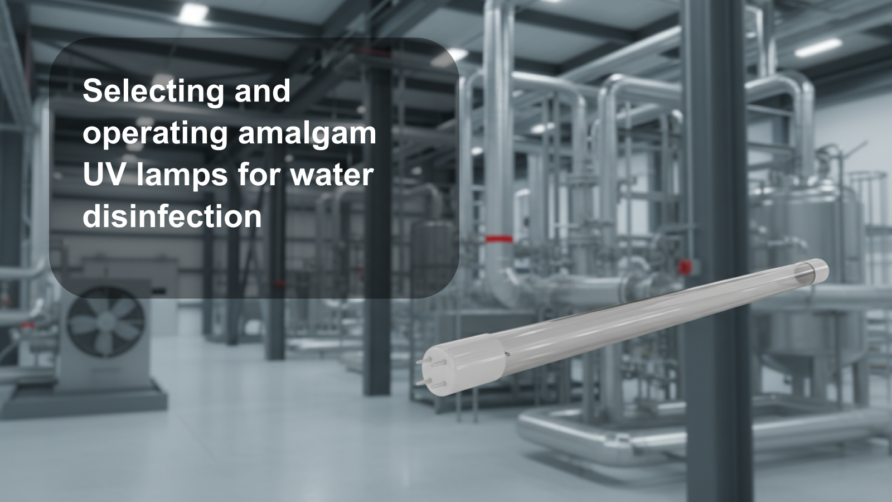
Amalgam ultraviolet lamps contain mercury in a solid alloy form—a mixture of mercury with metal—unlike traditional mercury vapor lamps that use liquid mercury. This design ensures stable lamp operation across a wide temperature range and reduces mercury leakage risks in case of bulb breakage. This is a fundamental difference that simplifies handling and safety measures compared to liquid mercury lamps.
Technically, an amalgam lamp converts electrical energy into bactericidal UV radiation at approximately 254 nm wavelength, effectively disinfecting water. Their high power rating (up to 500 W) allows treatment of large water volumes while maintaining compact equipment size. The amalgam composition is adjusted to optimize performance at different ambient temperatures, a critical factor in industrial applications.
On-site verification of lamp performance involves monitoring supply voltage stability, ambient temperature, water level in the irradiation chamber, and visual inspection of the quartz sleeve integrity. Maintaining a clean and undamaged quartz sleeve is particularly important, as contamination or cracks directly reduce the bactericidal UV output.
Neglecting these characteristics may cause UV output reduction, lamp overheating due to inadequate cooling, shortened operational life, and frequent replacements. These issues ultimately degrade disinfection quality and increase operational costs.
When selecting amalgam UV lamps, it is advisable to consider the temperature regime of the facility and process specifics, and during operation, regularly monitor voltage and lamp condition. For improved reliability, implement protections against water level fluctuations and schedule timely replacement of lamps.
How to select the correct replacement lamp for UV equipment
Selecting a replacement for an amalgam UV lamp requires precise matching of the original equipment’s technical specifications. Key factors include lamp power, length, bulb type, and emission spectrum characteristics. Amalgam lamps are available in a range from 50 to 500 W; substituting with a lower-power lamp reduces the bactericidal UV output.
To verify a replacement lamp’s suitability on-site, perform the following: compare markings and technical data with equipment documentation; inspect the bulb for cracks or damage; measure voltage and current in the lamp circuit; assess the quartz sleeve and reflector condition. Compatibility with the ballast (electronic or magnetic control gear) must also be confirmed, as mismatched components can cause unstable operation and shorten lamp life.
Using an incompatible lamp may result in ignition failures, overheating, premature failure, and reduced disinfection efficiency. In severe cases, it can damage the entire UV system and halt production processes.
Therefore, only use verified lamps with guaranteed compliance, and conduct on-site testing. Maintaining a stock of spare lamps is recommended to minimize downtime.
Operational considerations for amalgam UV lamps with fluctuating water levels
Amalgam UV lamps are sensitive to cooling conditions. In industrial environments where the water level in the irradiation chamber varies—due to process dynamics or adjustments—an improperly positioned lamp may partially emerge from the water. This causes localized overheating, accelerating lamp degradation and reducing bactericidal output.
Cooling is provided by the surrounding water, which also transmits UV radiation. When part of the lamp is exposed to air, heat dissipation worsens, raising the temperature of the bulb and the internal amalgam. Elevated temperatures destabilize lamp operation, decrease UV output, and shorten lamp lifespan.
On-site, it is important to monitor water level in the irradiation chamber, measure bulb temperature during operation, and record supply voltage parameters. Visual inspection for partial lamp exposure during water level drops is also necessary.
Ignoring these factors leads to frequent lamp replacements, reduced disinfection effectiveness, higher maintenance costs, and increased risk of unplanned shutdowns.
Design recommendations include providing a water level margin, using secure lamp mounts, and installing water level sensors. In some cases, selecting amalgam lamps with enhanced thermal tolerance is justified.
Case study: reduced disinfection efficiency at a water treatment facility
Initial conditions:
A large water treatment plant operated a UV disinfection system using 250 W amalgam lamps with a capacity of up to 85 m³/h. Over time, a decline in bactericidal effect and frequent lamp replacements were observed.
Symptoms:
- 25% reduction in bactericidal UV output over three months
- Elevated lamp bulb temperature during operation
- Unstable supply voltage
- Periodic water level fluctuations in the irradiation chamber
- Increased equipment downtime due to lamp changes
Root causes:
Water level fluctuations caused parts of the lamps to be exposed above the water surface, leading to overheating. Unstable power supply further stressed the lamps, reducing lifespan. Insufficient monitoring and delayed replacement of lamps aggravated the problem.
Checks performed:
- Water level variation throughout the process cycle
- Lamp bulb temperature during operation
- Voltage and current supplied to lamps
- Quartz sleeve integrity and cleanliness
- Compatibility of replacement lamps with control gear
- Surface contamination on lamps
- Lamp operating cycles and ignition frequency
- Documentation review for replacement lamps
Solutions implemented:
- Installed water level sensors and automated control systems
- Switched to amalgam lamps with higher thermal resilience
- Stabilized supply voltage using voltage regulators
- Established regular lamp performance monitoring
- Used only certified replacement lamps matching original specs
- Developed a lamp replacement schedule based on operating conditions
Implementation steps:
- Equipment installation for water level control and adjustment
- Training personnel on lamp monitoring and replacement procedures
- Configuring power supply and surge protection systems
- Maintaining detailed maintenance and replacement logs
- Conducting a pilot phase with intensified monitoring
- Analyzing results and refining maintenance protocols
Outcome:
Post-implementation, water levels stabilized, lamp temperatures remained within limits, and bactericidal output met design specifications. Lamp replacement frequency decreased, and equipment downtime was minimized.
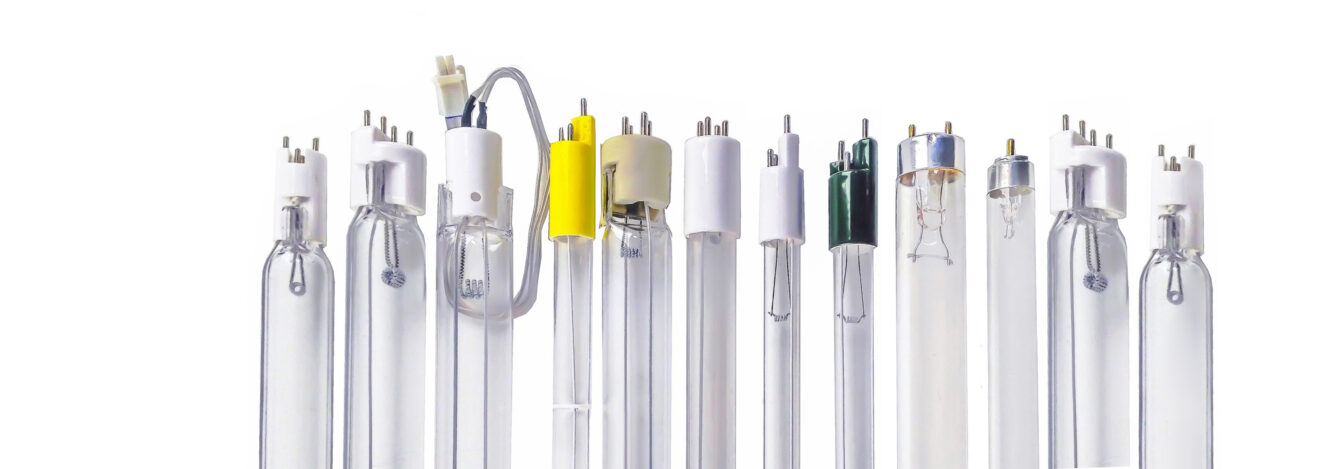
We manufacture mercury and amalgam ultraviolet lamps compatible with all types of UV disinfection systems. Use the filter to select a lamp with the required specifications or contact our manager via the feedback form for assistance. We produce lamps in any quantity within short lead times and ensure worldwide delivery, providing reliable UV solutions tailored to your needs.
Common mistakes in choosing and operating amalgam UV lamps
A frequent error is using replacement lamps that do not meet the original equipment’s technical parameters, resulting in reduced disinfection efficiency and shortened lamp life. Incorrect lamp power selection causes insufficient UV output or overheating.
Neglecting to monitor water levels in the irradiation chamber leads to lamp overheating and premature failure. Lack of supply voltage stabilization causes unstable lamp operation and reduced lifespan.
Failure to regularly inspect and clean quartz sleeves diminishes UV intensity. Insufficient control of environmental conditions (temperature, humidity) also negatively impacts lamp performance.
Less common but critical is improper disposal of spent lamps, creating environmental hazards and regulatory risks.
Pre-implementation checklist for amalgam UV lamps
- Verify lamp technical specifications and compliance with project requirements
- Ensure stable power supply with surge protection
- Provide water level monitoring and regulation in the irradiation chamber
- Confirm compatibility of lamps with control gear (ballasts)
- Organize routine inspection and cleaning of quartz sleeves
- Train personnel on correct lamp replacement and maintenance
- Establish proper storage conditions for spare lamps to preserve service life
- Integrate temperature and voltage monitoring systems
- Schedule lamp replacement intervals based on operational conditions
- Plan for safe disposal of spent lamps according to environmental standards
- Conduct pilot testing of lamps under actual site conditions
- Prepare detailed operation and maintenance documentation
Frequently asked questions before purchasing and implementation
How to determine when an amalgam lamp needs replacement?
Key indicators include decreased bactericidal output, visible darkening or damage of the bulb, unstable ignition, and increased bulb temperature. Monitoring operational parameters and visual inspections enable timely replacement.
Is it acceptable to use lower-power lamps to save costs?
Using lamps with reduced power lowers UV intensity, compromising disinfection quality. Cost savings on lamp power often lead to higher expenses due to decreased water treatment effectiveness and increased maintenance.
How does ambient temperature affect amalgam lamp performance?
Below approximately +10 °C, ignition becomes difficult; above +40 °C, bactericidal output declines. Operating within the optimal temperature range ensures stable performance and maximizes lamp life.
What to do if water levels fluctuate in the irradiation chamber?
Install level control and regulation systems and consider lamps with enhanced resistance to overheating. Ignoring water level issues significantly reduces lamp lifespan.
How to verify replacement lamp compatibility?
Cross-check technical specs, bulb type, power, length, and electrical parameters against manufacturer documentation. Using incompatible lamps risks equipment damage and reduced disinfection efficiency.
How to arrange safe disposal of spent amalgam lamps?
These lamps are classified as hazardous waste and must be collected separately and transferred to specialized organizations for recycling or disposal in accordance with environmental regulations.
Which parameters should be monitored during operation?
Supply voltage, bulb temperature, water level, quartz sleeve condition, and lamp operating time. Regular monitoring helps prevent premature failures.
Selecting and operating amalgam ultraviolet lamps is a complex engineering task requiring attention to technical details and site-specific conditions. The primary criterion is maintaining stable bactericidal UV output and ensuring lamp parameters meet process requirements. Successful implementation relies on thorough data collection, pilot testing, and establishing clear maintenance protocols. Only through this disciplined approach can water disinfection systems operate effectively and reliably.