Water disinfection is a critical process to ensure technological safety and product quality across various industrial sectors. Ultraviolet (UV) water treatment systems, particularly flow-through UV sterilizers, are increasingly adopted as alternatives to chemical disinfection methods. For engineers and process technologists, understanding the operational principles of UV water sterilizers is essential, alongside assessing their economic efficiency to avoid overspending or performance loss. This article examines how to select the right UV sterilizer for water treatment, key operational considerations, and quality control practices. A practical case study highlights common pitfalls and their consequences.
Who needs UV water disinfection systems and when
- Industrial plants with water supply systems aiming to reduce microbial contamination without chemicals.
- Facilities requiring potable water standards to ensure safety and compliance.
- Process engineers integrating UV disinfection into water treatment workflows.
- Equipment maintenance engineers responsible for servicing and extending UV lamp life.
- Projects with restrictions on chemical disinfectants favoring UV technology.
- Sites with variable water flow rates needing adaptable flow-through UV sterilizers.
- Companies focused on energy efficiency evaluating operational costs and return on investment.
How flow-through UV water sterilizers work and impact economics
A flow-through UV sterilizer disinfects water by exposing it to germicidal ultraviolet light at approximately 254 nm wavelength. This radiation damages microbial DNA and RNA, preventing reproduction. The disinfection efficacy depends on UV dose, water clarity, and exposure time.
Design considerations must include flow velocity and water turbidity: high flow reduces exposure time, while turbidity impedes UV penetration. Therefore, specifying a UV system with adequate power margin and optimized irradiation chamber design is vital. Ignoring these factors risks insufficient disinfection, leading to costly reprocessing or premature equipment replacement.
On-site verification involves:
- Measuring water turbidity and organic load before installation.
- Confirming flow rates align with the UV system’s rated capacity.
- Assessing UV intensity using specialized sensors.
- Monitoring UV lamp condition and output power.
- Performing regular microbial load checks post-treatment.
Exceeding design flow or turbidity limits sharply reduces effectiveness, increases failure risk, shortens lamp lifespan, and raises operational expenses.
Selecting UV systems based on actual water parameters and allowing performance adjustment ensures sustained disinfection quality. Routine chamber cleaning and lamp replacement per maintenance schedules are essential.
Selecting the right UV sterilizer for water disinfection
Equipment selection starts with evaluating site-specific parameters: water flow, quality, disinfection requirements, and installation conditions. UV lamps must deliver an effective dose—typically 25–40 mJ/cm² for potable water—to reliably reduce microbial contamination.
Common errors include underestimating turbidity and lacking power reserve. Flow-through units vary in chamber design—reflectors, lamp arrangement—which affects uniform irradiation and power efficiency.
Field checks should confirm that actual flow, turbidity, and UV intensity match specifications. For fluctuating flows, models with adjustable power or multiple lamps are preferable.
Undersized units lose disinfection efficacy under load, risking process disruptions and extra costs. Oversized units increase capital and operating costs without proportional benefits.
Key factors to balance include water quality, maximum/minimum flow, safety margins, and maintenance expenses. Integration capability with existing water treatment systems is also critical.
Operation and maintenance of UV water disinfection systems
Operating UV sterilizers requires ongoing parameter monitoring and timely maintenance. UV lamps typically have a service life of 8,000–12,000 hours, after which output power declines, diminishing disinfection effectiveness. Deposits on chamber walls can further reduce UV transmission.
Performance verification involves UV intensity measurements and microbiological water analysis after treatment. Tracking flow and turbidity parameters enables operational adjustments.
Neglecting maintenance lowers disinfection levels, increasing risks of process failures and additional costs for reprocessing or repairs. Fouled chambers and aged lamps also elevate energy consumption.
Recommended maintenance includes regular chamber cleaning, scheduled lamp replacement, checking seals and electronics, and maintaining operation logs. Automated UV intensity monitoring with alarms enhances operational reliability and cost efficiency.
Case study: reduced UV sterilizer performance in food-grade water production
Initial conditions:
A flow-through UV system rated at 10 m³/h was installed at a food processing facility. Water turbidity was at the upper allowable limit but was not considered during system selection.
Symptoms:
- Decreased disinfection effectiveness detected via microbiological tests.
- Increased energy consumption.
- Frequent UV lamp replacements.
- Disrupted production due to unstable water quality.
Root cause:
The system was undersized for the actual turbidity, which impaired UV penetration. Attempts to compensate by increasing lamp power were limited by design constraints, causing lamps to operate near maximum load and fail prematurely. Lack of regular chamber cleaning exacerbated the problem.
Assessment checklist:
- Measure inlet water turbidity and clarity.
- Verify flow rate compliance with system specs.
- Check UV lamp output and remaining service life.
- Inspect chamber interior for fouling.
- Review microbiological post-treatment results.
- Confirm presence of automated monitoring and alarms.
- Evaluate installation quality and flow distribution.
- Assess electrical connections and parameters.
Corrective actions:
- Install a pre-filter to reduce turbidity.
- Recalculate required UV power for actual water conditions.
- Replace lamps with certified high-output units.
- Implement regular chamber cleaning schedules.
- Deploy automated UV intensity monitoring and alarms.
- Train staff on operation and maintenance protocols.
Implementation steps:
- Conduct detailed water quality and flow measurements.
- Procure and install pre-filter and upgraded lamps.
- Adjust system operation to match new parameters.
- Establish routine monitoring and logging.
- Provide staff training and documentation.
- Perform follow-up microbiological testing.
Results:
Post-implementation, microbial contamination levels fell within standards, energy consumption stabilized, and lamp lifespan improved. This confirmed the value of a systematic engineering approach and ensured cost-effective UV disinfection.
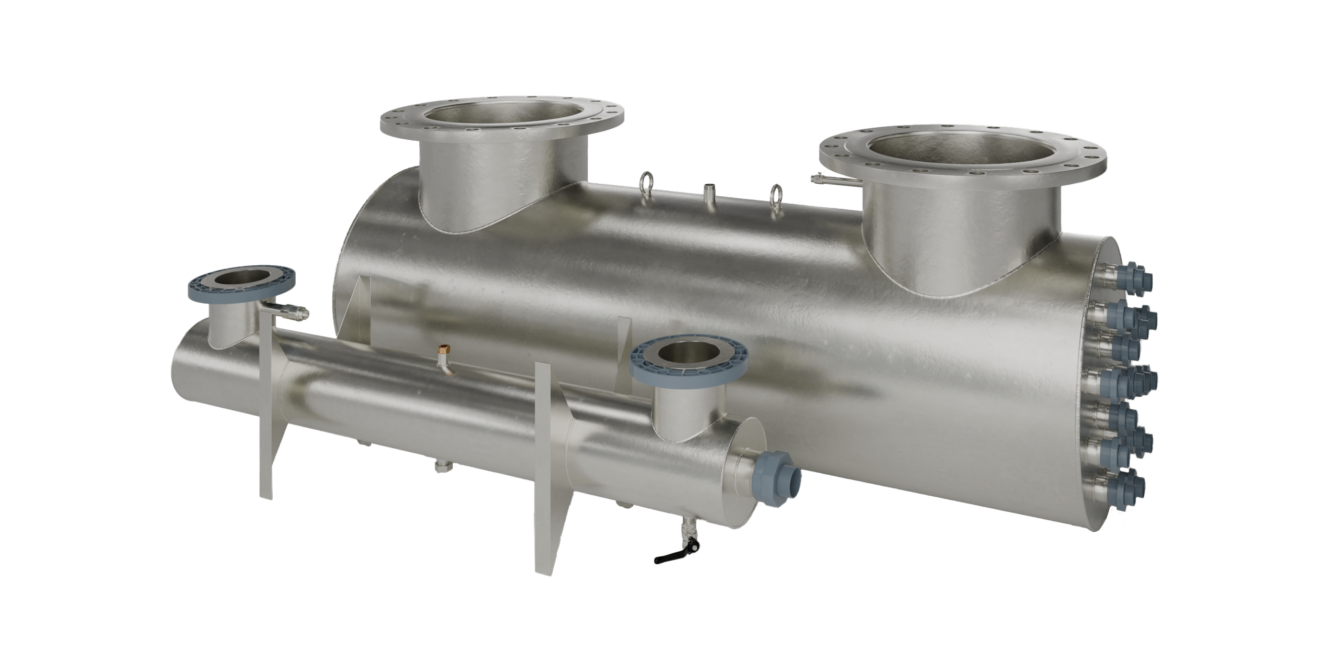
Multi-lamp UV pressure units in a stainless steel housing are used for water treatment. They can be made of AISI 316 or AISI 304 steel, with any performance parameters suitable for your system.
Common mistakes during UV water disinfection implementation
- Underestimating water turbidity and organic load, leading to reduced UV efficacy.
- Selecting equipment without power margin or flow rate adaptability.
- Neglecting regular maintenance and chamber cleaning.
- Ignoring UV lamp output monitoring and timely replacement.
- Improper installation causing uneven flow irradiation.
- Insufficient operator training increasing operational errors.
- Skipping microbiological quality control after treatment.
Pre-installation checklist for UV water disinfection systems
- Verify input water parameters: turbidity, clarity, flow rate.
- Ensure UV sterilizer includes power reserve.
- Confirm compatibility with existing water treatment infrastructure.
- Assess installation conditions and service accessibility.
- Plan routine maintenance and cleaning schedules.
- Set up UV intensity and flow monitoring systems.
- Train personnel on operational and safety procedures.
- Develop lamp replacement and control protocols.
- Schedule microbiological water quality monitoring.
- Consider automation and remote monitoring capabilities.
Frequently asked questions before purchase and commissioning
How to determine the required UV sterilizer power?
Power is calculated based on water flow, turbidity, and target disinfection dose—typically 25–40 mJ/cm² for potable water.
Can one unit handle variable water flow?
Yes, but models with adjustable power or multiple lamps maintain effectiveness under changing flow rates.
How often should UV lamps be replaced?
Typically every 8,000–12,000 operating hours; replacement is critical as output declines with use.
What parameters need monitoring onsite?
Turbidity, flow rate, UV intensity, and microbial contamination after treatment.
What if water turbidity is too high?
Install a pre-filter to reduce turbidity, as high turbidity impedes UV disinfection.
How to prevent efficiency loss from chamber fouling?
Perform regular cleaning and maintenance to maintain transparency and uniform irradiation.
Is integration with existing water treatment systems possible?
Yes, but water parameters and operational modes must be coordinated with other treatment stages.
What common errors cause UV system failure?
Undersized units, lack of maintenance, and ignoring water quality monitoring.
How to assess economic efficiency?
Compare capital and operating costs against alternative disinfection methods and risks of process disruptions.
In conclusion, the economic efficiency of UV water disinfection systems in industrial settings hinges on a precise engineering approach: accurate equipment selection, accounting for water quality, consistent maintenance, and diligent performance monitoring. The key criterion is matching system capacity and design to actual operating conditions and technological requirements. The next steps involve gathering detailed water and flow data, conducting pilot tests or detailed calculations, followed by developing operational and monitoring protocols.