Ultraviolet (UV) water disinfection is a critical process step to ensure the safety and quality of industrial operations. For engineers and technologists, selecting the appropriate UV water sterilizer and integrating it correctly within the system while adhering to technical standards and regulations is essential. Design or operational errors can reduce disinfection efficiency, leading to increased microbial contamination and violations of process controls. This article reviews the key standards governing flow-through UV water sterilizers, methods to verify equipment compliance onsite, and common pitfalls to avoid. Real-world examples illustrate issues such as insufficient UV dose due to underestimated exposure time or power, and improper UV filter selection causing pressure fluctuations and process instability.
Who needs this and when
- Water treatment engineers — for accurate sizing and parameter calculation of UV water systems.
- Process technologists in food and pharmaceutical industries — for seamless integration of water disinfection into production lines.
- Engineering system designers — to ensure compliance with installation and operational standards for UV sterilizers.
- Maintenance specialists — for routine monitoring and servicing of UV equipment.
- Quality controllers — to verify UV disinfection effectiveness in potable water.
- Project managers overseeing water system upgrades — to mitigate financial and reputational risks.
- Industrial equipment buyers — to assess technical specifications and standards compliance.
Key standards and regulations for UV water sterilizers
UV water disinfection operates by disrupting microbial DNA with UV radiation, typically at a wavelength near 254 nm. For flow-through systems, critical parameters include radiation intensity, exposure time, and uniform irradiation within the disinfection chamber. Standards specify the minimum UV dose required to achieve target microbial reduction, as well as safety criteria and material and construction requirements.
Practically, standards regulate:
- Minimum UV dose (mJ/cm²), generally starting at 40 mJ/cm² for drinking water applications.
- Chamber material requirements: corrosion resistance and smooth interior surfaces to prevent biofilm formation.
- Control of UV lamp power and operational time.
- Monitoring and alarm systems for lamp wear or failure.
- Acceptable pressure drops and hydraulic performance criteria of the flow system.
Onsite verification begins with measuring UV intensity using specialized sensors and assessing water clarity (turbidity coefficient). Non-compliance leads to reduced UV disinfection efficiency and increased microbial contamination risk.
If UV intensity is too low or flow velocity too high, the flow-through UV sterilizer cannot deliver the required disinfection level, causing process disruptions and possible biofilm-related equipment damage.
Recommendations: apply validated UV dose calculation methods during design and commissioning, and implement regular performance monitoring. Incorporate automated diagnostic systems for UV lamps and ensure easy access for maintenance.
UV system design and materials: impact on compliance
Technologically, a flow-through UV sterilizer consists of a chamber where water is irradiated by UV lamps. The chamber’s construction materials must ensure durability and operational safety without releasing harmful substances or attenuating UV radiation.
Disinfection efficiency depends on the reflectivity of the chamber’s internal surface. Standards recommend polished stainless steel grades such as AISI 304 or 316. Failure to meet these requirements reduces UV intensity, necessitating higher lamp power and increasing energy consumption.
Onsite checks include visual inspection for corrosion and contamination, reflectivity measurements, and verification of chamber sealing. Leaks introduce air, reducing UV disinfection performance.
Using unsuitable materials shortens equipment lifespan and promotes biofilm growth, which blocks UV rays, preventing the sterilizer from meeting microbial reduction standards.
It is advisable to select systems with certified materials and designs, schedule regular chamber cleaning and seal replacements, and use ultrasonic testing and insulation resistance measurements to monitor chamber integrity.
Monitoring and controlling UV sterilizer performance
Effective UV water disinfection depends on stable lamp operation and controlled water flow parameters. Industrial flow-through systems require monitoring of UV intensity and lamp runtime.
Onsite checks involve UV sensor measurements, turbidity and transparency analysis, and flow and pressure monitoring. Deviations degrade disinfection effectiveness.
Without monitoring, even new systems may operate below specifications. For example, a 20% lamp power reduction without adjusting exposure time increases microbial load. Quartz sleeve fouling also reduces UV transmission.
Recommendations: implement automatic monitoring and alarm systems, regularly calibrate sensors, inspect lamps and chambers, provide access for replacement parts, and maintain operation and maintenance logs.
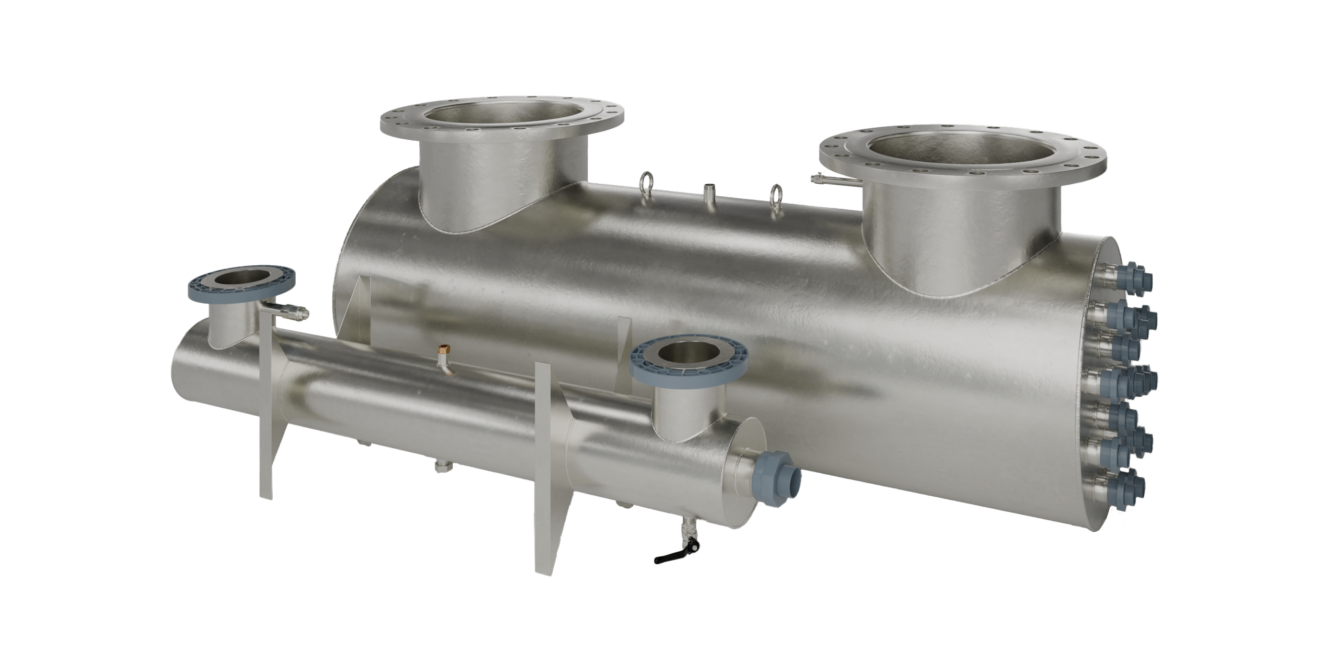
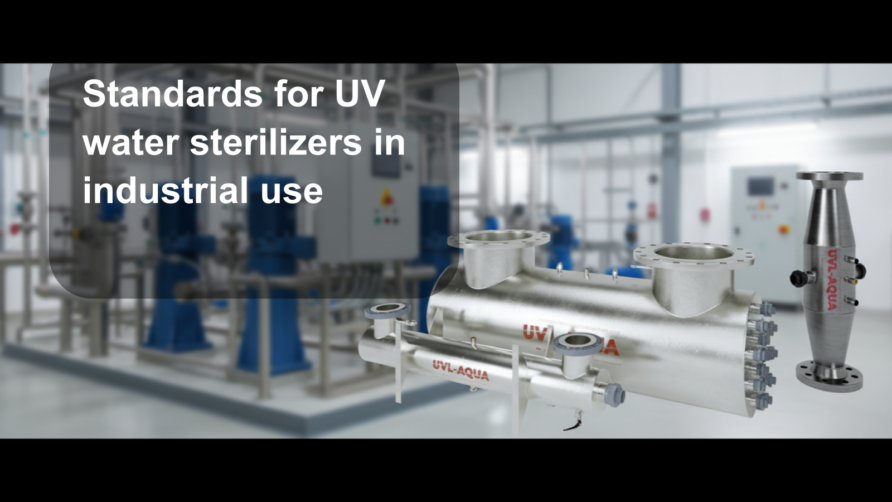
Multi-lamp UV pressure units in a stainless steel housing are used for water treatment. They can be made of AISI 316 or AISI 304 steel, with any performance parameters suitable for your system.
Case study: design error in a flow-through UV sterilizer at a food production facility
Initial conditions: A flow-through UV system rated for 50 m³/h was installed for water disinfection. Post-commissioning, microbial counts remained above required levels.
Symptoms:
- Elevated bacterial colonies after installation.
- Pressure fluctuations in the water supply system.
- Increased energy consumption.
- Frequent lamp replacements due to overheating.
- Process instability reported by technologists.
Cause: The UV dose was miscalculated, ignoring water turbidity and actual flow rate. The chamber had an unpolished interior surface, reducing UV intensity. Lack of monitoring prevented early detection of lamp power decline.
What to check:
- Turbidity and transparency of source water.
- Actual flow rate through the chamber.
- UV intensity via sensors.
- Chamber interior condition.
- Lamp operating parameters: voltage, temperature.
- Chamber sealing and leaks.
- Presence of monitoring system and maintenance logs.
- Quality of installation and electrical connections.
Solution:
- Recalculate UV dose accounting for water parameters.
- Replace chamber with polished stainless steel version.
- Install automated lamp power monitoring.
- Adjust flow rate per updated calculations.
- Train personnel on maintenance and monitoring.
- Establish cleaning and inspection protocols.
Implementation:
- Retest water parameters.
- Remove old chamber and install new one.
- Integrate monitoring into control room.
- Configure alarms and response procedures.
- Conduct commissioning tests.
- Document and approve system for operation.
Outcome: After modifications, microbial load met standards, pressure stabilized, energy consumption dropped by 15%, and monitoring enabled prompt maintenance interventions.
Common mistakes in selecting and operating UV water systems
Industrial practice reveals frequent errors reducing UV disinfection effectiveness, including:
- Underestimating water turbidity and omitting pre-filtration, which blocks UV penetration.
- Incorrect sizing of lamp power and quantity.
- Ignoring material and chamber construction requirements.
- Lack of intensity and runtime monitoring systems.
- Failure to follow maintenance and cleaning schedules.
- Improper installation causing leaks and pressure drops.
- Absence of documentation and operation logs, complicating troubleshooting.
These errors lead to resource wastage, downtime, and non-compliance risks.
Pre-installation checklist for flow-through UV water sterilizers
- Assess raw water quality: turbidity, color, organic content.
- Provide filtration to reduce turbidity.
- Calculate UV dose with safety margin.
- Select chamber materials per standards.
- Confirm presence of monitoring and alarm systems.
- Design hydraulics considering pressure and flow velocity.
- Ensure maintenance access.
- Protect electrical supply and grounding.
- Train operational personnel.
- Maintain operation and maintenance logs.
- Verify equipment compliance with international and industry standards.
- Plan regular inspections and parameter measurements.
Frequently asked questions before UV system purchase and commissioning
How to determine the required UV sterilizer power?
Calculate based on water volume and characteristics like turbidity and organics, ensuring UV dose meets microbial reduction targets.
What if water turbidity is high?
Pre-filtration is essential, as turbidity reduces UV effectiveness by shielding microbes.
How to verify UV lamp operation onsite?
Use specialized UV sensors to measure intensity and monitor electrical parameters and quartz sleeve transparency.
Is regular lamp replacement necessary?
Yes, UV lamps typically last 9,000–12,000 hours. Timely replacement maintains stable disinfection.
How to avoid pressure drop in UV systems?
Design hydraulics considering chamber characteristics and flow velocity; use quality seals and fittings.
What documentation should accompany UV equipment?
Technical datasheets, conformity certificates, operation manuals, and maintenance logs.
Can UV systems operate without monitoring?
Monitoring is recommended to detect lamp power decline and prevent disinfection failure.
How often should maintenance be performed?
At least quarterly, including chamber cleaning and lamp inspection.
What are consequences of non-compliance with standards?
Reduced disinfection quality, increased microbial contamination, process disruptions, and audit penalties.
Summary
Technical standards and regulations for UV water sterilizers form the foundation for reliable and effective industrial water disinfection. The primary factor is accurate UV dose calculation considering water quality and operational conditions. This should be followed by thorough water parameter analysis, pilot testing, and system design compliant with material and monitoring requirements. Regular monitoring and maintenance ensure long-term process safety and performance.