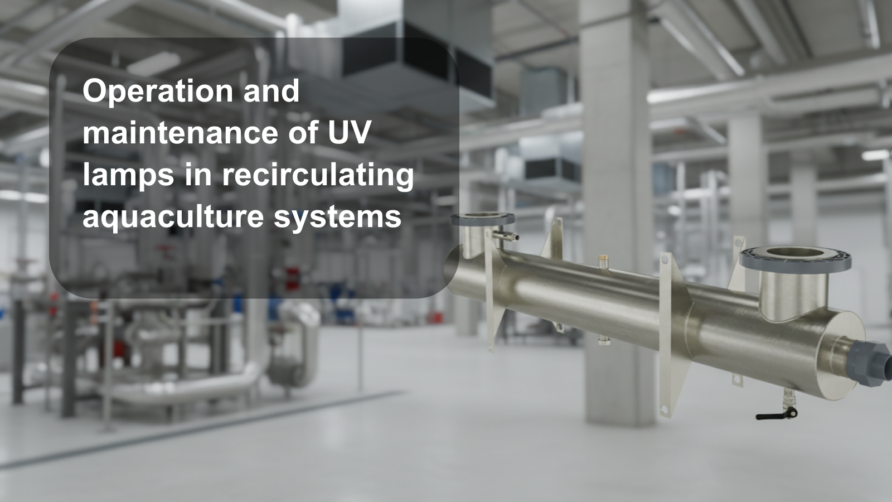
In recirculating aquaculture systems (RAS), ultraviolet (UV) water sterilizers play a crucial role in maintaining microbial control and preventing pathogen proliferation. Proper operation and timely maintenance of UV lamps ensure consistent water disinfection without chemical additives, which is essential for preserving biological balance and product quality. Improper use or delayed replacement of lamps leads to reduced germicidal output and increased contamination risks, manifesting as water quality degradation and process disruptions. This article details the selection, implementation, and monitoring of UV lamps in RAS, highlights common mistakes, and presents a practical case study from aquaculture production.
Who needs this information and when
- Operations engineers — to maintain uninterrupted UV sterilizer performance and prevent downtime.
- Aquaculture technologists — to control microbiological water quality within closed-loop systems.
- RAS system designers — during UV lamp selection and technical specification development.
- Maintenance specialists — for planning lamp cleaning and replacement schedules.
- Quality managers — to monitor disinfection effectiveness.
- Automation engineers — when integrating UV equipment into process control systems.
- Production managers — to minimize microbial-related risks and reduce chemical usage costs.
UV lamp physics and technology in RAS
UV lamps used in RAS emit germicidal ultraviolet radiation at approximately 254 nm wavelength, which disrupts microbial DNA and effectively disinfects water. Sterilization efficiency depends on UV intensity and exposure time. In continuous flow RAS sterilizers, it is critical to ensure uniform UV exposure across the entire water stream.
Over time, germicidal output decreases due to natural lamp aging and fouling of the quartz sleeve, which attenuates UV transmission. Additionally, power supply fluctuations, temperature variations, and water quality impact lamp performance. For example, a 10% drop in supply voltage can reduce germicidal efficiency by 15%, while quartz sleeve contamination further impairs disinfection.
To assess UV lamp condition onsite, the following checks are necessary:
- Measure germicidal irradiance using dedicated UV sensors.
- Verify lamp power supply voltage and electronic ballast parameters.
- Inspect quartz sleeve for fouling and damage.
- Visually evaluate lamp ignition stability.
- Compare lamp operating hours against replacement schedules.
Neglecting these inspections risks insufficient disinfection, leading to microbial load increases in the RAS, water quality decline, and process inefficiencies. Long-term consequences include higher treatment costs and reduced production reliability.
Regular monitoring of lamp parameters, scheduled quartz sleeve cleaning, and lamp replacement every 1.5–2 years are recommended. Maintaining an inventory of spare lamps and components is essential for rapid response to unexpected failures.
Operational considerations for UV lamps in RAS environments
In RAS, water circulates through pipelines and tanks, imposing continuous operational demands on UV equipment. UV lamps must operate continuously to maintain microbiological water quality and inhibit bacterial and viral growth. Lamp specifications and installation must accommodate environmental factors such as temperature, water transparency, and suspended solids content.
Uneven water flow distribution or quartz sleeve fouling reduces disinfection efficiency, often evidenced by increased biofilm formation and deteriorated sanitary metrics. Regular monitoring of flow pressure and velocity is vital to maintain optimal UV lamp performance conditions.
Key operational checks include:
- Assessing flow uniformity through the sterilizer.
- Measuring pressure before and after the unit.
- Inspecting seals and ensuring housing integrity.
- Monitoring ambient and water temperatures.
- Visual inspection of lamps and quartz sleeves.
Failure to address these factors can cause premature germicidal output decline and lamp failure, increasing microbial risks and compromising safety. Equipment downtime and repair costs may also rise.
Integrating parameter sensors into control systems with automated alerts for performance drops is advisable. Quartz sleeve cleaning should be routine, especially when treating water with suspended particles.
Case study: operational errors of UV lamps at an aquaculture facility
Initial situation
A RAS-based aquaculture facility experienced rising microbial contamination in tanks despite using UV sterilizers. After 12 months, water quality worsened and disease incidence increased.
Symptoms
- Elevated water turbidity.
- Reduced UV germicidal effectiveness.
- Frequent automation control faults.
- Increased unscheduled lamp replacements.
- Biofilm accumulation on tank walls.
Root causes
The primary issue was inadequate quartz sleeve maintenance, leading to mineral and biofilm deposits that blocked UV transmission. Additionally, unstable lamp power supply caused voltage fluctuations, reducing efficiency. Lack of routine cleaning and monitoring accelerated lamp degradation. Incorrect flow velocity settings resulted in insufficient UV exposure time.
Inspection checklist
- Quartz sleeve fouling and damage.
- Lamp power supply and ballast operation.
- Water flow rate and uniformity.
- Lamp operating hours compliance.
- Automation system functionality.
- Sterilizer pressure and seal integrity.
- Water and ambient temperature.
- Availability of spare lamps and parts.
Corrective actions
- Thorough cleaning and replacement of damaged quartz sleeves.
- Installation of voltage stabilizers for lamp power supply.
- Flow rate optimization to increase exposure time.
- Implementation of a maintenance schedule with planned lamp replacement.
- Staff training on monitoring and diagnostics.
- Deployment of additional germicidal irradiance sensors.
Implementation
- Incorporated mandatory cleaning and replacement procedures into operational protocols.
- Established spare parts inventory.
- Automated data collection on lamp parameters.
- Conducted post-implementation testing.
- Maintained feedback loops with production for prompt issue resolution.
- Ensured ongoing water quality monitoring.
Outcome control
Three months post-implementation, water quality improved, microbial loads decreased, and unplanned lamp replacements and control failures reduced. Automated monitoring enabled early detection of deviations and prevented equipment failures.
Common mistakes in UV lamp operation within RAS
Frequent errors include neglecting quartz sleeve cleaning, rapidly diminishing germicidal output. Failure to monitor power supply parameters—voltage fluctuations and unstable electronic ballasts—shortens lamp lifespan. Incorrect lamp power selection and insufficient exposure time reduce disinfection efficiency. Ignoring operating temperature ranges impairs ignition and UV output. Lack of spare parts causes repair delays and downtime. Insufficient parameter monitoring and absence of automated control increase the risk of unnoticed performance degradation.
Pre-implementation checklist for UV lamps in RAS
- Verify lamp power matches system volume and water clarity.
- Ensure stable, voltage-regulated power supply.
- Provide easy access for cleaning and lamp replacement.
- Select quartz sleeves resistant to fouling.
- Integrate germicidal irradiance sensors.
- Set optimal flow velocity for adequate exposure time.
- Maintain an inventory of spare lamps and components.
- Develop maintenance and replacement protocols.
- Train personnel in diagnostics and monitoring.
- Confirm housing seal integrity and protection.
- Consider ambient and water temperature ranges.
- Plan data automation and alarm systems.
Frequently asked questions before purchasing and integrating UV lamps
How often should UV lamps be replaced in RAS?
Replacement is recommended every 1.5–2 years, considering up to 30% germicidal output decline and quartz sleeve condition.
What if the water is highly turbid?
Effective mechanical filtration upstream of the UV sterilizer is required; otherwise, sleeve fouling will rapidly reduce efficiency.
Can lamps operate with voltage fluctuations?
Operation with voltage deviations exceeding ±10% is not recommended due to sharp efficiency loss and shortened lamp life.
How to verify UV lamp effectiveness onsite?
Use specialized UV irradiance sensors and conduct visual inspection of quartz sleeves and lamp ignition stability.
What if biofilms are detected in RAS?
Perform quartz sleeve cleaning, verify flow rates, and ensure timely lamp replacement.
Which environmental conditions affect lamp performance?
Temperatures below +10°C or above +40°C impair ignition and reduce germicidal output, necessitating operational adjustments.
Is automation of UV lamp monitoring necessary?
Yes, automation enables prompt detection of faults, reducing downtime and maintaining water quality.
How to ensure compatibility with existing systems?
Select lamps and equipment based on size, power, and mounting conditions, and plan integration with existing control units and automation.
Operation and maintenance of UV lamps in RAS are fundamental to ensuring sanitary safety and stable equipment performance. The key to success lies in regular germicidal output monitoring, maintaining quartz sleeve cleanliness, and timely lamp replacement. The next step involves data collection from pilot installations and developing maintenance protocols to minimize risks and optimize production.