What are the key challenges in integrating conveyor UV irradiators into existing production lines?
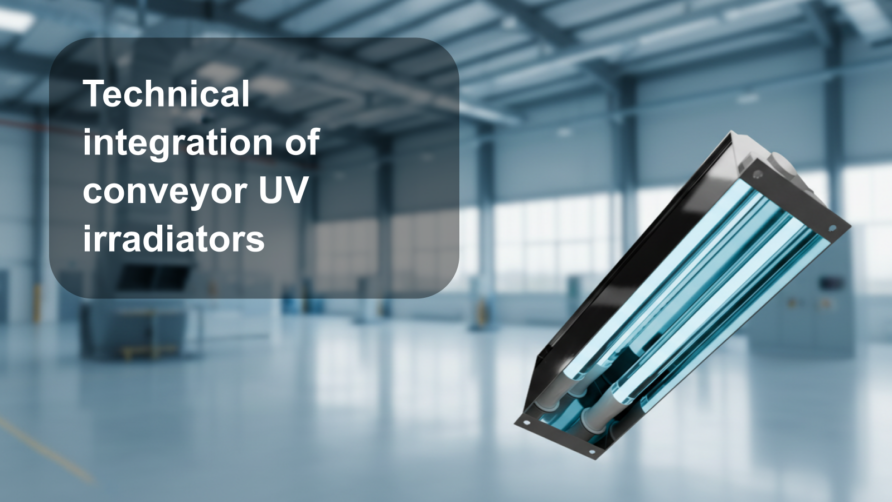
Integrating conveyor UV irradiators into operational production lines is a complex task that requires a thorough understanding of the manufacturing process. Engineers and technologists must not only select suitable equipment but also ensure its proper integration to achieve effective surface disinfection without reducing throughput or disrupting the production cycle. Incorrect selection or installation can lead to insufficient UV dose, reducing disinfection efficiency, or excessive exposure that damages product materials. Common issues include installing the irradiator too far from the conveyor surface, resulting in inadequate disinfection, or failing to synchronize the UV exposure with conveyor speed, causing uneven irradiation and product quality inconsistencies.
Who benefits from integrating conveyor UV irradiators and when is it necessary?
- Facilities with stringent hygiene requirements aiming to reduce microbial contamination on product surfaces.
- Engineers responsible for upgrading production lines seeking to implement UV solutions without halting operations.
- Food and pharmaceutical technologists transitioning from chemical disinfection methods.
- Automation project managers focusing on remote control and system monitoring.
- Quality assurance specialists needing documented compliance with sanitary standards.
- Maintenance engineers planning lamp replacements and servicing with minimal downtime.
- Producers with non-standard conveyor configurations requiring customized equipment adaptation.
What are the technical principles of conveyor UV irradiators?
Conveyor UV irradiators operate by directing UV radiation onto product surfaces as they move along the transport belt. The intensity of UV light decreases with distance, and the effective dose depends on lamp power and conveyor speed. Since UV radiation disinfects only exposed surfaces, correct irradiator positioning and elimination of shadow zones are critical. Validation involves measuring UV intensity at the conveyor surface using specialized radiometers, monitoring conveyor speed, and ensuring synchronization with irradiator operation to maintain a consistent dose. Protective screens must block UV radiation for personnel safety without causing reflective distortions that affect dosing.
What are the installation and connection requirements for conveyor UV irradiators?
Installation demands strict adherence to technical specifications, as both disinfection efficacy and personnel safety depend on it. UV radiation poses hazards to skin and eyes, so irradiators must be equipped with certified protective screens and installed in inaccessible locations. Prior to installation, equipment dimensions and available space must be verified, ensuring reliable mounting with adjustable brackets to fine-tune distance to the product surface. Stable power supply and control cabinets with surge protection and remote management capabilities are essential. Failure to observe these requirements can cause frequent lamp failures, premature equipment degradation, and safety risks, leading to production interruptions and regulatory non-compliance.
How is UV dose monitored and synchronized with conveyor operation?
Accurate UV dose control is crucial for effective disinfection. Dose depends on lamp power, exposure distance, and conveyor speed. Uniform irradiation requires each item to receive a specified dose. On-site control uses portable UV radiometers positioned across the irradiation zone to measure intensity profiles. Conveyor speed is measured and compared to target parameters. Lamp output diminishes over time, so equipment includes lamp hour counters and status indicators within control cabinets. Automated systems integrating conveyor speed and UV intensity data enable real-time adjustments and preventive maintenance. Remote monitoring through enterprise IT systems enhances process optimization and operational reliability.
Can you provide a practical example of common integration mistakes?
A production line for disposable hygiene products faced issues after UV irradiator installation: uneven disinfection, frequent equipment failures, packaging damage, increased microbial counts, and production delays. Root causes included incorrect dose calculation and lamp power selection, installation at excessive height reducing UV intensity, lack of synchronization with conveyor speed, absence of lamp usage monitoring, and missing personnel protection screens necessitating frequent safety checks. The corrective actions involved adjusting irradiator height per specifications, replacing worn lamps, synchronizing operation with conveyor speed, installing protective screens, implementing remote monitoring and lamp usage tracking, and training staff on safety protocols. Post-implementation, microbial contamination decreased, product defects declined, and production stabilized.
What are frequent errors during conveyor UV irradiator integration?
Common mistakes include underestimating conveyor speed impact on UV dose, incorrect irradiator-to-product distance resulting in reduced intensity, improper or missing protective screens posing safety hazards, neglecting lamp condition monitoring leading to unnoticed power loss, lack of integration with automation systems limiting control and diagnostics, and using unsuitable screen or housing materials causing reflection-induced dose inconsistencies.
What checklist should be followed before integrating conveyor UV irradiators?
- Verify production line parameters: speed, width, product type.
- Determine precise installation location ensuring safety compliance.
- Confirm irradiator power matches required UV dose.
- Ensure availability and certification of protective screens.
- Configure synchronization between irradiator and conveyor speed.
- Inspect power supply and control cabinet status.
- Implement lamp usage monitoring system.
- Conduct UV intensity measurements on-site.
- Train personnel on operation and safety procedures.
- Integrate equipment into plant automation systems.
- Develop maintenance and lamp replacement schedules.
- Prepare documentation for audits and quality control.
What questions are commonly asked before purchase and integration?
How to determine the required irradiator power?
Calculate based on conveyor speed, product dimensions, and target UV dose, referencing manufacturer data and on-site measurements.
Is it possible to install without stopping the line?
Yes, with careful planning and adjustable mounting, minimal downtime can be achieved.
How to monitor disinfection effectiveness?
Use UV radiometers for dose measurement and monitor microbial contamination via production control protocols.
What to do with worn-out lamps?
Replace lamps regularly according to usage hours to maintain output, incorporating this into maintenance schedules.
Which screen materials are recommended?
Certified polymers or metals that block UV radiation without causing reflections ensure safety and dose stability.
How to protect personnel?
Employ protective screens, enable remote operation, and implement automatic shutdowns when access zones are opened.
Can irradiators be integrated into automation systems?
Modern control cabinets support data transmission and remote management, facilitating integration into enterprise IT infrastructure.
How do temperature and humidity affect irradiator operation?
High humidity and temperature may reduce lamp lifespan and impact electronics; equipment must be adapted to operating conditions.
What documentation is needed for audits?
Technical equipment passports, UV dose measurement protocols, maintenance procedures, and microbiological safety reports.
Summary
Integrating conveyor UV irradiators requires a comprehensive approach involving precise dose calculations, correct installation, and continuous monitoring. The key to success is maintaining a stable UV dose aligned with line parameters while ensuring personnel safety. Initial data collection, pilot measurements, and development of integration protocols are essential steps to guarantee effective and reliable system performance.