Who needs this and when
- Pool design engineers — to correctly integrate UV sterilizers into water treatment systems.
- Operations technologists — to monitor disinfection efficiency and perform timely maintenance.
- Water treatment specialists — when selecting and configuring UV equipment for pool water disinfection.
- Facility managers — to understand disinfection quality requirements and reduce operational risks.
- Installation contractors — to avoid errors during sterilizer integration and piping connections.
- Equipment manufacturers — to develop solutions that meet real-world operating conditions.
- Service engineers — for effective maintenance and diagnostics of UV sterilizers.
Ultraviolet water disinfection technology in pools: how it works and why it matters
UV sterilizers disinfect pool water by damaging the DNA and RNA of microorganisms, preventing their reproduction. The critical parameter is the UV dose, measured in mJ/cm², which must be sufficient to inactivate pathogenic microbes. Recommended doses for pools typically range between 40 and 200 mJ/cm², depending on microbial load and safety standards.
A key technological factor is the uniform distribution of UV radiation within the reactor. Excessive turbulence or flow rates above design values can cause portions of water to receive insufficient UV exposure. This reduces disinfection effectiveness, often leading to increased microbial contamination and greater reliance on chemical disinfectants.
Effectiveness can be verified using specialized UV sensors that measure radiation intensity inside the reactor, combined with monitoring flow rate and pressure. Regular microbiological testing of pool water is also essential.
Ignoring dose and flow requirements results in inadequate disinfection, bacterial growth, more frequent filter backwashes, and chemical adjustments. In extreme cases, this may cause regulatory non-compliance.
Selecting a UV sterilizer should consider actual circulation parameters and water characteristics. For reliability, systems should include automatic flow monitoring and emergency lamp shutdown if circulation stops.
Key technical parameters of pool UV sterilizers: what to consider
Main technical factors influencing UV sterilizer selection for pools include lamp power, lamp type (low-pressure or medium-pressure), reactor dimensions, housing material, and maximum operating pressure.
Lamp power directly affects UV dose. Medium-pressure lamps rated 2–2.5 kW can deliver up to 200 mJ/cm², suitable for high-load commercial pools. Low-pressure lamps are appropriate for small or residential pools but often fail to provide adequate disinfection in larger facilities.
Housing material impacts durability. Stainless steel AISI-316 is corrosion-resistant, critical when coagulants or chlorine-based chemicals are used. Quartz sleeves must be clean and intact to ensure stable UV transmission.
On-site technical checks should include:
- Measuring water flow at sterilizer inlet and outlet.
- Verifying system pressure does not exceed manufacturer limits.
- Assessing UV radiation levels with a dosimeter.
- Inspecting quartz sleeve and housing condition.
- Testing automation and flow sensor operation.
Neglecting these parameters can cause frequent failures, reduced sterilization efficiency, and increased repair costs. Excessive pressure risks housing leaks and electrical component damage.
Equipment should be specified with safety margins for power and pressure, alongside scheduled maintenance and lamp replacement.
Installation and commissioning considerations for pool UV sterilizers
Proper installation is essential for effective UV water disinfection. The sterilizer must be integrated into the circulation loop to ensure uniform water flow through the reactor and prevent air pockets.
Piping connections require tight sealing and correct integration with control systems. Flow sensors must be installed to shut off lamps if circulation ceases, preventing overheating and equipment damage. Protection against cavitation and vibration is important to avoid quartz sleeve damage.
Installers should verify:
- Compatibility of pipe and fitting diameters.
- Tightness of all joints.
- Functionality of flow sensors and automation.
- Absence of air pockets inside the sterilizer housing.
- Electrical safety and correct control panel connection.
Improper installation may cause leaks, diminished UV disinfection effectiveness, and accelerated lamp wear. Incorrect lamp positioning can create uneven irradiation and “dead zones.”
Engaging qualified personnel, strictly following technical guidelines, and performing comprehensive commissioning tests are recommended.
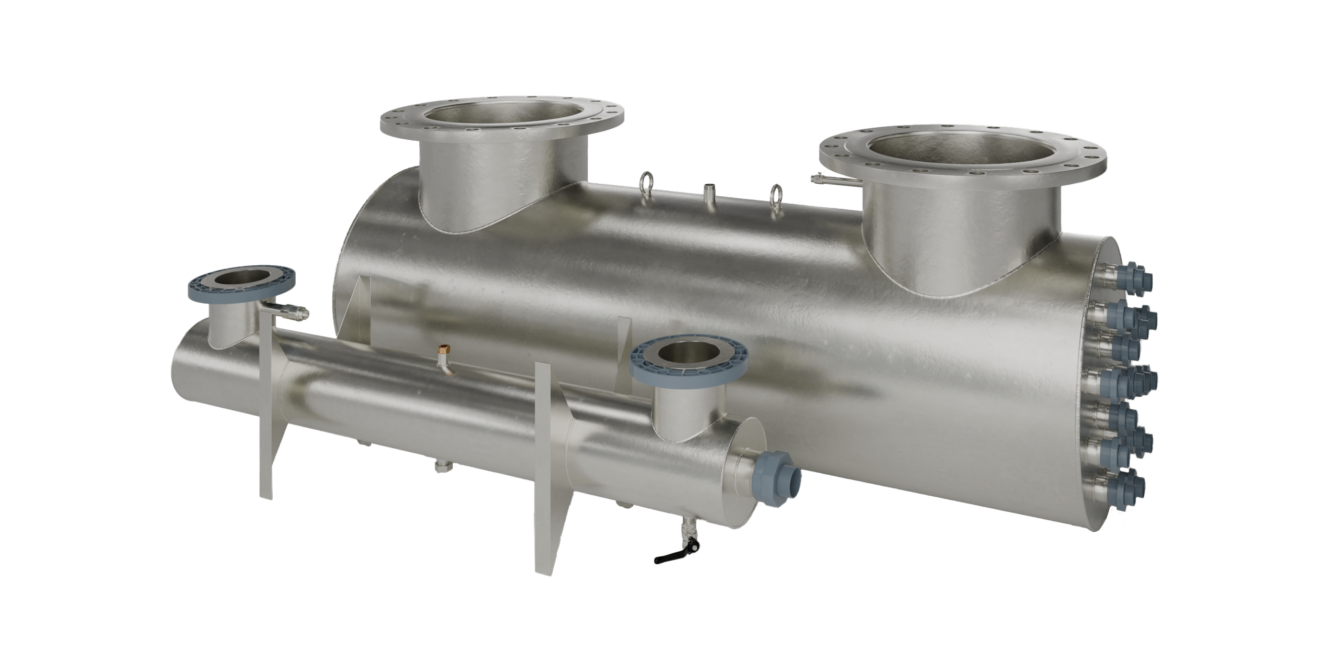
Multi-lamp UV pressure units in a stainless steel housing are used for water treatment. They can be made of AISI 316 or AISI 304 steel, with any performance parameters suitable for your system.
Case study: lamp replacement in a dolphinarium pool UV sterilizer — analysis of errors
Initial conditions:
A dolphinarium with an open pool used a medium-pressure UV system for water disinfection. Original lamps became unavailable, and substitute lamps with incorrect dimensions and specifications were installed.
Symptoms:
- Lamp size mismatch with sockets.
- Equipment startup failures.
- Rapid lamp burnout (<1000 hours).
- Increased microbial contamination.
- Higher chemical consumption.
Causes:
Incorrect lamp length and diameter caused mechanical installation issues and disrupted system operation. Radiation parameters did not meet requirements, reducing disinfection efficiency. Rapid lamp failure resulted from improper operation and overheating.
Verification checklist:
- Lamp dimensions and base type.
- Lamp power and operating mode.
- Socket and seal condition.
- Reactor temperature and pressure.
- Presence of automatic protection and flow control.
- Compliance with technical documentation.
- UV radiation level post-installation.
- Service life and replacement schedule.
Solution:
- Develop a prototype lamp matching precise dimensions.
- Verify compatibility with control and protection systems.
- Use ozone-free radiation mode suitable for aquatic animals.
- Implement scheduled lamp replacement and maintenance plans.
Implementation:
- Conduct on-site lamp testing with parameter monitoring.
- Train staff on correct lamp operation and replacement.
- Introduce UV dose and equipment condition monitoring.
- Maintain spare parts inventory for quick replacement.
- Document control and maintenance results regularly.
Outcome:
Following implementation, water microbiological parameters stabilized, chemical use decreased, and equipment operated reliably throughout the season.
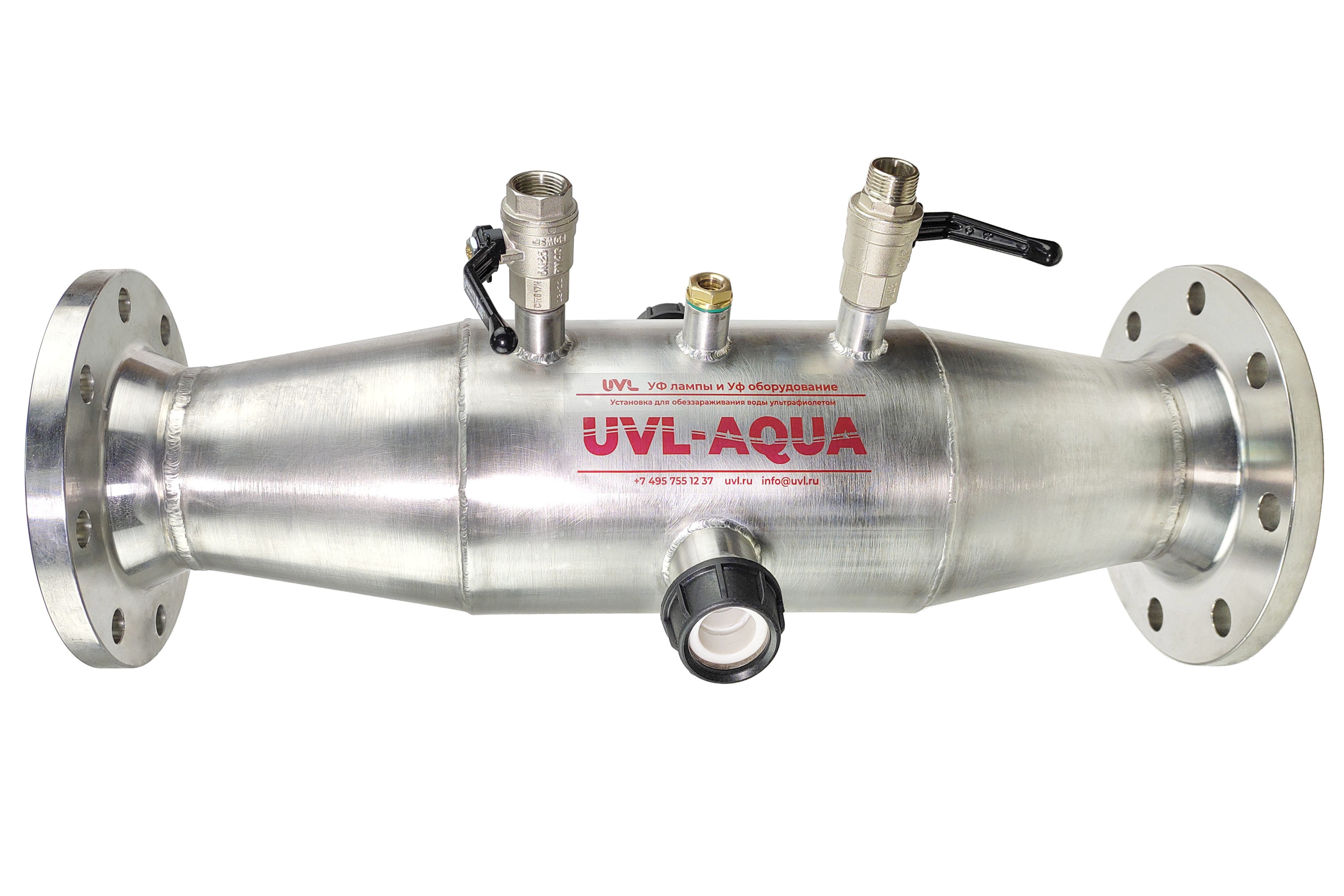
Medium pressure UV units in a stainless steel housing, used in areas where water treatment with ultraviolet radiation in the range of 200 to 400 nm is required. Designed for larger swimming pools. Ultraviolet light helps to neutralize trichloramines (derivatives of chlorine), which significantly improves the quality of pool water.
Common mistakes in selection and operation of pool UV sterilizers
A frequent error is undersizing lamp power relative to actual water flow, resulting in insufficient UV dose and poor disinfection quality. Ignoring sealing and proper installation often causes leaks and equipment failures.
Lack of flow monitoring and automatic lamp shutdown upon circulation stop leads to lamp damage and reduced lifespan. Using incompatible lamp sizes or types causes operational and compatibility issues.
Neglecting lamp replacement schedules and quartz sleeve cleaning reduces UV intensity and disinfection efficiency. Underestimating housing material durability and chemical environment aggressiveness leads to corrosion and equipment failure.
Finally, failure to regularly measure UV dose and conduct microbiological water testing limits early detection and resolution of problems.
Pre-implementation checklist for pool UV sterilizer integration
- Verify water parameters: flow rate, pressure, chemical composition.
- Ensure pipe diameter compatibility with the reactor.
- Select lamp type and power according to facility needs.
- Assess housing material corrosion resistance.
- Install flow sensors and automatic shutdown systems.
- Eliminate air pockets during installation.
- Test joint tightness.
- Configure automation and overheating protection.
- Train personnel for operation and maintenance.
- Organize regular UV dose and microbiological monitoring.
- Establish lamp replacement and reactor cleaning schedules.
- Document installation and commissioning steps.
Frequently asked questions before purchasing and installing pool UV sterilizers
What lamp power is needed for my pool?
Power selection depends on water volume and circulation speed. Commercial pools typically require medium-pressure lamps rated 2–2.5 kW to deliver up to 200 mJ/cm² UV dose.
How to verify disinfection effectiveness?
Use UV sensors to measure radiation intensity and conduct regular microbiological water analyses. Flow rate and pressure must be monitored.
Can low-pressure lamps be used?
Suitable for small pools, but medium-pressure lamps are preferred for larger, high-use facilities due to higher power and stability.
How often should UV lamps be replaced?
Lamp life usually ranges from 9,000 to 12,000 hours. Replacement should follow manufacturer guidelines to maintain required UV dose.
What if water circulation stops?
Automation must shut off lamps immediately to prevent overheating and damage.
Can a UV sterilizer be installed without modifying the existing system?
Often system adaptation is required for proper flow, pressure, and air pocket elimination.
How does water chemical composition affect UV equipment?
High salt and chemical content accelerate housing corrosion and quartz sleeve fouling, reducing disinfection efficiency.
Is ozone protection necessary?
For pools with live animals, ozone-free lamps are recommended to avoid adverse effects.
Conclusion
Selecting a UV sterilizer for pools demands a comprehensive approach considering technical parameters, operating conditions, and circulation system specifics. The primary criterion is delivering an adequate UV dose with stable equipment operation. Careful verification of lamp compatibility, installation quality, and flow control systems is essential. Prior to implementation, collecting water parameters, conducting pilot tests, and developing maintenance protocols are crucial. This ensures reliable UV disinfection and minimizes operational risks.