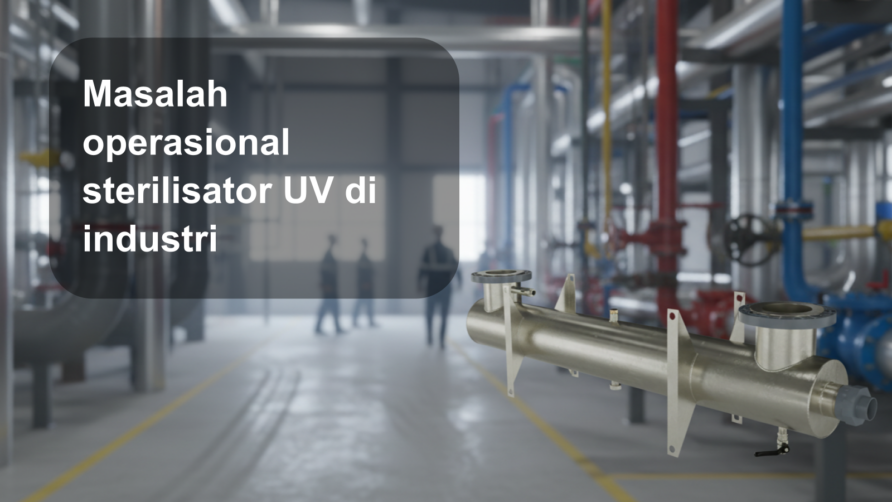
In modern industrial settings, ultraviolet (UV) water sterilizers are essential components for ensuring microbiological safety and maintaining stable technological processes, especially in aquaculture systems. Despite proper equipment selection and installation, operators often face reduced disinfection efficiency, directly impacting product quality and operational safety. It is crucial for engineers and technologists to understand common operational issues with UV sterilizers, their causes, and methods for timely detection and resolution. This article examines frequent challenges encountered when using UV lamps in aquaculture water treatment (AWT) and provides practical guidance for system monitoring and maintenance. For example, frequent fouling of quartz sleeves and declining UV intensity reduce water disinfection efficacy, while incorrect power sizing compromises sterilization performance under continuous flow conditions.
Who needs to consider these aspects and when
- System operators — to maintain consistent microbiological water quality.
- Aquaculture and food production technologists — to prevent pathogen introduction and circulation.
- Water treatment system designers — to ensure proper UV equipment selection and integration.
- Service engineers — for timely diagnostics and preventive maintenance.
- Production managers focusing on automation — to optimize disinfection workflows.
- Sanitary control specialists — to ensure regulatory compliance.
- Procurement teams — to maintain adequate stock of lamps and spare parts.
Key technological and operational challenges in practice
Quartz sleeve fouling and its impact on disinfection effectiveness
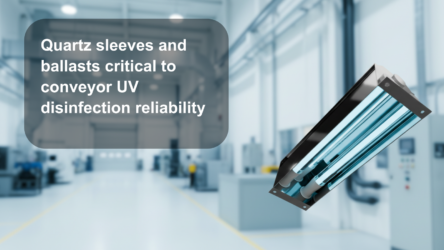
The quartz sleeve protecting the UV lamp from direct water contact is critical for UV transmission. Accumulation of deposits, biofilms, or mineral scaling diminishes quartz transmittance, reducing UV irradiance reaching the water flow. This leads to lower disinfection performance and potential microbial growth within the system.
On-site inspection involves visual examination using a flashlight and measuring UV intensity with lux meters or dosimeters. Monitoring water pressure and flow rates can indirectly indicate fouling, as increased hydraulic resistance suggests deposit build-up. When feasible, chemical cleaning of quartz sleeves according to manufacturer guidelines is recommended.
Neglecting timely cleaning causes UV intensity to fall below design specifications, reducing disinfection and increasing pathogen risks, filter load, and unplanned downtime for emergency cleaning.
Industrial environments should implement scheduled quartz sleeve cleaning at least biannually. Installing automatic UV intensity monitoring and alert systems further enhances operational reliability. Cleaning methods should combine mechanical and chemical techniques compatible with quartz materials.
UV lamp degradation and lifespan considerations
UV lamps have a finite service life; their irradiance declines even if visual inspection shows no defects. This is due to degradation of mercury vapor and electrodes inside the lamp, lowering water disinfection effectiveness.
Effectiveness can be assessed using UV sensors within the sterilizer housing or by measuring UV dose. Maintaining records of lamp operational hours against recommended replacement intervals (typically 9,000–12,000 hours) is essential. Automated shutdowns or alerts for low lamp output reduce risks associated with aged lamps.
Delayed lamp replacement compromises disinfection levels, risking sanitary non-compliance and reduced system performance. It also leads to higher recovery costs and potential production stoppages.
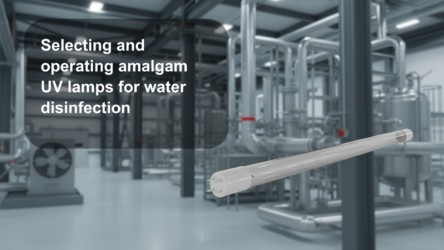
Lamp replacement scheduling should rely on operational hour tracking and UV intensity monitoring. Stocking spare lamps minimizes downtime. Amalgam lamps offer improved stability and longer life, especially under variable temperature conditions.
Installation errors and incorrect UV power sizing
Disinfection efficacy depends on correct UV power selection and proper sterilizer installation. Undersized equipment or improper lamp placement results in insufficient UV dose to the water flow. Excessive flow velocity shortens water exposure time to UV radiation, diminishing effectiveness.
Installation must comply with hydraulic resistance requirements and ensure uniform flow distribution through the disinfection chamber. Verification includes measuring flow and pressure before and after installation and visual inspection for integrity and correct connections. Improper piping and lack of check valves can cause recirculation of contaminated water.
Ignoring these factors leads to non-compliance with disinfection standards, increased infection risk, higher operational costs for additional treatment and repairs, and possible premature equipment failure due to hydraulic shocks or vibrations.
Reliable operation requires careful hydraulic design considering flow rates and characteristics, maintaining recommended water velocities, and regular monitoring of hydraulic parameters and piping condition. Protection against external contamination and scalability provisions are also important.
Case study: Reduced UV sterilization efficiency in an aquaculture facility
Initial conditions:
Aquaculture production with closed water recirculation, UV sterilizers equipped with UV lamps sized for up to 400 m³/h flow with cyclic water circulation.
Symptoms:
- Unpredictable increases in microbial load.
- Frequent sanitary standard deviations.
- Rapid quartz sleeve fouling.
- Elevated power consumption.
- Uneven water flow and pressure drops.
- Decreased UV irradiance.
Root causes:
Biofilm and mineral deposits accumulated on quartz sleeves due to infrequent cleaning and lack of automated UV intensity monitoring. Initial sterilizer power was insufficient for circulation volume, and flow velocity exceeded recommendations. Installation overlooked hydraulic factors, causing contaminated water recirculation and uneven flow distribution.
Checks to perform:
- Quartz sleeve condition via visual and UV sensor inspection.
- Lamp operational hours and spare lamp availability.
- Water flow and pressure at equipment inlet and outlet.
- Installation accuracy and joint tightness.
- Presence of automatic UV intensity monitoring systems.
- Flow velocity within the sterilization chamber.
- Check valves and backflow prevention measures.
- Cleaning frequency and quality.
Implemented solutions:
- Mechanical and chemical cleaning of quartz sleeves.
- Replacement of aged lamps considering operational time.
- Hydraulic redesign to reduce flow velocity.
- Installation of UV intensity sensors with alarms.
- Establishment of a maintenance schedule for cleaning and lamp replacement.
- Maintaining inventory of spare lamps and parts.
Deployment:
- Staff training on UV equipment maintenance.
- Implementation of sterilizer performance monitoring.
- Development of lamp replacement and sleeve cleaning protocols.
- Configuration of automatic power drop alerts.
- Hydraulic optimization and backflow protection.
- Scheduling regular equipment audits.
Outcome control:
Post-implementation, UV disinfection intensity stabilized, microbial water quality met standards, power consumption decreased, and unplanned downtime was reduced. Continuous monitoring enabled early detection and correction of deviations, increasing process reliability and safety.
Common operational mistakes with UV sterilizers
Frequent undercleaning of quartz sleeves reduces UV output. Poor tracking of lamp operating time leads to premature degradation. Installation errors—such as improper flow rates, missing check valves, or poor sealing—cause contaminated water recirculation. Inadequate flow and pressure control result in uneven disinfection. Absence of automated monitoring impairs rapid response to faults. Insufficient spare parts inventory extends repair downtime. Lastly, inadequate personnel training leads to maintenance and diagnostic errors.
A comprehensive, production-tailored approach to system deployment and operation minimizes these risks.
Pre-installation checklist for industrial UV sterilizers
- Verify equipment power matches water volume and flow rates.
- Ensure availability of spare UV lamps and parts in inventory.
- Confirm compatibility with existing piping and filtration systems.
- Provide access for regular quartz sleeve cleaning.
- Implement automatic UV intensity monitoring systems.
- Install check valves and prevent contaminated water recirculation.
- Design hydraulics for minimal pressure loss and uniform flow.
- Organize operator training on maintenance and diagnostics.
- Develop lamp replacement and cleaning schedules.
- Verify power supply stability and moisture protection.
- Consider scalability options for future capacity increases.
- Plan periodic audits and preventive maintenance.
Frequently asked questions before procurement and integration
How to determine the required UV sterilizer power for my production?
Calculate based on water volume, flow velocity, and required UV dose for disinfection. Consider peak loads and water quality variations.
What is the optimal UV lamp replacement interval?
Typically after 9,000–12,000 hours. Monitoring UV intensity and lamp condition helps adjust replacement timing to maintain disinfection efficacy.
How often should quartz sleeves be cleaned?
At least every six months in industrial conditions. Frequency depends on water quality and deposit formation rate.
Can amalgam lamps replace standard UV lamps?
Yes, amalgam lamps offer more stable output and longer lifespan, especially in variable temperature environments, enhancing system reliability.
What are common installation errors reducing effectiveness?
Incorrect flow velocity, missing check valves, poor sealing, and neglecting hydraulic parameters lead to reduced UV dose and risk of contaminated water recirculation.
How to monitor disinfection effectiveness on-site?
Use UV sensors to measure irradiance, monitor flow and pressure, and perform periodic microbiological water testing.
What to do if UV intensity decreases?
Inspect quartz sleeves and lamps, perform cleaning or replacement, then verify hydraulic parameters and monitoring system operation.
Can UV equipment be integrated into existing systems?
Yes, modern UV sterilizers are designed for compatibility with various modules and piping, with flexible scalability.
What automation measures are recommended?
Install UV intensity sensors, power drop alarms, automated lamp hour tracking, and integrate with plant-wide management systems.
Conclusion
Operating UV sterilizers in industrial aquaculture requires meticulous attention—from selecting appropriate power and installation to routine maintenance and monitoring of UV lamps and quartz sleeves. The key criterion is maintaining stable UV irradiance and hydraulic parameters to ensure effective water disinfection. Successful implementation demands collecting baseline flow and water quality data, conducting pilot tests, and establishing maintenance protocols. This systematic approach minimizes risks and ensures long-term reliability of UV equipment.