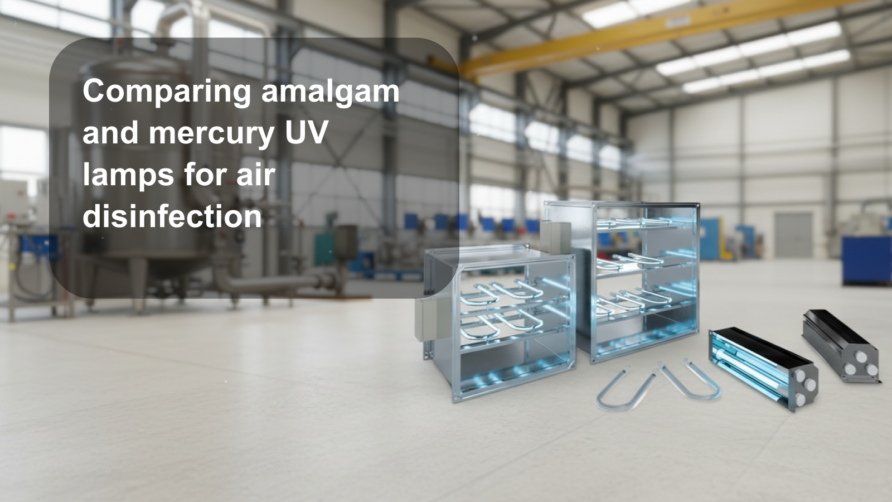
In modern industrial air disinfection systems, ultraviolet (UV) irradiators play a critical role in reducing microbial contamination within production and technological environments. The choice between amalgam and mercury germicidal UV lamps affects not only disinfection efficacy but also operational characteristics of the equipment. Engineers and process specialists must understand the physical and technical distinctions of each lamp type to avoid design and maintenance errors. This article examines how differences in construction and operation impact lamp performance, lifespan, and operational safety. In practice, these factors influence bactericidal output under temperature and voltage fluctuations, as well as maintenance requirements. Incorrect lamp selection can lead to reduced disinfection efficiency or premature equipment failure.
Who needs this information and when
- Ventilation engineers – for selecting UV lamps suited to specific operating conditions.
- Production technologists – to ensure compliance with microbial cleanliness standards.
- UV equipment maintenance personnel – for planning scheduled servicing and lamp replacement.
- Air purification system designers – to consider temperature and airflow effects on disinfection.
- Facility managers with stringent sanitation requirements – to assess operational risks.
- Safety engineers – to ensure compliance when working with mercury-containing lamps.
- Procurement managers – for choosing cost-effective equipment with optimal service life.
Physical principles of amalgam and mercury UV lamps and their impact on air irradiator performance
Amalgam and mercury germicidal UV lamps are low-pressure types emitting primarily at 254 nm wavelength, effective for air disinfection. The main difference lies in construction and working substance composition. Mercury lamps contain metallic mercury in vapor form, while amalgam lamps use a mercury alloy (typically indium-tin amalgam) that stabilizes mercury vapor pressure inside the bulb.
This technical distinction affects operational parameters: amalgam lamps demonstrate greater resistance to temperature fluctuations and supply voltage variations. Below approximately 10 °C, amalgam lamps maintain bactericidal output more effectively, whereas standard mercury lamps experience reduced efficiency due to ignition difficulties and increased electrode sputtering. Additionally, amalgam lamps exhibit less power degradation over their service life, contributing to more stable disinfection performance.
On-site lamp condition verification requires measuring UV intensity at 254 nm using specialized radiometers or spectrometers. Monitoring supply voltage and air temperature in the irradiated zone is essential, as deviations beyond ±10% from nominal values can reduce bactericidal output by 15% or more. Tracking cumulative lamp operating hours against rated service life is also critical.
Neglecting these factors risks significant loss in UV air recirculator effectiveness, resulting in elevated microbial contamination that can compromise technological processes and safety. Premature lamp failure also increases maintenance costs and downtime.
Amalgam lamps are recommended in environments with unstable temperature and voltage conditions, alongside implementation of operational parameter monitoring. Regular bactericidal flux measurements and logging lamp operating time enhance reliability.
Impact of temperature and airflow velocity on UV air irradiator operation
UV air irradiators function under conditions where ambient temperature and airflow velocity significantly influence bactericidal radiation intensity. At temperatures below +10 °C, mercury lamps struggle to ignite and stabilize mercury vapor pressure, reducing their efficacy. Amalgam lamps are more stable due to the amalgam’s ability to maintain consistent vapor pressure despite moderate temperature changes.
Airflow velocity through the irradiator is equally critical. Excessively high velocity shortens UV exposure time for microorganisms, decreasing disinfection levels. Conversely, too low velocity may cause lamp overheating and performance deterioration. Manufacturers specify an optimal velocity range in equipment documentation to achieve the required bactericidal dose D90—the minimal dose for 90% microbial inactivation.
Field verification involves measuring air temperature in the irradiation zone and airflow velocity using anemometers. These parameters must be compared against lamp and equipment specifications. Deviations require adjustments to ventilation settings or selection of alternative lamp types.
Ignoring temperature and aerodynamic conditions leads to reduced UV irradiator effectiveness, increased microbial load, and potential non-compliance with sanitation standards. It also negatively impacts lamp lifespan and operational stability.
Engineers should ensure maintenance of proper temperature and airflow conditions within the UV irradiation zone. Automated monitoring systems facilitate early detection of deviations and minimize operational risks.
Comparative analysis of service life and bactericidal flux stability
Service life and stability of bactericidal output are key factors influencing the choice between amalgam and mercury lamps for air irradiators. Mercury lamps typically exhibit gradual intensity decline—up to 30% reduction over their lifespan—due to mercury sputtering on bulb walls and electrode wear. Amalgam lamps provide a more stable bactericidal flux throughout their rated service life by maintaining consistent mercury vapor pressure, reducing the frequency of replacements.
On-site stability assessment involves recording UV intensity and comparing it with normative values. It is important to log lamp operating hours and switching cycles, as frequent on/off cycles accelerate degradation, particularly in mercury lamps.
Failure to consider these aspects may result in lamps operating beyond their nominal life with diminished bactericidal effect, adversely affecting air sanitary conditions. This is especially critical for UV air recirculators where flux stability directly influences disinfection quality.
Lamp replacement planning should be based not only on operating time but also on measured bactericidal flux. Using amalgam lamps reduces replacement frequency and increases system reliability.
Case study: reduced disinfection efficiency due to improper lamp selection
Initial conditions:
A production facility installed a UV air recirculator equipped with mercury lamps. Ambient temperature varied between +5 and +25 °C; airflow velocity was uncontrolled. After three months, disinfection quality deteriorated.
Symptoms:
- Elevated microbial contamination in air.
- Frequent lamp fault shutdowns.
- Decreased UV intensity output.
- Failure to meet microbiological cleanliness standards.
- Increased maintenance costs.
Root cause:
Use of mercury lamps at temperatures below +10 °C caused ignition difficulties, reduced bactericidal flux, and accelerated electrode wear. Lack of airflow control prevented maintaining optimal lamp operating conditions. Frequent lamp cycling further accelerated degradation.
Recommended checks:
- Temperature regime at UV irradiator installation site.
- Airflow velocity through the recirculator.
- UV intensity output measurements.
- Lamp operating time and switching cycle counts.
- Integrity and condition of mercury lamps.
- Power supply voltage and stability.
- Compliance of lamp specifications with operating conditions.
- Maintenance log records.
Corrective actions:
- Replace mercury lamps with temperature-stable amalgam lamps.
- Adjust ventilation to maintain recommended airflow velocity.
- Implement regular UV intensity monitoring.
- Install temperature and voltage monitoring systems.
- Train personnel on correct operation and maintenance.
- Maintain detailed equipment operation logs.
Implementation steps:
- Remove mercury lamps and install amalgam lamps.
- Optimize ventilation system settings.
- Deploy measurement instruments for operational parameters.
- Develop maintenance and monitoring protocols.
- Conduct staff training.
- Establish reporting and performance analysis procedures.
Outcome control:
One month post-implementation, microbial load and UV intensity were remeasured. Results met standards with stable equipment operation and no fault shutdowns, confirming the effectiveness of corrective measures.
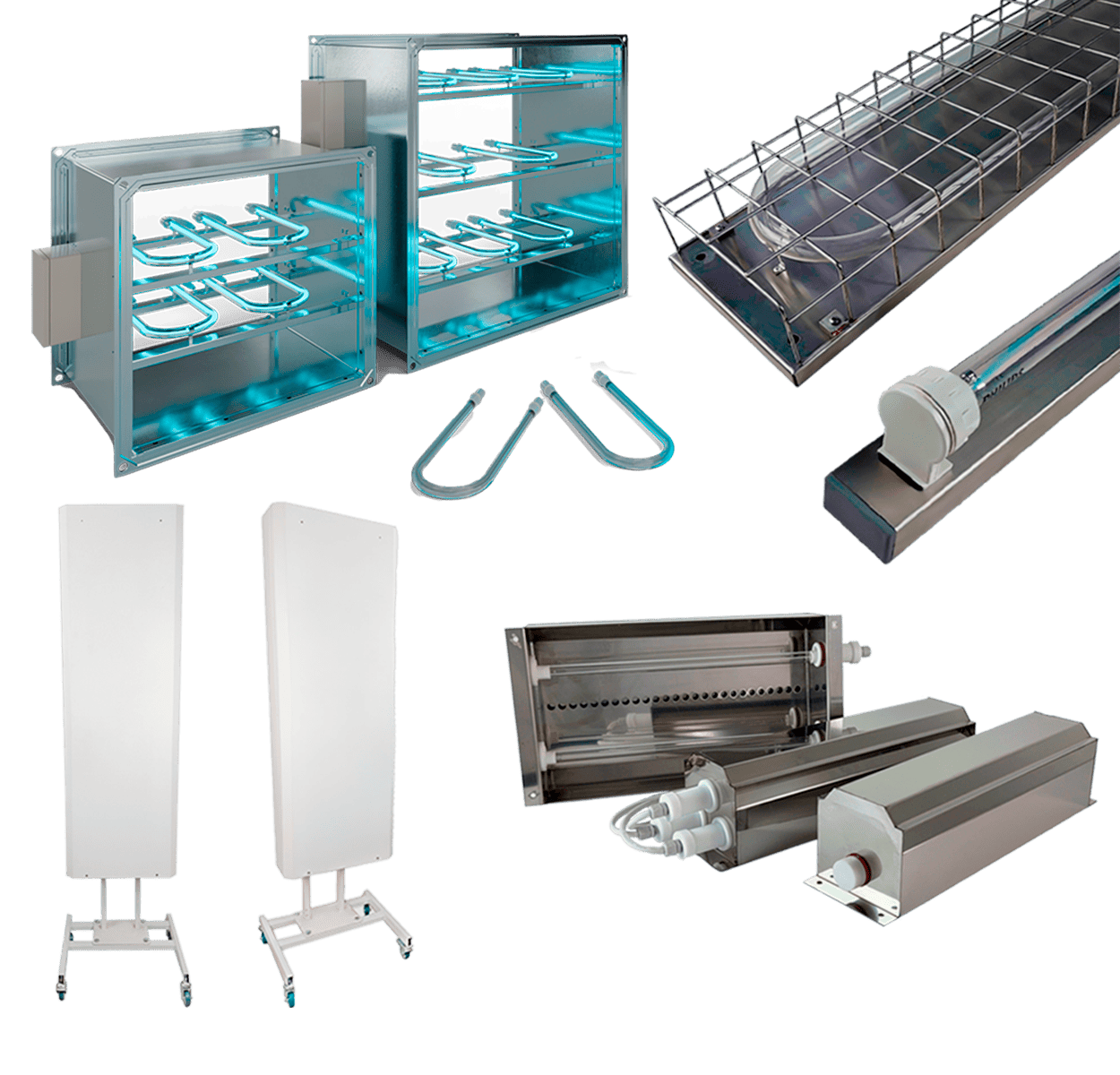
UV disinfection systems for air and surfaces
Common errors in selection and operation of germicidal UV lamps
Practitioners frequently encounter errors that reduce disinfection efficiency: installing mercury lamps in low-temperature environments without adaptation; neglecting airflow velocity control; ignoring supply voltage fluctuations affecting bactericidal output; replacing lamps solely based on operating time without intensity measurements; overlooking switching cycle frequency; improper storage and handling causing lamp damage; insufficient integrity checks increasing mercury contamination risk.
Each error leads to decreased bactericidal performance and higher maintenance costs. A systematic approach to lamp selection, installation, and operational monitoring is essential to avoid these pitfalls.
Pre-implementation checklist for UV irradiators with amalgam or mercury lamps
- Verify lamp type suitability for site temperature conditions.
- Ensure optimal airflow velocity range for the system.
- Check power supply stability (voltage, frequency).
- Assess installation conditions and maintenance accessibility.
- Confirm lamp service life and replacement schedule per documentation.
- Implement UV intensity monitoring systems.
- Maintain detailed operation logs.
- Provide personnel training on operation and safety.
- Ensure protective measures and mercury spill protocols for mercury lamps.
- Plan for rapid response to equipment faults or failures.
- Align design with relevant disinfection standards.
- Conduct pilot testing under actual conditions.
Frequently asked questions before purchase and deployment
Which lamps are better for unstable temperature conditions?
Amalgam lamps exhibit superior resistance to temperature fluctuations, maintaining bactericidal output below +10 °C compared to mercury lamps.
How does airflow velocity affect effectiveness?
Excessive velocity reduces UV exposure time, lowering disinfection efficiency. Optimal velocity ranges are specified by manufacturers and should be monitored onsite.
Can mercury lamps be used with frequent on/off cycles?
Frequent cycling shortens mercury lamp lifespan more than amalgam lamps, making amalgam lamps preferable in such scenarios.
How to verify irradiator effectiveness onsite?
Measure UV intensity at 254 nm and monitor temperature and airflow velocity, comparing results with equipment specifications.
What to do if a mercury lamp is damaged?
Immediate decontamination of the area is required using specialized procedures due to mercury toxicity.
How often should lamps be replaced?
Replacement intervals are per manufacturer’s data but should be adjusted based on measured UV intensity and operating conditions.
What risks arise without voltage monitoring?
Voltage fluctuations exceeding 10% reduce bactericidal output by at least 15% and increase premature lamp failure risk.
Can irradiators operate in presence of people?
Open UV irradiators are used only in absence of personnel; closed systems or air recirculators are employed for occupied areas.
In conclusion, selecting between amalgam and mercury germicidal UV lamps for air irradiators must consider operating conditions, required bactericidal flux stability, and site microclimate specifics. Key criteria include lamp resilience to temperature and electrical parameters and service life. The next steps involve gathering precise site data, conducting pilot tests, and developing maintenance protocols to ensure reliable and effective air disinfection system operation.