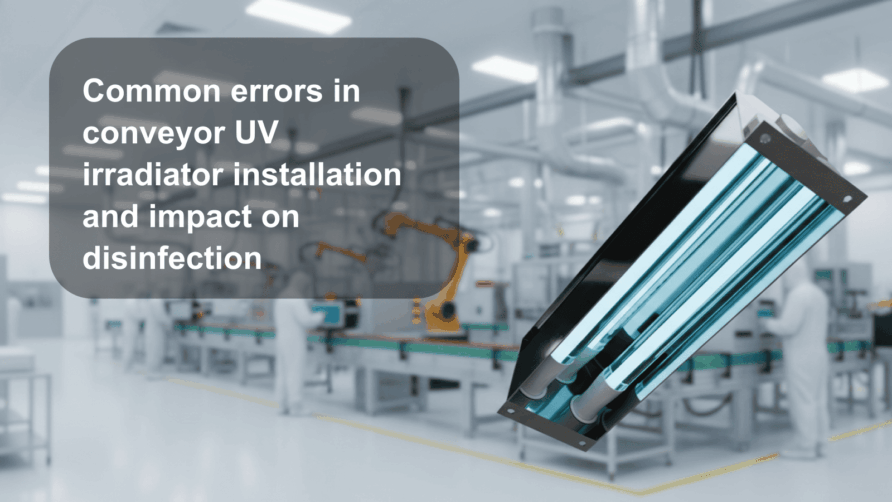
Implementing conveyor UV irradiators in production lines is a critical step to reduce microbial contamination and maintain hygienic safety of products. However, installation and operational errors often diminish disinfection efficiency, affecting product quality and complicating compliance with sanitary audits. For engineers and process technologists, understanding the causes of these issues and knowing how to prevent them is essential. This article reviews common mistakes encountered on-site and offers recommendations for selecting, installing, and maintaining conveyor UV irradiators. For example, improper lamp positioning or failure to follow maintenance protocols often results in uneven UV exposure and reduced disinfecting performance. In one case, incorrect adjustment of irradiator height created “dead zones” on the conveyor, necessitating reinstallation.
Who needs this and when
- Automation engineers and process technologists — for correct selection and integration of UV equipment into the production process.
- Quality assurance and hygiene specialists — to ensure required disinfection levels and prepare for audits.
- Project managers — for risk assessment and budgeting of installation and maintenance.
- Service engineers — to promptly identify and resolve malfunctions.
- Plant managers — to minimize equipment downtime and maintain process stability.
- Production line designers — to adapt UV irradiators to product and conveyor specifics.
- Equipment suppliers — to develop technical specifications and oversee quality control.
Proper positioning of conveyor UV irradiators and its effect on disinfection quality
Ultraviolet radiation disinfects surfaces effectively only if installed with correct geometry. Conveyor UV irradiators must be placed at an optimal distance and angle relative to the product to ensure uniform bactericidal coverage. Installation too high or too low reduces UV intensity on the product surface, resulting in insufficient microbial load reduction.
In practice, verifying installation correctness involves measuring the distance between lamps and conveyed products and visually assessing uniformity of conveyor illumination. Using UV sensors or fluorescent detection paper helps identify underexposed areas. Conveyor speed is also critical — excessive speed shortens exposure time and lowers the UV dose.
Ignoring these parameters risks creating “dead zones” with poor disinfection, increasing contamination probability and potentially causing product rejection and audit failures.
It is recommended to coordinate installation design with technologists, consider conveyor construction features, and employ radiation monitoring tools. For process stability, adjustable lamp height and angle, as well as conveyor speed variability, should be provided.
Errors in lamp power and quantity selection: consequences for disinfection
The choice of lamp power and number directly determines the UV dose received by the product. Insufficient power reduces disinfection effectiveness, while excessive power increases energy consumption and may cause equipment overheating. Incorrect lamp quantity leads to uneven UV distribution and zones of low intensity.
To verify power selection on-site, measurement instruments record radiation intensity in watts per square meter. Comparing these values with normative requirements assesses whether lamp quantity and placement are appropriate. Product characteristics and operating conditions such as humidity and temperature must also be considered, as they affect UV efficacy.
Neglecting power calculations results in ineffective microbial reduction despite equipment operation, causing repeated treatments and risk of non-compliance with hygiene standards.
Use specialized calculation methods and experienced engineers to determine required lamp power and quantity. Also plan for irradiator upgrades if the production process changes.
Impact of lamp condition and maintenance on conveyor UV irradiator performance
UV lamps have a limited service life and gradually lose emission intensity. Delayed replacement or improper maintenance reduces bactericidal activity, manifesting as deteriorated sanitation indicators and increased contamination risk.
Technical condition checks start with visual inspection for damage, dirt, and dimming. Monitoring lamp operating hours and measuring UV intensity with specialized devices are critical. Cleanliness of quartz lamp sleeves and reflectors is essential since contamination impedes UV transmission.
Failure to follow maintenance schedules decreases disinfection efficiency, leading to extra costs and quality risks. In some cases, this causes production disruptions due to reprocessing or additional inspections.
Develop a detailed maintenance protocol based on manufacturer guidelines, including regular cleaning, inspection, and lamp replacement. Control cabinets with hour counters and remote monitoring facilitate early detection of deviations and stable operation.
Case study: installation error of conveyor UV irradiator in hygiene product manufacturing
Initial conditions:
A conveyor UV irradiator was installed for product disinfection before packaging without considering optimal lamp height and tilt angle. Conveyor speed was set at maximum.
Symptoms:
- Low disinfection levels detected by internal testing.
- Uneven microbial load distribution on product surfaces.
- Frequent quality department remarks and audit difficulties.
- Increased energy consumption without improved results.
Root cause:
Incorrect irradiator positioning — lamps set too high lowered UV intensity on products. High conveyor speed reduced exposure time. Lack of radiation monitoring and delayed lamp condition tracking worsened the issue.
What to check:
- Distance from lamps to product surface.
- Lamp tilt angle and uniformity of conveyor illumination.
- Conveyor speed and exposure time.
- UV intensity at critical points.
- Lamp and reflector condition.
- Maintenance and monitoring protocols.
- Control cabinet settings and lamp hour counters.
- Lamp power compliance with process requirements.
Solution:
- Adjust irradiator height and angle to recommended values.
- Reduce conveyor speed to achieve target UV dose.
- Calibrate and measure radiation intensity.
- Replace lamps at end of life and clean reflectors.
- Implement remote lamp operation monitoring.
- Train personnel on maintenance and control procedures.
Implementation steps:
- Develop and approve installation design considering technological specifics.
- Install equipment per technical requirements.
- Perform commissioning with UV intensity measurements.
- Establish maintenance and monitoring schedules.
- Train service staff.
- Launch pilot line for testing and parameter adjustment.
Performance monitoring:
Following corrections, disinfection levels stabilized at required standards. Periodic inspections and monitoring prevented recurrence and ensured consistent sanitation without added costs.
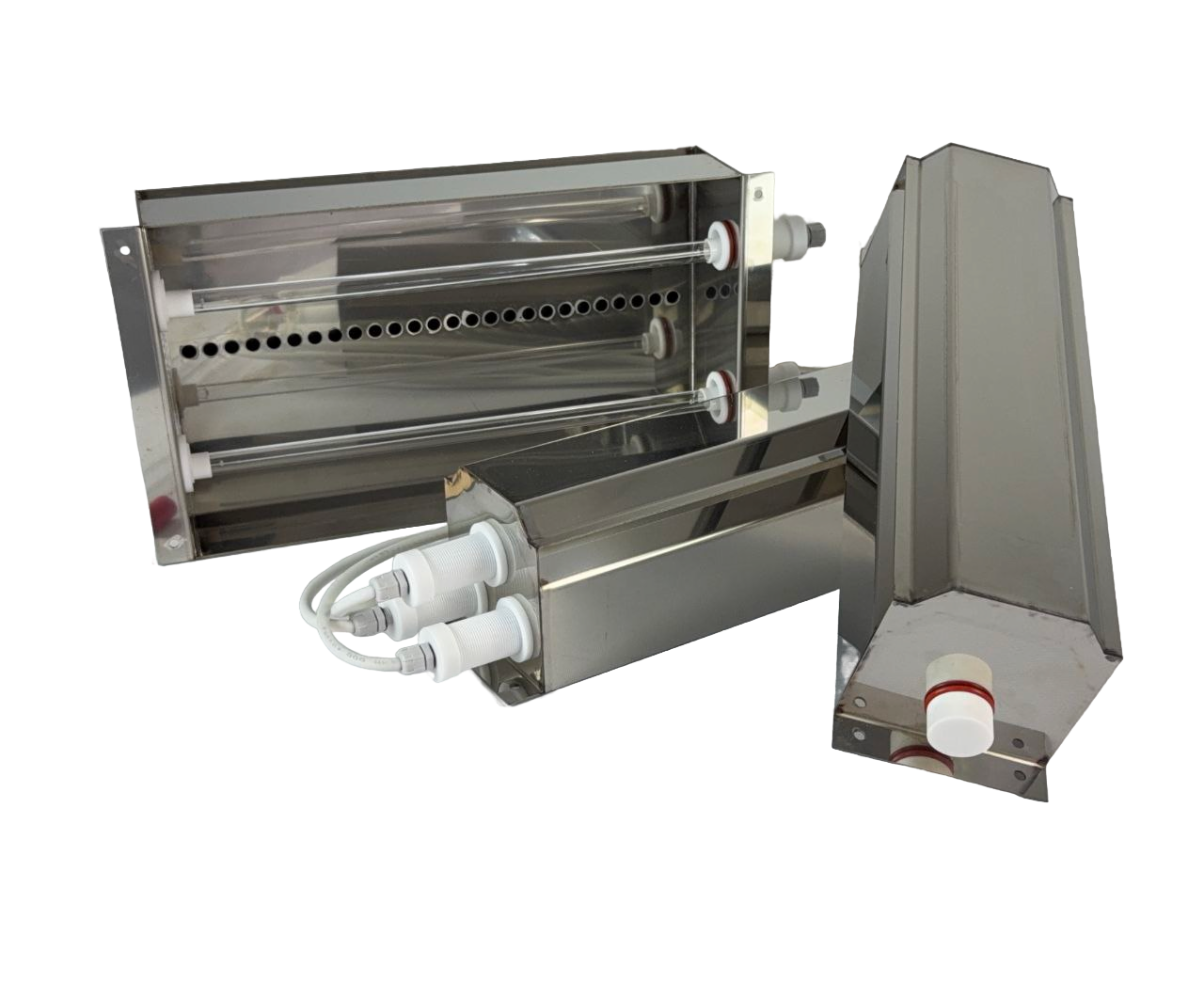
Specialized UV equipment is safe for operators, as irradiation occurs exclusively within the enclosed treatment chamber. The power of the ultraviolet lamp for conveyor systems is selected based on the belt speed and the dimensions of the treatment area to ensure effective disinfection.
Common operational errors of conveyor UV irradiators
Frequent issues include neglecting regular cleaning of lamps and reflectors, reducing UV transmission; insufficient attention to lamp operating hours leading to degraded performance; improper installation location ignoring product and conveyor characteristics causing low disinfection zones; absence of monitoring and remote control systems hindering early problem detection; incorrect lamp power and quantity selection resulting in inefficient resource use; failure to follow maintenance schedules causing premature equipment failure; and lack of comprehensive approach from design to staff training increasing downtime and risks.
Pre-installation checklist for conveyor UV irradiators
- Verify lamp and irradiator technical specifications meet requirements.
- Ensure optimal equipment positioning and tilt angle.
- Calculate necessary lamp power and quantity for required UV dose.
- Account for conveyor speed and exposure time.
- Implement UV intensity monitoring system.
- Develop maintenance and lamp replacement protocols.
- Protect equipment from dust and contamination.
- Deploy monitoring and remote control capabilities.
- Prepare documentation for audits and quality control.
- Train personnel on operation and maintenance.
- Conduct commissioning with measurements and adjustments.
- Organize periodic disinfection effectiveness verification.
Frequently asked questions before purchasing and integrating conveyor UV irradiators
How to determine required UV irradiator power?
Consider irradiated surface area, conveyor speed, and target disinfection dose. Calculations rely on normative data and operating conditions.
Can standard lamps be used for all product types?
No. Different materials and environmental factors (humidity, temperature) affect UV effectiveness; lamp selection must match specific processes.
How to monitor disinfection effectiveness on the line?
Use UV sensors, fluorescent detection paper, and microbiological tests. Regularly check UV intensity and lamp condition.
How often should lamps be replaced?
Typical lamp life ranges from 8,000 to 12,000 operating hours. Replacement is done per schedule or when UV intensity falls below thresholds.
Does conveyor speed affect UV disinfection?
Yes. Higher speed shortens exposure time and reduces UV dose. A balance between speed and equipment power is necessary.
Can UV irradiators be integrated into existing automation?
Yes. Modern irradiators include control cabinets with remote monitoring and integration capabilities for enterprise IT systems.
What to do if “dead zones” appear on the conveyor?
Check lamp positioning, tilt angle, radiation intensity, and coverage uniformity. Adjust installation or add lamps as needed.
How to protect equipment from contamination and dust?
Use stainless steel enclosures, protective covers, filters, and perform regular cleaning and maintenance.
Disinfection effectiveness on conveyor lines depends on strict adherence to technical requirements and proper equipment operation. The key criterion is delivering the required UV dose uniformly over the entire product surface while maintaining system stability. The next step is to analyze the technological process in detail, perform design and pilot testing, then implement equipment with established protocols and controls. This approach minimizes errors and ensures consistent microbial load reduction in production.