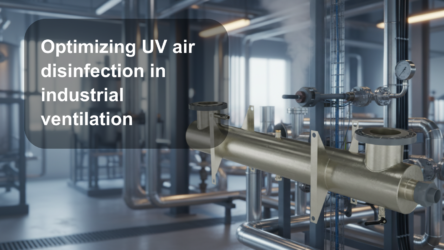
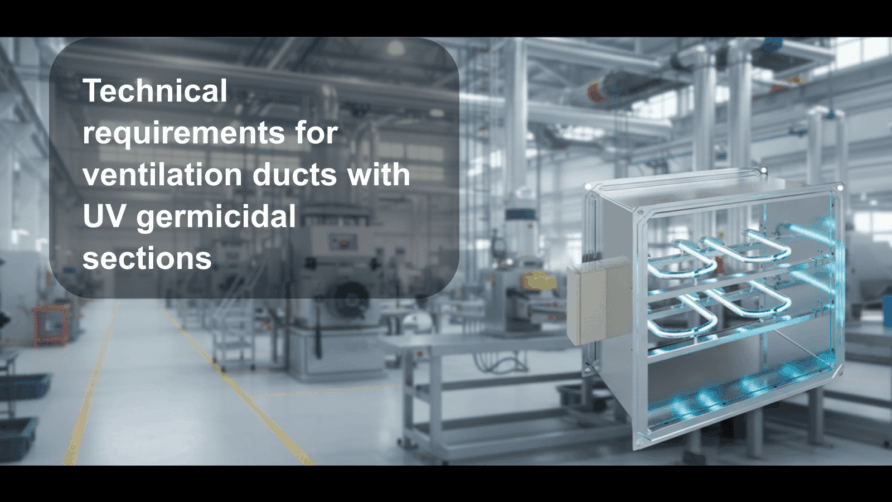
Integrating UV germicidal sections into ventilation systems is an effective method to disinfect air in industrial and manufacturing facilities. However, the success of such installations largely depends on correct technical decisions regarding the ventilation ducts. Improperly selected or prepared duct segments can significantly reduce the effectiveness of UV disinfection and, in some cases, cause premature equipment failure.
Engineers and process specialists must understand the critical duct parameters and features necessary for the proper integration of ultraviolet germicidal sections and UV lamps. This knowledge helps avoid common mistakes, optimizes system performance, and ensures the required air disinfection level. Below, we discuss key technical requirements for ducts, on-site verification methods, and the consequences of non-compliance.
In practice, situations arise where air passing through inadequately prepared or unadapted ducts does not receive the required UV dose, lowering disinfection efficiency. Additionally, improper operating conditions can shorten lamp lifespan, increase overheating risks, and cause electronic ballast failures.
Understanding these factors enables engineers to make informed decisions during the design and upgrade of ventilation systems with germicidal sections.
Who needs this and when
- Ventilation system designers — to select appropriate locations and parameters for germicidal sections.
- Equipment maintenance engineers — to ensure long-term UV system reliability and efficiency.
- Food and pharmaceutical technologists — to reduce microbial load in the air environment.
- Sanitary safety specialists — to comply with industrial air disinfection standards.
- Installation contractors — to prevent errors during integration into existing ducts.
- Service engineers — to perform correct diagnostics and maintenance.
- Clients with restrictions on modifying ventilation layouts — to select sections that do not alter duct structure.
Selecting a duct segment for UV germicidal section installation
Choosing the correct duct segment for mounting a UV germicidal air treatment section is crucial for achieving the required disinfection efficiency. Ultraviolet radiation must uniformly irradiate the entire air stream. Therefore, duct length and geometry, as well as the absence of turbulence and vortices, are critical factors.
If the segment is too short or contains bends and constrictions immediately upstream of the section, airflow will be uneven, reducing the UV dose. It is also essential that the duct minimizes pressure losses and prevents lamp overheating by ensuring sufficient ventilation within the section.
On-site suitability can be verified by measuring airflow velocity and uniformity using an anemometer and visually inspecting duct geometry. A straight duct length of at least 1 meter before and after the section is recommended. If unavailable, flow-straightening elements such as diffusers or straight inserts should be installed.
Incorrect placement can cause localized zones with insufficient disinfection, lamp overheating, reduced lifespan, and increased failure risk. Additionally, improper positioning may increase ventilation resistance, negatively impacting overall system performance.
It is advisable to coordinate ventilation design with the UV section supplier, considering duct geometry and material, and to plan regular inspections of the installation site.
Requirements for duct materials and construction
Duct material and construction significantly affect UV disinfection effectiveness and equipment durability. Metal ducts made of stainless steel or galvanized steel are preferred as they reflect UV radiation and resist corrosion.
Plastic or composite ducts may reduce disinfection efficiency due to UV absorption or unpredictable heating. The material must withstand temperatures generated by lamps and power supplies to avoid deformation or damage.
During on-site inspection, ensure ducts are free of contamination and deposits that block UV rays and reduce germicidal dose. Also, assess joint tightness and air tightness, as leaks lower system performance.
Ignoring material and duct condition requirements may result in ineffective disinfection and premature equipment failure due to overheating and corrosion.
Use only certified materials, maintain routine cleaning, and provide protection against mechanical damage and vibration.
Installation and connection specifics of UV germicidal sections in ventilation ducts
Installing a UV germicidal section requires strict adherence to technical standards to ensure secure mounting and correct lamp orientation relative to airflow. UV lamps must be positioned so radiation passes through the entire duct cross-section unobstructed.
Before installation, verify that the section’s dimensions fit the duct’s parameters. Mismatches cause stagnant air zones or disrupted flow, reducing disinfection effectiveness.
On-site, measure duct dimensions with appropriate tools, confirm availability of a straight segment for installation, and record mounting parameters. Pay special attention to sealing joints to prevent air leaks.
Installation errors—such as misaligned or loosely fixed sections—can cause vibrations, lamp damage, and reduced equipment lifespan. Incorrect electrical connections to UV lamps and electronic ballasts may lead to unstable operation and failures.
Use specialized fasteners, follow manufacturer installation and connection instructions, and conduct post-installation testing.
Case study: common errors in installing UV germicidal sections in industrial ventilation
Initial conditions: A UV germicidal section was installed in an existing ventilation duct (rectangular cross-section 830×600 mm, airflow 5000 m³/h) at a food packaging facility to disinfect air. The installation was performed without modifying duct structure.
Symptoms:
- Reduced air disinfection efficiency below design values.
- Frequent UV lamp and electronic ballast failures.
- Elevated temperature inside the section.
- Presence of stagnant air zones.
- Increased ventilation resistance.
Root causes: The section was installed with only about 0.4 m of straight duct upstream instead of the recommended 1 m. Airflow turbulence was caused by nearby bends and constrictions. Duct material had dust deposits reducing UV penetration. Mounting fasteners were loose, causing vibrations and lamp damage.
Verification checklist:
- Length and straightness of duct segment before the section.
- Airflow velocity and uniformity.
- Condition of internal duct surfaces.
- Rigidity and sealing of fasteners.
- Electrical supply parameters and lamp connections.
- Temperature inside the section during operation.
- Section dimensions matching duct size.
- Presence of vibrations or noise during operation.
Solutions:
- Extend straight duct length with inserts.
- Clean and apply corrosion protection to ducts.
- Replace fasteners with rigid, sealed ones.
- Recheck electrical supply and lamp connections.
- Install temperature sensors inside the section.
- Optimize ventilation scheme to reduce turbulence.
Implementation:
- Remove existing section.
- Install additional straight duct segments of at least 1 m.
- Clean and prepare ducts.
- Mount UV section according to updated requirements.
- Connect and verify electrical wiring.
- Run test mode monitoring key parameters.
Outcome: After modifications, disinfection efficiency met design targets, section temperature stabilized, and no equipment failures were recorded over six months.
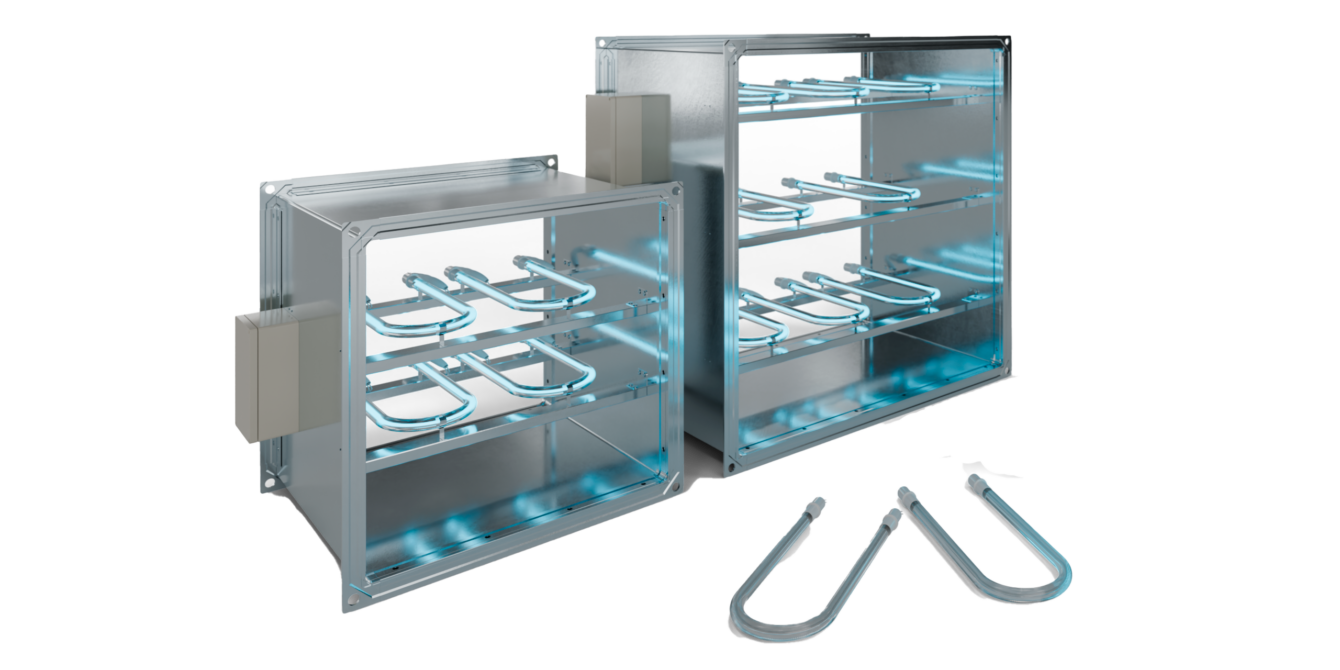
UVL-Vent bactericidal sections based on amalgam UV lamps for installation in ventilation and air conditioning channels in residential and industrial premises. They are used to equip existing or projected air ducts for neutralizing microorganisms: viruses, bacteria, mold spores, and fungi.
Common mistakes when preparing ventilation ducts for UV germicidal sections
A frequent error is installing the section in a segment with insufficient straight length, causing turbulence and reduced UV dose. Using plastic ducts without reflective properties lowers disinfection efficiency.
Neglecting duct cleaning and maintenance leads to accumulation of contaminants that block UV radiation. Installation errors—loose fasteners, poor sealing, incorrect electrical connections—also reduce equipment lifespan.
Insufficient temperature monitoring inside the section risks lamp overheating and ballast failure. Finally, failure to coordinate section parameters with duct dimensions increases resistance and lowers system performance.
Checklist before installing a UV germicidal section in ventilation
- Verify straight duct length before and after installation.
- Ensure duct materials have high UV reflectivity.
- Check internal duct surfaces for contamination.
- Confirm section size matches duct parameters.
- Provide rigid, airtight mounting.
- Verify electrical supply and correct UV lamp connection.
- Ensure sufficient ventilation and cooling inside the section.
- Assess airflow uniformity and velocity.
- Prepare maintenance and cleaning schedule.
- Conduct post-installation testing with parameter measurements.
- Coordinate project with UV equipment supplier.
- Maintain availability of spare parts and consumables.
Frequently asked questions before purchasing and installing
How to determine if my ventilation duct is suitable for UV germicidal section installation?
Measure the straight duct length upstream of the intended mounting location and assess airflow uniformity. If less than 1 meter or obstructed, duct modifications will be necessary.
Can UV germicidal sections be installed in plastic ducts?
Plastic materials often absorb UV radiation and may deform from heat. Metal ducts with reflective surfaces are recommended for maximum disinfection efficiency.
How often should UV sections and ducts be serviced?
Regular duct cleaning at least twice a year is recommended, along with inspections of lamps and electrical components every 1000–2000 operating hours.
What if ventilation performance decreases after installation?
Check section sealing, size conformity, and possible increased duct resistance. Adjust ventilation layout or install flow conditioning elements if needed.
How to monitor air disinfection effectiveness on-site?
Use specialized sensors and microbial load indicators, and measure UV dose inside the duct. Periodic testing ensures consistent system performance.
Is self-installation of UV germicidal sections advisable?
Installation requires technical expertise and safety compliance. Engaging qualified specialists or strictly following manufacturer guidelines is recommended.
What are the electrical connection requirements for UV lamps?
Use compatible electronic ballasts that provide stable voltage and overload protection. Incorrect wiring can cause equipment failure.
How to prevent lamp overheating inside the section?
Ensure sufficient airflow and temperature control. Additional fans or cooling systems may be necessary.
Can UV sections be integrated into existing ventilation without duct modifications?
Usually, duct preparation is required to provide adequate straight length and size conformity. Without this, disinfection efficiency will be compromised.
UV germicidal sections are complex engineering components requiring precise matching of duct parameters and operating conditions. The key to successful implementation is preparing a straight, clean, and properly sized duct segment, along with correct installation and electrical connection. The next steps include gathering detailed ventilation data, conducting pilot testing, and developing maintenance protocols. This approach ensures stable air disinfection and long service life of UV equipment.