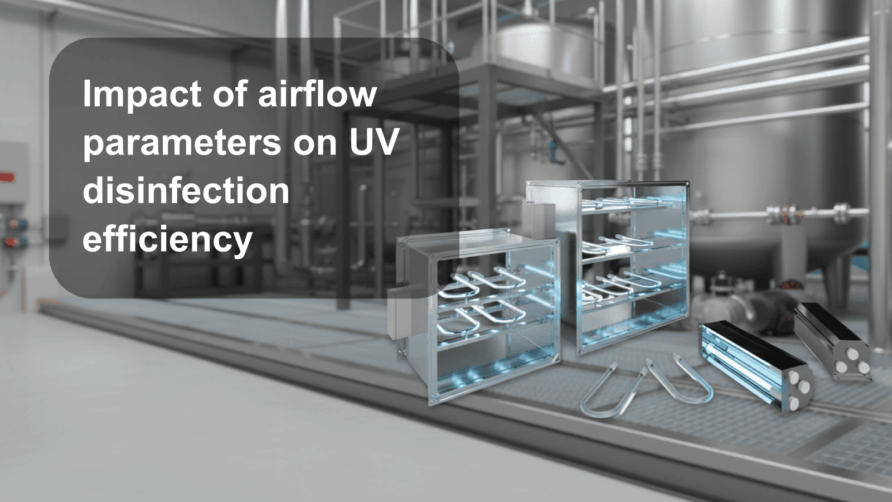
Ultraviolet (UV) air disinfectors and bactericidal UV recirculators are widely used in industrial and production environments to disinfect air. The effectiveness of these systems directly depends on airflow parameters—specifically speed, direction, and circulation volume. For engineers and process technologists, understanding how these parameters influence air disinfection levels is essential for selecting appropriate equipment, ensuring correct installation, and maintaining reliable operation. For instance, excessively high airflow velocity can reduce UV exposure time, while insufficient air circulation leads to uneven treatment of the space. This article examines how airflow characteristics affect the performance of open UV air disinfectors and UV bactericidal recirculators, methods for on-site measurement, and common pitfalls to avoid.
Who needs this information and when
- Ventilation engineers designing air disinfection systems with consideration of airflow speed and direction.
- Production technologists aiming to maintain regulatory microbial air cleanliness in workshops and facilities.
- UV equipment operators managing and adjusting operational parameters under real conditions.
- Safety system designers choosing between open and enclosed UV systems.
- Industrial managers optimizing air disinfection costs and minimizing downtime.
- Quality engineers implementing protocols to monitor disinfection effectiveness.
- Service engineers diagnosing and resolving drops in UV disinfector performance.
How airflow speed influences UV disinfector efficiency
Exposure time—the duration microorganisms spend in the UV radiation zone—is a critical factor determining disinfection effectiveness. Higher airflow speeds reduce exposure time, limiting the UV dose received by airborne pathogens. In open UV air disinfectors and bactericidal recirculators, airflow speed is controlled either by natural convection or forced ventilation.
In practice, optimal airflow velocity for recirculators typically does not exceed 1–2 m/s. Speeds above this threshold sharply decrease disinfection efficacy because microbes pass too quickly through the radiation field. In open systems, where air is directly irradiated without passing through a chamber, airflow speed also affects how evenly the air in the space is treated.
Air velocity is measured on-site using anemometers at the UV installation zone. Multiple measurement points help identify turbulent areas and stagnation zones. Correct airflow direction is equally important to ensure effective contact between air and UV radiation.
Too low airflow speed can create stagnant zones with poor circulation, causing localized microbial accumulation. Conversely, excessive speed reduces UV dose and disinfection quality, while potentially increasing noise and equipment wear.
Recommendations include selecting recirculators with capacity matched to room volume and enabling smooth fan speed adjustment. For open UV units, ensuring uniform airflow distribution across the irradiation zone is critical to avoid drafts that disrupt treatment uniformity.
The role of airflow volume and direction in recirculator operation
The volume of air passing through a UV bactericidal recirculator determines the quantity of air disinfected per unit time. Insufficient airflow volume means parts of the room’s air remain untreated, while excessive volume reduces exposure time as noted previously. Airflow direction impacts treatment uniformity and prevents formation of stagnant zones.
Technically, recirculators draw air from the room, pass it through a UV lamp chamber, and return disinfected air. It is essential that airflow inside the unit is uniform and free of dead zones where air could bypass sufficient UV exposure.
On-site airflow volume is verified using flow meters or based on ventilation equipment specifications. Direction and uniformity can be assessed with smoke tests or specialized airflow distribution indicators. Design must consider room layout to prevent backflow or recirculation of contaminated air into supply zones.
Neglecting control over airflow volume and direction lowers disinfection efficiency and allows microbial load to persist. This often necessitates more frequent disinfection cycles, increasing operational costs.
Designers should ensure the entire room air volume passes through the recirculator with an exposure time adequate for UV inactivation. Proper equipment capacity and placement, guided by airflow schematics, are key to achieving this.
Effects of temperature and humidity on UV disinfector performance
Temperature and humidity significantly affect UV disinfection efficiency. At low temperatures, especially below +5 °C, traditional mercury UV lamps experience reduced output due to degraded lamp characteristics. Modern thermally stabilized amalgam lamps address this issue by maintaining stable radiation between +1 and +35 °C.
Humidity influences UV absorption and may cause condensation on lamp surfaces, diminishing light transmittance. Relative humidity above 70% can decrease UV intensity and impair disinfection effectiveness.
On-site climate monitoring using temperature and humidity sensors is necessary. If parameters exceed recommended limits, measures include deploying lamps rated for wider temperature ranges or installing air conditioning and dehumidification systems.
Ignoring environmental conditions leads to premature lamp failure and reduced disinfection performance, increasing maintenance costs and microbial risk.
Selecting UV bactericidal equipment should account for operating conditions, with regular maintenance and lamp output verification as standard practice.
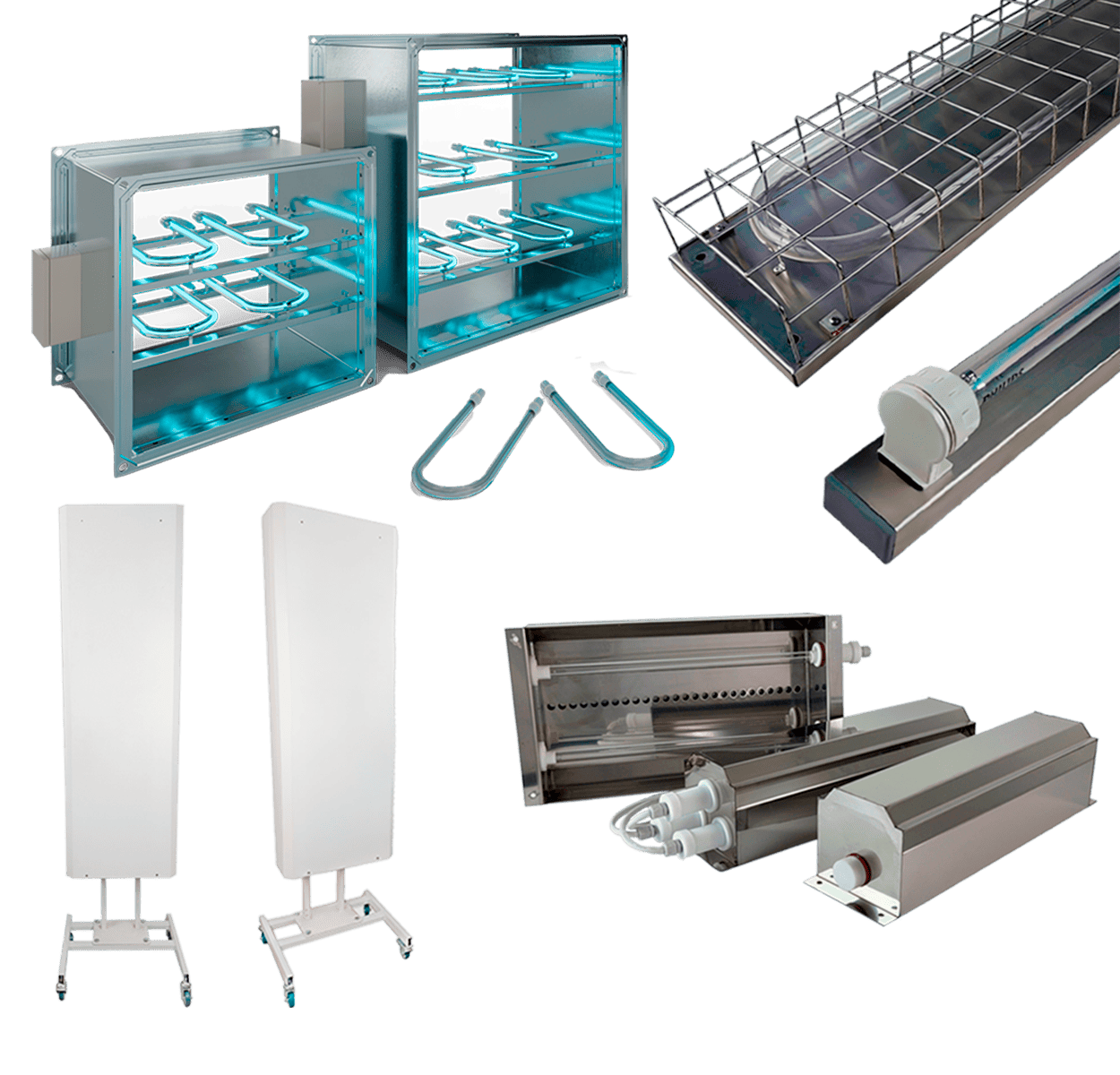
UV disinfection systems for air and surfaces
Case study: Reduced disinfection efficiency in a cold storage room—analysis of selection and installation errors
Initial conditions: Several UV bactericidal air recirculators were installed in a dairy production cold storage room to reduce microbial load. Air temperature was maintained around 4 °C, with airflow velocity approximately 3 m/s.
Observed issues:
- Low air disinfection levels confirmed by microbiological tests;
- Frequent complaints from technologists regarding odors and product quality decline;
- Increased downtime for supplementary disinfection procedures;
- Rapid lamp degradation and failure;
- Elevated noise due to fans running at maximum speed.
Root causes: The low ambient temperature was outside the effective range of the mercury UV lamps used. High airflow velocity shortened exposure time, while improper airflow direction created stagnant zones. Together, these factors diminished overall disinfection efficiency.
Inspection checklist:
- Verify lamp operating temperature range compliance;
- Measure airflow speed in the irradiation zone;
- Assess airflow direction and identify stagnant areas;
- Check lamp condition including radiation intensity and lifespan;
- Confirm correct installation per design;
- Evaluate noise and vibration levels;
- Perform microbiological air quality analysis;
- Match equipment specs to room conditions.
Corrective actions:
- Replace mercury lamps with thermally stabilized amalgam lamps;
- Reduce airflow velocity to about 1.5 m/s;
- Adjust airflow directions to eliminate stagnant zones;
- Implement regular microclimate and lamp condition monitoring;
- Add extra recirculators for uniform air distribution;
- Establish maintenance and monitoring protocols.
Implementation steps:
- Coordinate changes with technologists and engineering;
- Gradually reduce fan speeds while monitoring air quality;
- Install new lamps and verify operation;
- Adjust ventilation layout based on measurements;
- Train personnel on operation and safety;
- Maintain detailed equipment operation logs.
Effectiveness was confirmed by reduced microbial contamination and fewer unplanned disinfection cycles within one month, with technologist complaints resolving.
Common mistakes in using UV air disinfectors and recirculators
Engineers frequently encounter errors that compromise UV disinfection effectiveness. These include selecting inappropriate airflow speeds leading to insufficient UV dose or stagnant zones; poor equipment placement ignoring airflow direction and room geometry, causing uneven treatment; neglecting temperature and humidity effects resulting in rapid lamp wear and reduced output; failing to regularly monitor lamp condition and microclimate, leading to unnoticed performance degradation; choosing an unsuitable UV system type (open vs. enclosed) without considering human presence, raising safety risks and reducing efficacy; and lacking systematic documentation and operational control that complicates troubleshooting and maintenance.
Pre-implementation checklist for UV disinfectors and recirculators
- Confirm equipment compatibility with ambient temperature and humidity.
- Calculate required airflow speed and volume relative to room size.
- Select UV system type based on presence of personnel.
- Review ventilation layout and airflow directions.
- Ensure access for routine maintenance and lamp replacement.
- Implement systems for operational monitoring and logging.
- Verify availability of technical documentation and maintenance protocols.
- Assess noise and vibration levels.
- Provide adjustable fan speed controls.
- Organize staff training on operation and safety procedures.
- Validate lamp power and specifications against manufacturer data.
- Plan for ongoing monitoring of disinfection effectiveness.
Frequently asked questions before purchase and deployment
How to determine the optimal airflow speed for a recirculator?
Optimal speed depends on room volume and equipment specifications, typically not exceeding 1–2 m/s to ensure sufficient UV exposure time.
Can open UV disinfectors be used in occupied spaces?
No, open UV systems emit radiation harmful to humans and are intended for unoccupied areas. Enclosed recirculators are used where people are present.
How often should UV lamps be replaced?
Lamp lifespan ranges from 8,000 to 12,000 operating hours. Replacement is recommended before output falls below 70% of nominal power.
How to verify disinfection effectiveness on-site?
Through microbiological air sampling after equipment operation or by measuring UV radiation intensity with specialized instruments.
Does airflow direction affect disinfection quality?
Yes, improper direction can create stagnant zones and reduce uniform air treatment.
What if the room has high humidity?
Use lamps and equipment rated for high humidity and consider air dehumidification solutions.
Can recirculators be used in cold storage?
Yes, but only with thermally stabilized lamps that maintain output at low temperatures.
In summary, airflow parameters are critical to the design and operation of UV air disinfection systems. Ensuring optimal UV exposure time and uniform air treatment requires careful control of airflow speed, volume, and direction, alongside monitoring of environmental conditions. Collecting on-site data and conducting pilot testing are essential steps before full implementation, followed by establishing maintenance and control protocols to sustain disinfection performance.