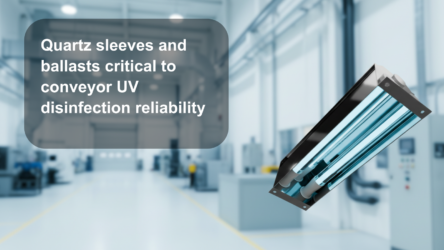
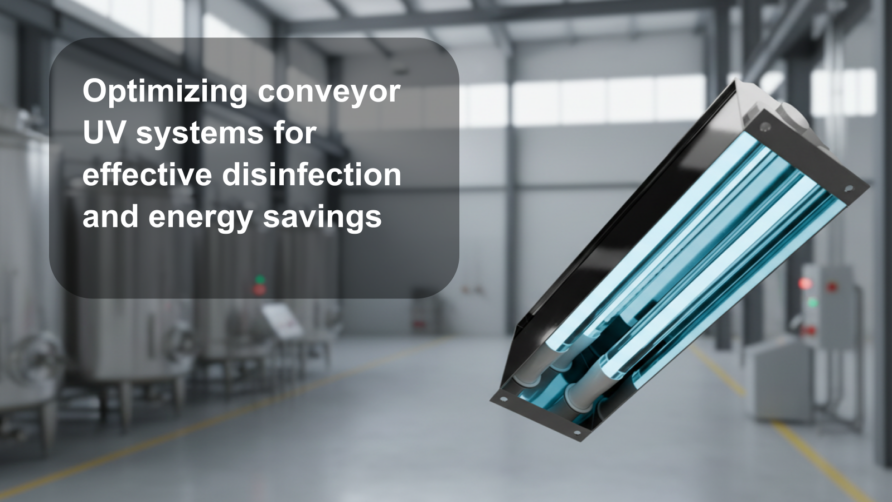
In modern industrial production, disinfecting products and packaging on conveyor lines is a critical operation. Conveyor-mounted UV emitters disinfect surfaces efficiently by reducing microbial contamination without chemical agents. However, improper operating modes can lead either to excessive energy consumption or insufficient disinfection, impacting product quality and safety. Engineers and process specialists must understand how to select optimal parameters — lamp power, conveyor speed, distance to the treated surface — and how to monitor these conditions on-site. This article reviews practical aspects of optimizing operational modes, common errors, and corrective measures based on real industrial cases. For example, one hygiene product manufacturer experienced incomplete disinfection due to mismatched settings, while a food processing plant faced excessive energy use from overly powerful lamps.
Who needs this and when
- Automation engineers integrating UV emitters into conveyor lines considering production parameters.
- Process technologists aiming to ensure required disinfection levels without overspending energy.
- Sanitation specialists responsible for consistent microbial load reduction on surfaces.
- Project managers selecting and implementing equipment based on technical and economic criteria.
- Service engineers tasked with maintenance and performance verification of UV systems.
- Procurement managers evaluating equipment specifications and compliance with requirements.
- Auditors and experts verifying regulatory adherence and correct operation of UV emitters.
Physics and technology of conveyor disinfection
Ultraviolet radiation at approximately 254 nm wavelength damages microbial DNA and RNA, thereby disinfecting surfaces. Conveyor UV systems must deliver a uniform UV dose across the product width and length. Key factors include conveyor belt speed, lamp power and quantity, distance between lamps and the product, and exposure time.
If conveyor speed is too high for a fixed lamp power, the UV dose drops, causing incomplete disinfection. Conversely, excessive lamp power at low speeds results in unnecessary energy consumption and accelerated lamp wear. Incorrect spacing between lamps and products reduces effectiveness due to radiation scattering and absorption.
On-site verification uses portable UV radiometers to measure irradiation levels at multiple conveyor points. Visual inspection for uniform coverage helps detect shadow zones and underexposed areas. Comparing belt speed against lamp specifications assesses configuration accuracy. Environmental parameters like temperature and humidity also affect UV output and lamp condition.
Incorrect settings may lead to two scenarios: contaminated products posing quality and safety risks, or elevated electricity and maintenance costs without quality improvement. Both outcomes increase operational expenses and risk.
Optimization should rely on equipment datasheets and regular monitoring of actual UV dose. Electronic ballast controllers (EBRs) enable flexible lamp power adjustment and remote operation monitoring.
How to verify conveyor UV operating mode on-site
To evaluate and optimize performance:
- Measure UV radiation intensity at multiple points across conveyor width and length using UV sensors.
- Check conveyor speed and compare with recommended values for the lamp power used.
- Measure lamp-to-product distance, ensuring no mechanical deviations.
- Assess lamp condition and operating hours, as UV output declines with age.
- Record ambient temperature and humidity affecting UV intensity.
- Inspect control systems and lamp status indicators.
These data support adjustment of operating modes, identification of under-disinfected zones, and energy consumption reduction.
Impact of conveyor speed and lamp power mismatches
If conveyor speed exceeds the optimum for the selected lamp power, the UV dose on surfaces decreases, causing incomplete microbial inactivation. This leads to increased product defects and sanitation risks. Low speed combined with excessive lamp power causes energy waste, faster lamp degradation, and more frequent replacements, raising operating costs.
Additionally, improper modes may cause local equipment overheating and deteriorate operating conditions, resulting in repair expenses and downtime.
Regular parameter monitoring and data-driven adjustments are essential to mitigate these risks.
Recommendations for setting optimal conveyor UV operating modes
Optimization begins with precise calculation of required UV dose for the specific product and conveyor speed. Use manufacturer data considering installation conditions and product characteristics. Regularly verify actual UV levels and lamp status.
Employ electronic ballast controllers to flexibly manage lamp power and remotely monitor parameters. Ensure quick lamp replacement and maintenance without halting the production line.
Improve radiation distribution using reflectors and optimal lamp placement, while considering hygiene and personnel safety requirements. Implement monitoring systems with automatic parameter logging for timely intervention.
Case study: operational errors in conveyor UV disinfection on hygiene product line
Initial conditions
A hygiene product manufacturer installed conveyor UV emitters for product disinfection before packaging. The system included four models with varying lamp counts and sizes, controlled via electronic ballasts with remote monitoring.
Symptoms
- Low disinfection levels in certain conveyor zones.
- Elevated energy consumption under standard settings.
- Frequent emergency shutdowns due to power supply overheating.
- Incomplete audit documentation for disinfection.
- Accelerated lamp wear and frequent replacements.
Root causes
The main issue was the mismatch between conveyor speed and emitter power. Lamps operated at maximum power, but conveyor speed exceeded recommended values, reducing UV dose. Lack of regular monitoring failed to detect underexposed areas. Control modules operated without line-specific adaptation, causing overloads and failures.
What to check
- Conveyor speed compliance with emitter specifications.
- Actual UV radiation levels across conveyor width and length.
- Lamp condition and accumulated operating hours.
- Ambient temperature and humidity in the installation zone.
- Electronic ballast operation and power settings.
- Installation quality and lamp-to-product distances.
- Presence and condition of reflectors.
- Documentation completeness for audit purposes.
Solutions
- Adjust conveyor speed to optimal levels for installed emitters.
- Tune lamp power via electronic ballasts based on real conditions.
- Implement regular UV intensity monitoring using sensors.
- Update documentation and protocols to meet audit requirements.
- Add reflectors to ensure uniform radiation distribution.
- Train personnel on equipment control and maintenance.
Implementation
- Conduct trial runs with adjusted parameters.
- Deploy remote monitoring and control systems.
- Schedule regular inspections and maintenance.
- Maintain transparent documentation for audits.
- Collaborate with equipment manufacturers for support.
- Evaluate improvements by tracking defect rates and energy consumption.
Outcome control
Post-implementation, disinfection levels stabilized at target values, energy usage decreased, and emergency downtime ceased. Documentation met audit standards, increasing process reliability. Ongoing monitoring enabled early detection of deviations and sustained optimal operation.
Common mistakes in optimizing conveyor UV systems
Errors usually stem from insufficient consideration of process parameters and operating conditions. Examples include selecting lamp power without accounting for conveyor speed, causing incomplete disinfection or wasted energy. Lack of regular monitoring and lamp condition checks reduce system effectiveness. Improper installation and incorrect lamp-to-product spacing cause uneven UV distribution. Neglecting temperature and humidity requirements shortens lamp life and destabilizes output. Inadequate staff training and missing maintenance protocols increase failure risks. Finally, incomplete documentation complicates audits and quality control.
Pre-installation checklist for conveyor UV systems
- Verify production line parameters and disinfection requirements.
- Define optimal conveyor speed.
- Assess space and dimensions for emitter installation.
- Calculate required lamp power and quantity.
- Confirm presence and functionality of control and monitoring systems.
- Ensure conditions for uniform UV distribution (reflectors, distances).
- Prepare audit and internal control documentation.
- Organize staff training on operation and maintenance.
- Plan routine UV level measurements and technical inspections.
- Arrange for rapid lamp replacement and repair capabilities.
- Check environmental conditions (temperature, humidity).
- Coordinate operating modes with process and sanitation teams.
Frequently asked questions before purchase and deployment
How to determine the required lamp power for my line?
Consider conveyor speed, belt width, and necessary UV dose for effective disinfection of the specific product. Calculations use lamp technical data and operating conditions.
Can operating modes be changed without stopping the line?
Yes, electronic ballasts allow remote power adjustments without production interruption.
How often should UV intensity be measured?
At least monthly, after changes in production parameters, or following lamp replacement.
What if UV lamps fail prematurely?
Common causes include overheating, high humidity, poor installation, or exceeding recommended operating hours. Check and adjust these factors accordingly.
How to ensure uniform UV distribution across the conveyor width?
Use optimized lamp placement and reflectors. Verify coverage with UV sensors to eliminate shadowed areas.
Is documentation for UV system audits necessary?
Yes, technical and operational records with mode parameters and monitoring reports are mandatory for regulatory compliance.
Can UV emitters be used for different products on the same line?
Yes, but operating modes and power must be adjusted per product to ensure required disinfection doses.
In summary, optimizing conveyor UV emitters’ operating modes is essential for effective disinfection coupled with minimal energy consumption. Success depends on precise matching of lamp power, conveyor speed, and environmental conditions, supported by regular monitoring. The next steps involve data collection from existing lines, pilot testing new modes, and developing comprehensive operational protocols for stable equipment performance.