In modern ventilation systems, air disinfection plays a critical role in maintaining hygienic standards in industrial and public facilities. Engineers and technologists must accurately select the parameters of UV germicidal sections to deliver the required ultraviolet dose for effective microbial inactivation. Incorrect lamp power or exposure time leads to reduced disinfection efficiency, unnecessary energy consumption, and premature equipment wear. This article explores how to optimize these parameters correctly, key considerations during implementation, and methods to verify the performance of germicidal sections on-site. In practice, insufficient disinfection or excessive power use often results in frequent lamp replacements and increased maintenance costs.
Who needs this and when
- Ventilation system designers—for accurate calculation of germicidal sections.
- Food production technologists—for controlling microbiological air safety.
- Ventilation operation specialists—to maintain stable equipment performance.
- Production managers with strict sanitary requirements—to reduce secondary contamination risks.
- Service engineers—for diagnostics and adjustment of germicidal modules.
- Project integrators—when incorporating UV equipment into existing ductwork.
- Agro-industrial enterprises—for air disinfection in animal housing.
Physics of UV exposure and its impact on disinfection effectiveness
Ultraviolet radiation in germicidal sections disrupts microbial DNA and RNA structures, preventing reproduction. Achieving the required disinfection level requires delivering a UV dose equal to the product of radiation intensity and exposure time. Airflow velocity in ducts directly affects the time air spends in the irradiation zone.
If lamp power is too low or exposure time too short, microorganisms receive an insufficient UV dose, leaving air contaminated and compromising production safety. Conversely, excessive lamp power results in higher energy consumption, increased heat generation, and reduced lamp and ballast lifespan.
To verify effectiveness on-site, measure airflow velocity and calculate air transit time through the germicidal section. Then, use UV sensors to assess actual radiation intensity and compare it with the required dose. This measurement identifies mismatches and enables system parameter adjustments.
Without optimizing power and exposure time, frequent lamp replacements, degraded air quality, and risks to production and hygiene standards may occur. Selecting lamp quantity and power based on air volume and required dose—considering technical specs and operating conditions—is essential.
Improving effectiveness also involves section design to ensure uniform UV distribution across the duct cross-section. Regular inspections and maintenance guarantee stable operation and prolonged equipment service life.
Determining optimal lamp power and exposure time on-site
Selecting UV lamp power and exposure time begins with analyzing ventilation parameters. The primary factors are volumetric airflow (m³/h) and duct geometry, which determine air velocity. Higher velocity shortens air contact time with UV radiation. To achieve the target germicidal dose, either lamp power must increase or airflow velocity decrease.
Practical verification involves several steps. First, measure actual airflow using anemometers or flow meters. Second, determine UV radiation intensity inside the section with specialized UV sensors. Then calculate the dose: Dose = Intensity × Exposure time. This value is compared to normative levels for target microorganisms.
If exposure time is too brief, the germicidal section cannot disinfect effectively, leaving air contaminated. Excessive power accelerates lamp wear and energy costs, increasing operational expenses. Balancing these parameters ensures efficient and economical equipment performance.
For precise tuning, software tools and on-site testing under real conditions are recommended. In some cases, adjustable-power sections or ventilation performance modifications may be appropriate.
Regular monitoring of section parameters is advisable, especially after maintenance or system changes, to maintain consistent air disinfection without unnecessary downtime or costs.
How section design affects disinfection performance
A germicidal section is more than a lamp housing; its design determines UV radiation distribution and disinfection quality. Lamp placement, reflectors, and housing materials influence irradiation uniformity and thermal management.
Optimal design maximizes lamp power utilization, minimizing radiation loss on walls and preventing overheating. High-power amalgam lamps reduce section size and improve service life due to their temperature stability.
On-site quality checks include visual inspection and UV intensity measurements at multiple cross-section points. Uneven readings indicate a need to upgrade reflectors or mounting elements.
Poor design causes under-irradiated zones, lowering disinfection quality and increasing microbial risks. Overheating reduces lamp lifespan and raises replacement costs.
Selecting sections with proven design and materials ensures reliable operation and ease of maintenance. When upgrading existing systems, focus not only on lamp power but also on housing and fixture quality.
Case study: Incorrect power selection in a food packaging facility
Initial conditions:
A germicidal section was installed for a sauce packaging line, with lamp power calculated for 1300 m³/h airflow. During operation, insufficient air disinfection was detected, threatening product quality.
Symptoms:
- Elevated microbial air contamination.
- Frequent complaints about odors and poor conditions.
- Increased lamp replacements due to overheating.
- Rising energy consumption without improved effectiveness.
Cause: Actual airflow and velocity were underestimated. Lamp power and exposure time did not match real conditions, resulting in inadequate UV dose. Additionally, section design did not ensure uniform light distribution.
What to check:
- Actual volumetric airflow.
- UV radiation intensity inside the section.
- Air transit time through the irradiation zone.
- Lamp and ballast technical condition.
- Section construction and reflector quality.
- Lamp operating temperature.
- Lamp power compliance with dose requirements.
- Lamp and reflector cleanliness.
Solution:
- Recalculate lamp power based on real airflow.
- Replace lamps with higher-power amalgam types.
- Optimize section design by adding reflectors.
- Implement temperature control systems.
- Establish regular maintenance routines.
- Train staff in inspection and control procedures.
Implementation:
- Remove old section and install improved design.
- Configure lamp power management system.
- Conduct commissioning tests with UV intensity measurements.
- Introduce maintenance and control protocols.
- Monitor air quality post-implementation.
- Adjust parameters based on initial operational data.
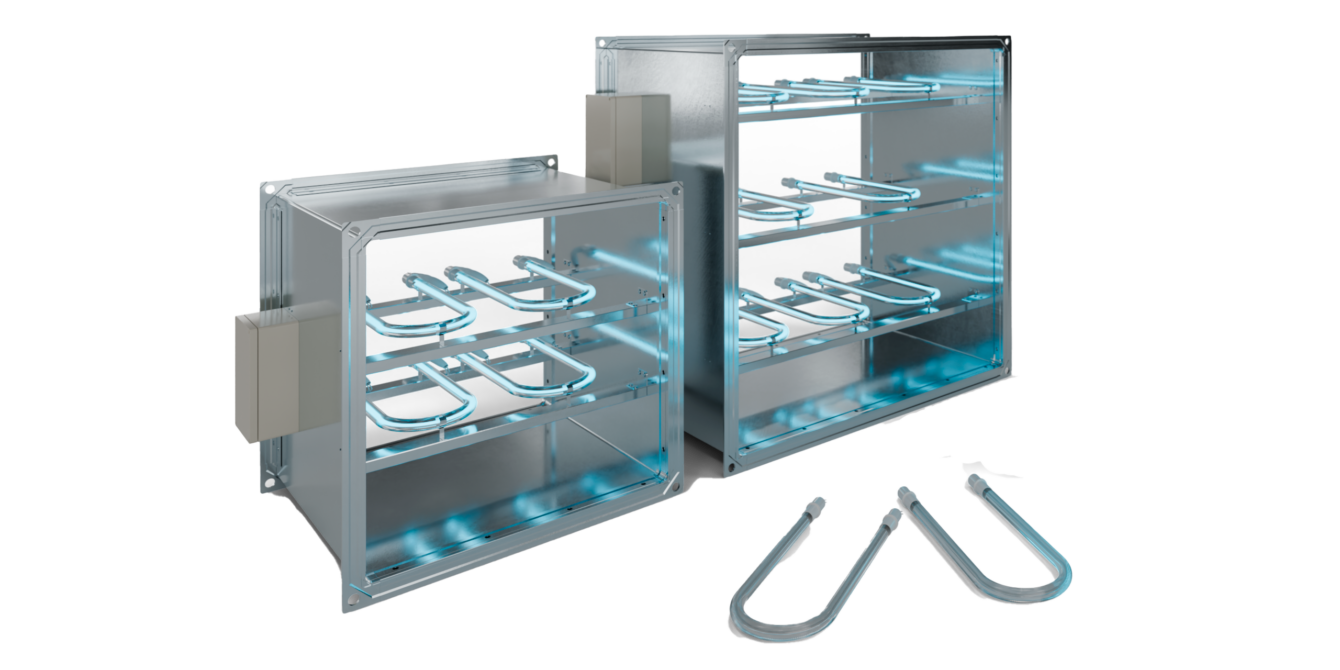
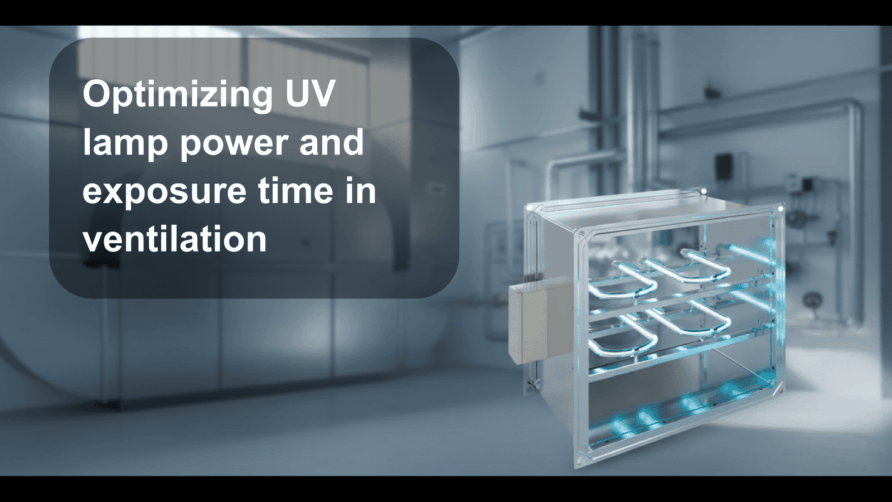
UVL-Vent bactericidal sections based on amalgam UV lamps for installation in ventilation and air conditioning channels in residential and industrial premises. They are used to equip existing or projected air ducts for neutralizing microorganisms: viruses, bacteria, mold spores, and fungi.
Common errors in selection and operation of germicidal sections
Frequent mistakes include incorrect UV dose calculation due to inaccurate airflow data, using lamps with inappropriate power, poor lamp placement, and lack of reflectors causing uneven irradiation. Neglecting maintenance leads to dust accumulation and reduced UV intensity. Ignoring temperature control results in overheating and shortened lamp life. Incorrect ballast connection and failure to adhere to electrical specs degrade system reliability. Absence of monitoring and parameter verification complicates early problem detection.
Checklist before installing a germicidal section
- Verify volumetric airflow in the ventilation system.
- Account for duct geometry and section installation location.
- Calculate required UV dose for disinfection.
- Select lamps with appropriate power and lifespan.
- Ensure quality reflectors and mounting hardware.
- Plan for temperature control and management systems.
- Provide access for maintenance and lamp replacement.
- Prepare maintenance schedules.
- Check electrical parameters and ballast compatibility.
- Conduct tests and measure UV intensity.
- Train personnel in control and operation methods.
- Implement performance monitoring systems.
Frequently asked questions before purchase and installation
How to determine the required germicidal section power?
Base calculations on air volume and velocity. Determine exposure time and UV energy dose considering target microorganisms.
Which lamps are preferable—amalgam or mercury?
Amalgam lamps offer more stable power, better temperature resistance, and longer service life, making them preferable for ventilation applications.
How often should germicidal sections be serviced?
At minimum, semiannual inspections of lamp condition, reflector cleaning, and electrical parameter checks are recommended.
What if air is not disinfected properly?
Check airflow, UV intensity, and lamp integrity. Increasing lamp power or adjusting section design may be necessary.
Can germicidal sections be integrated into existing ducts?
Yes, provided parameters are correctly calculated and equipment selected according to duct geometry and ventilation characteristics.
How to monitor germicidal section effectiveness on-site?
Use UV sensors for radiation intensity and air analyzers for microbial load assessment.
What risks are associated with incorrect power selection?
Insufficient power reduces disinfection quality; excessive power raises energy consumption and shortens lamp life.
Is lamp power adjustable in germicidal sections?
Many modern systems allow power adjustment to adapt to changing operating conditions.
What safety requirements apply during operation?
Prevent direct UV exposure to personnel, ensure section sealing, and comply with electrical safety standards.
Conclusion
Optimizing UV lamp power and exposure time in germicidal sections is essential for effective air disinfection in ventilation systems. Accurate calculation, selection, and verification reduce microbial contamination and maintain safe production conditions without excess costs. Considering real ventilation operating conditions, equipment design features, and regular maintenance is critical. The next step involves collecting precise on-site data for pilot testing and developing operational protocols to ensure consistent results and long equipment service life.