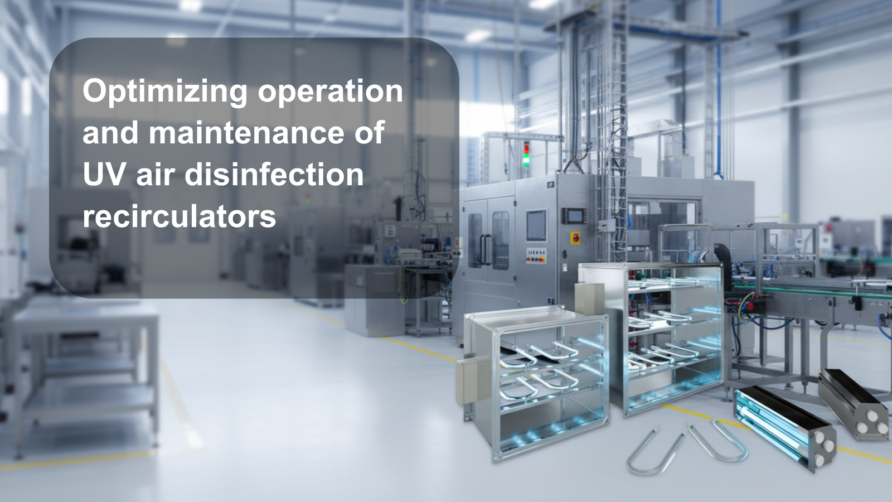
In modern industrial settings, air quality control is an integral part of the production process. Ultraviolet (UV) bactericidal air recirculators are widely used to reduce microbial contamination and maintain hygiene standards. For engineers and technologists, understanding proper operation and maintenance of these systems is essential to ensure effective air disinfection without downtime or failures. Incorrect equipment selection, installation errors, or delayed maintenance can reduce disinfection efficiency and disrupt production processes. This article reviews key aspects of operating UV bactericidal air recirculators, highlights critical considerations during implementation, and outlines how to monitor their performance on site. For example, common signs of reduced effectiveness include increased microbial contamination and significantly longer disinfection cycles. Such issues are frequently encountered in food processing and metallurgical workshops with high dust loads.
Who needs this and when
- Ventilation system engineers — for integrating UV equipment into existing networks.
- Food and pharmaceutical technologists — to lower airborne microbial load.
- Industrial safety specialists — to comply with hygiene requirements.
- Production supervisors — when rapid air disinfection is necessary.
- Engineering designers — for accurate calculation of recirculator quantity and placement.
- Service engineers — for planning and performing technical maintenance.
- Warehouse operations teams — to maintain air cleanliness during storage.
How UV air recirculators work and impact of operating conditions on performance
UV bactericidal air recirculators operate by forcing air through a chamber containing UV lamps emitting radiation at approximately 254 nm wavelength. This wavelength effectively disrupts microbial DNA and RNA, disinfecting the air passing through. The disinfection efficiency depends on airflow rate, lamp power and condition, as well as ambient humidity and temperature.
In dusty or aerosol-rich industrial environments, contaminants accumulate on lamp surfaces, reducing UV intensity. Without regular cleaning and lamp replacement, system performance declines. These recirculators enable continuous air disinfection in occupied areas, which is critical for maintaining sanitary conditions in work zones.
Key on-site performance checks include:
- Measuring UV radiation intensity at the recirculator outlet using specialized UV meters.
- Monitoring airflow velocity through the device.
- Assessing microbial contamination levels before and after operation.
- Inspecting lamp condition and tracking operating hours.
- Evaluating noise and vibration levels during operation.
Neglecting these checks may lead to increased microbial loads, product quality degradation, and process interruptions. Inefficient UV recirculators also waste electrical energy, increasing operational costs.
Implementing a routine monitoring system for lamp condition and operational parameters is recommended. To enhance reliability, maintain spare lamps and schedule replacements based on lamp service life. Ensure easy access for cleaning and repairs without halting production.
Proper selection and placement of UV air recirculators in industrial facilities
Achieving effective air disinfection requires correct calculation of the number and type of recirculators, as well as their strategic placement. Improper sizing or positioning results in insufficient air exchange rates through UV units, reducing overall bactericidal effect.
Air must flow through the irradiation zone at an optimal speed to ensure microbes receive the necessary UV dose. Excessive airflow shortens exposure time and lowers disinfection efficiency; too slow airflow leads to energy overconsumption and potential lamp overheating.
On site, verify placement and quantity by:
- Measuring air exchange rates provided by UV units.
- Analyzing airflow distribution using smoke or aerosol tests.
- Evaluating uniformity of bactericidal effect across different zones.
- Detecting dead zones with poor air circulation.
- Confirming technical specifications match equipment documentation.
Uneven placement causes untreated air pockets, fostering microbial growth—especially problematic in dusty workshops with complex layouts. Insufficient air exchange compromises safety and hygiene.
Optimizing performance involves combined placement schemes considering ventilation design and production layout. Adjustable lamp power and airflow speed should be provided to accommodate seasonal and process variations.
Maintenance and UV lamp replacement: essential considerations
UV lamps are critical components of bactericidal air recirculators. Their output diminishes over time due to quartz degradation and spectral changes, even if lamps appear visually intact.
Maintenance includes regular cleaning of lamps from dust and deposits, functionality checks, and timely replacement per manufacturer’s recommended service life. Failure to maintain lamps reduces disinfection efficiency and increases air treatment duration.
On-site lamp condition assessment methods:
- Visual inspection for contamination and damage.
- Measuring UV intensity with dedicated instruments.
- Logging operating hours.
- Checking the functionality of ballast and control gear.
Delayed lamp replacement results in substandard disinfection, risking hygiene compliance and process reliability. Lamps past their service life consume electricity without effectively disinfecting air.
Establish a maintenance schedule with strict tracking of lamp hours and condition. Automation using sensors and alert systems for lamp replacement is a best practice.
Case study: decreased UV recirculator performance in a food processing plant
Initial conditions
Several UV bactericidal air recirculators were installed in a packaging area to reduce microbial contamination. After six months, air microbial levels increased despite continuous equipment operation.
Symptoms
- Microbial contamination tripled above acceptable limits.
- Disinfection time increased from 30 to 60 minutes.
- Noticeable musty odor in the room.
- Elevated noise levels from recirculators.
- Frequent equipment shutdowns.
Root causes
Lamp contamination and wear reduced UV output; improper recirculator placement allowed air to bypass irradiation zones. Dust accumulation on lamps decreased radiation intensity, while increased noise indicated fan wear and compromised airflow.
Checks performed
- UV intensity measurement at each unit.
- Analysis of airflow patterns and recirculator locations.
- Lamp condition and operating hours review.
- Cleaning status of lamps and internal chambers.
- Fan operation and noise level assessment.
- Electrical and control gear inspection.
- Monitoring humidity and dust load in the area.
- Verification of air exchange rates against design parameters.
Actions taken
- Cleaned and replaced all lamps with verified service life units.
- Repositioned recirculators based on airflow analysis.
- Repaired and lubricated fans, reducing noise.
- Installed air filters upstream of recirculators to lower dust ingress.
- Implemented daily visual inspections and monthly UV intensity measurements.
- Developed a tailored maintenance schedule aligned with production specifics.
Implementation
- Trained staff on operation and maintenance procedures.
- Established logging system for lamp hours and equipment status.
- Organized regular inspections and reporting.
- Scheduled lamp replacements every 8000 operating hours.
- Optimized equipment layout according to process zones.
- Integrated pre-filtration for incoming air.
Outcome
Post-implementation, microbial contamination decreased to acceptable levels, disinfection time halved, noise and shutdown frequency substantially dropped, enhancing equipment reliability and product quality.
Common operational errors with bactericidal UV air recirculators
Incorrect placement ignoring airflow leads to uneven air treatment and reduced efficiency. Neglecting regular cleaning and lamp replacement diminishes UV output. Lack of operational parameter and microbial monitoring delays detection of performance loss. Skipping maintenance causes fan failures and impaired airflow. Installing equipment in unsuitable environments (high humidity, dust) shortens lamp life and degrades performance.
Pre-implementation checklist for UV bactericidal air recirculators
- Verify technical compatibility of equipment and facility conditions.
- Determine optimal quantity and placement of recirculators.
- Assess airflow parameters and air exchange rates.
- Evaluate dust and humidity impact on equipment.
- Ensure conditions for regular maintenance and lamp replacement.
- Confirm presence of air filters upstream of recirculators.
- Set up UV intensity monitoring systems.
- Develop maintenance protocols tailored to production needs.
- Train personnel on operation and maintenance.
- Measure noise and vibration levels of equipment.
- Provide emergency alarm and shutdown systems.
- Review power supply capacity and energy consumption.
Frequently asked questions before purchase and deployment
How to determine the number of recirculators needed?
Calculate based on room volume, required air exchange rate, and equipment specifications, considering layout and airflow patterns.
How to verify air disinfection effectiveness on site?
Use UV meters to measure radiation intensity and conduct microbiological air sampling before and after operation.
What factors influence UV lamp lifespan?
Operating mode, switch cycles, humidity, dust load, and temperature conditions.
Can recirculators operate in occupied spaces?
Yes, closed UV bactericidal air recirculators are designed for operation in presence of personnel when usage guidelines are followed.
How often should maintenance be performed?
Lamp cleaning at least monthly; lamp replacement according to service life, typically 8000–9000 hours.
What to do if UV output decreases?
Check lamp contamination, control gear condition, and replace lamps if necessary.
How to avoid common operational mistakes?
Ensure correct placement, adhere to maintenance schedules, and consistently monitor operational parameters.
In conclusion, the effectiveness of bactericidal UV air recirculators in industrial environments depends on correct equipment selection, strategic placement, and rigorous maintenance. Key performance indicators include UV radiation intensity and airborne microbial contamination levels. The next steps for engineers involve collecting air exchange and microbiological data, initiating pilot projects, and developing operational protocols.