Who needs this and when
- Water treatment engineers — to assess and optimize disinfection quality.
- Industrial process technologists — to ensure compliance with wastewater discharge standards.
- System designers — for correct selection and integration of UV equipment.
- Operations specialists — to promptly detect efficiency drops.
- Environmental professionals — to verify discharge safety based on microbiological control.
- Production managers — to reduce risks of fines and operational failures.
- Equipment suppliers — for customer consultation and technical support.
Core principles of monitoring UV disinfection efficiency in wastewater
UV disinfection relies on ultraviolet radiation, typically near 254 nm wavelength, which inactivates microorganisms by damaging their DNA and RNA. In multi-lamp water sterilizers, UV intensity is distributed across the water flow; achieving the required UV dose depends on stable lamp operation and uniform fluid passage.
Effectiveness depends on several factors: water transparency (suspended solids and organics reduce UV transmittance), lamp intensity, flow rate, and proper lamp arrangement. Without monitoring these parameters, zones of insufficient disinfection may develop, lowering overall system performance.
On-site, UV sensors installed inside the disinfection chamber continuously track radiation intensity, enabling real-time adjustments of lamp output. This ensures the necessary UV dose for effective wastewater disinfection.
Ignoring monitoring risks lamp aging and fouling of quartz sleeves, which reduce UV transmission. Changes in wastewater composition also affect disinfection efficiency, potentially leading to non-compliance with environmental standards and increased ecological risks.
Automated control systems with remote access and integration into plant management platforms are recommended to minimize human error and enable timely response to deviations.
Monitoring flow parameters and water transparency in UV units
Water transparency is a key parameter influencing UV disinfection quality. Higher turbidity and organic load absorb UV radiation, decreasing the dose reaching microorganisms. Flow velocity is equally critical; excessive flow reduces exposure time, undermining disinfection.
Transparency is measured on-site using turbidimeters or spectrophotometers, while flow is monitored by flowmeters. These measurements allow adjustment of sterilizer operation and early detection of water quality deterioration before the UV chamber.
Failure to account for transparency results in suboptimal UV dosing and incomplete disinfection. Similarly, exceeding design flow rates shortens UV exposure time, reducing microbial inactivation.
To enhance reliability, it is advisable to:
- Regularly clean quartz sleeves on lamps.
- Control and adjust water flow rates.
- Use transparency sensors integrated with control systems.
- Conduct periodic laboratory microbiological tests.
Automation and monitoring tools for UV disinfection
Modern multi-lamp sterilizers incorporate built-in UV sensors for continuous intensity monitoring. These sensors enable automatic lamp power regulation and maintenance alerts.
System checks include:
- Real-time sensor data verification.
- Comparison with lamp performance specifications.
- Regular sensor calibration.
- Testing emergency alarm functions.
Lack of automation or delayed sensor calibration increases the risk of operating outside optimal parameters, reducing UV disinfection effectiveness and causing potential plant downtime.
Implementing systems with remote monitoring and automatic parameter adjustment improves operational stability and reduces maintenance costs.
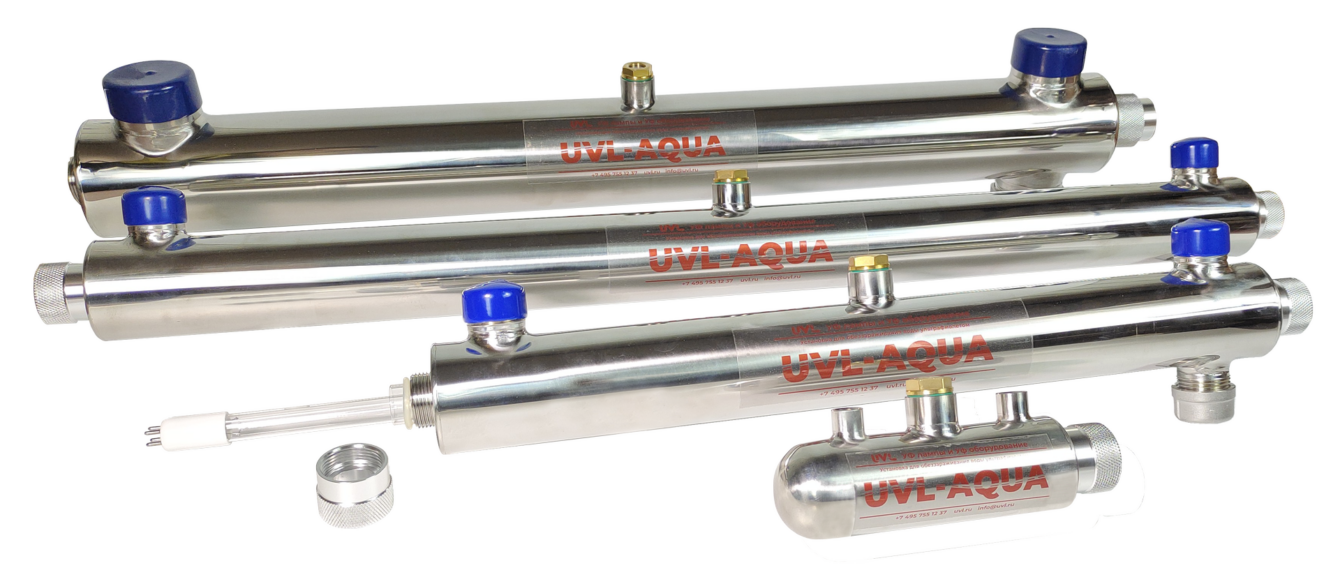
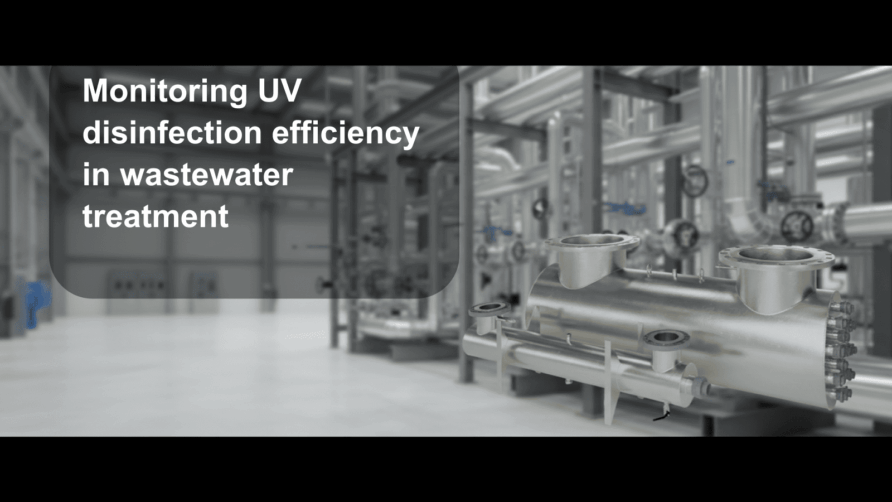
Stainless steel housing units provide water disinfection up to 99% SA in the water treatment system. They are connected to the pipeline using pipes of various cross-sections. Upon request, it is possible to produce a unit with the required parameters.
Case study: reduced UV sterilization efficiency at an industrial site
Initial conditions: A multi-lamp UV disinfection system was installed downstream of an oil separator, treating approximately 600 l/s in a 3200 mm diameter underground tank.
Symptoms:
- Elevated microbial load in effluent.
- Frequent UV sensor alarms.
- Uneven radiation distribution.
- Increased water turbidity.
- Higher energy consumption.
Root causes: Quartz sleeve fouling and partial lamp degradation lowered UV intensity. Flow rate was increased without adjusting operating parameters, shortening exposure time. The automated control system was improperly calibrated, causing false alarms and missed real deviations.
Inspection checklist:
- Condition of quartz sleeves and lamps.
- UV sensor readings and calibration.
- Wastewater flow compliance with design values.
- Water transparency before and after UV chamber.
- Automation and alarm system settings.
- Lamp power supply and operation modes.
- Tank contamination levels.
- Equipment maintenance documentation.
Actions taken:
- Cleaned and replaced quartz sleeves.
- Replaced degraded lamps.
- Calibrated UV sensors.
- Adjusted flow to design specifications.
- Reconfigured automation and alarm systems.
- Implemented regular transparency monitoring.
Implementation:
- Established scheduled maintenance addressing identified faults.
- Trained staff on parameter control and monitoring system operation.
- Introduced protocols for regular measurements and inspections.
- Enabled remote access to monitoring systems.
- Set up alerting for efficiency drops.
- Planned periodic lamp replacement per manufacturer guidelines.
Outcome: Microbial load stabilized at required levels, and monitoring system effectively signaled deviations, preventing downtime and ensuring consistent UV wastewater treatment.
Common mistakes in monitoring UV wastewater disinfection
Frequent errors include neglecting equipment condition and water parameter control. For example, ignoring quartz sleeve fouling reduces UV transmission. Irregular sensor calibration compromises data accuracy. Improper flow rates relative to lamp power cause incomplete disinfection. Delayed lamp replacement shortens service life and lowers efficiency. Lack of integration between monitoring and plant management systems complicates response to anomalies. Insufficient staff training on equipment operation and data analysis diminishes operational quality.
Pre-implementation checklist for UV wastewater disinfection
- Assess wastewater transparency and composition.
- Determine required lamp power and quantity.
- Verify equipment compatibility with existing systems.
- Evaluate monitoring system integration capabilities.
- Ensure access for lamp maintenance and replacement.
- Confirm presence and calibration of UV sensors.
- Provide operator training on monitoring and control.
- Configure alarm and emergency notification systems.
- Organize regular microbiological laboratory testing.
- Plan equipment redundancy for failure scenarios.
- Verify compliance with applicable standards.
- Schedule routine technical maintenance.
Frequently asked questions before purchase and implementation
How to determine the required UV dose for wastewater disinfection?
UV dose is calculated based on wastewater characteristics and target microorganism inactivation levels. Typical recommended doses for wastewater range from 25 to 30 mJ/cm², ensuring effective disinfection.
Is automatic UV intensity monitoring mandatory?
Without automatic monitoring, maintaining consistent disinfection quality is challenging, especially with variable water composition and lamp aging. Manual control is less responsive and increases risk.
How often should UV lamps be replaced in multi-lamp sterilizers?
Lamps should be replaced after reaching 80–90% of their rated lifespan, usually between 9,000 and 12,000 operating hours, to maintain optimal UV output.
What if wastewater transparency suddenly deteriorates?
Reduce flow rate, clean or replace quartz sleeves, and reassess disinfection effectiveness. Additional pretreatment may be required.
What additional monitoring tools are recommended?
Besides UV sensors, turbidimeters, flowmeters, and routine microbiological tests provide comprehensive process evaluation.
How to integrate UV equipment into wastewater treatment plant control systems?
UV systems typically support digital interfaces (e.g., Modbus, Ethernet), enabling connection to SCADA or similar platforms for centralized monitoring and control.
Conclusion
Effective monitoring and control of UV wastewater disinfection are essential for stable and reliable treatment operations. Continuous measurement of UV intensity and water parameters at system inlet and outlet is crucial. Engineers and technologists should implement automated monitoring, conduct regular equipment checks, and respond promptly to operational changes. The next step involves collecting data from pilot installations and developing maintenance protocols to ensure long-term stability and regulatory compliance.