Ultraviolet (UV) disinfection is a critical component in maintaining hygienic water quality in high-usage pool facilities. However, the performance of a UV disinfection system depends not only on the power and design of the UV unit but also significantly on the water’s physical and chemical characteristics. Improper equipment selection or setup without considering these water parameters can reduce the disinfection efficacy, increase microbial loads, accelerate lamp replacement, raise chemical consumption, and risk non-compliance with sanitation standards.
For engineers and water treatment specialists, understanding how water quality factors affect UV sterilizer operation is essential for selecting the right equipment, implementing systems correctly, and ensuring ongoing performance control. This article reviews key water parameters, their influence on UV radiation physics, testing methods on site, and consequences of neglecting these factors.
In practice, there are frequent cases where microbial contamination rises despite stable circulation, or the UV system experiences operational issues linked to increased water turbidity. We analyze these situations and provide guidance on how to prevent them.
Who needs this information and when
- Pool facility operators — to maintain stable and effective UV water disinfection.
- Water treatment system designers — for proper selection and integration of UV sterilizers.
- Water treatment plant technologists — to monitor water quality and prevent UV performance decline.
- Facility managers of high-traffic pools — to minimize downtime and maintenance costs.
- Sanitary control specialists — to verify microbial compliance with standards.
- Equipment suppliers — to advise and tailor solutions based on operational conditions.
- Standards developers — to incorporate water parameter impacts into disinfection protocols.
Effect of turbidity and suspended solids on UV disinfection
Water turbidity is a primary factor that directly affects the performance of UV sterilizers in pools. Turbidity arises from suspended particles that scatter and absorb UV radiation, reducing penetration depth and the UV dose delivered to microorganisms.
High turbidity causes water to become opaque to UV light, resulting in uneven dose distribution and diminished disinfection efficiency. Consequently, microbial loads may remain elevated despite UV treatment.
On site, turbidity is measured using turbidimeters or photometers at wavelengths near 254 nm. Turbidity levels above 1–2 NTU (Nephelometric Turbidity Units) typically require enhanced filtration before the UV unit.
Ignoring turbidity effects leads to:
- Extended lamp operating hours with insufficient disinfection.
- Increased risk of biofouling and equipment clogging.
- More frequent lamp and quartz sleeve replacements.
Regular turbidity monitoring and installation of fine filtration systems with automated water parameter control are recommended to optimize UV disinfection outcomes.
Influence of chemical composition on UV sterilizer performance
Water chemistry impacts UV disinfection effectiveness by altering optical properties and interacting with UV radiation. Organic compounds, iron, manganese, and chlorine residues can reduce water transparency and cause deposits on quartz sleeves.
Organic matter, particularly humic acids, absorbs UV light, lowering the dose reaching pathogens. Oxidized iron and manganese form precipitates that increase turbidity. Chlorine and its byproducts may react with lamp materials, shortening lamp lifespan.
Routine chemical analysis on site should monitor concentrations of iron, manganese, organics, and residual chlorine using spectrophotometers, test strips, or laboratory tests.
Neglecting chemical parameters results in:
- Rapid contamination of quartz sleeves and reduced UV transmittance.
- Shortened lamp service life and increased maintenance costs.
- Decreased overall UV disinfection efficiency.
To maintain system stability, pre-filtration, water softening, and regular quartz sleeve cleaning are advisable.
Temperature effects on UV disinfection properties
Water temperature influences the physical environment and UV sterilizer operation. Temperature changes affect water viscosity and optical density, impacting UV penetration. Lamp UV output efficiency also varies with temperature; low temperatures reduce UV generation.
The optimal temperature range for effective pool water UV disinfection is approximately 10–30 °C. Outside this range, UV intensity and flow dynamics may change, leading to insufficient treatment.
Temperature is monitored via thermometers and sensors integrated into circulation systems, with analysis over daily and seasonal cycles.
Failing to account for temperature can cause:
- Reduced disinfection efficiency during cold periods.
- Higher energy consumption and accelerated lamp wear.
- Non-compliance with sanitation protocols.
Automated temperature control integrated with UV system management is recommended to adjust operation modes accordingly.
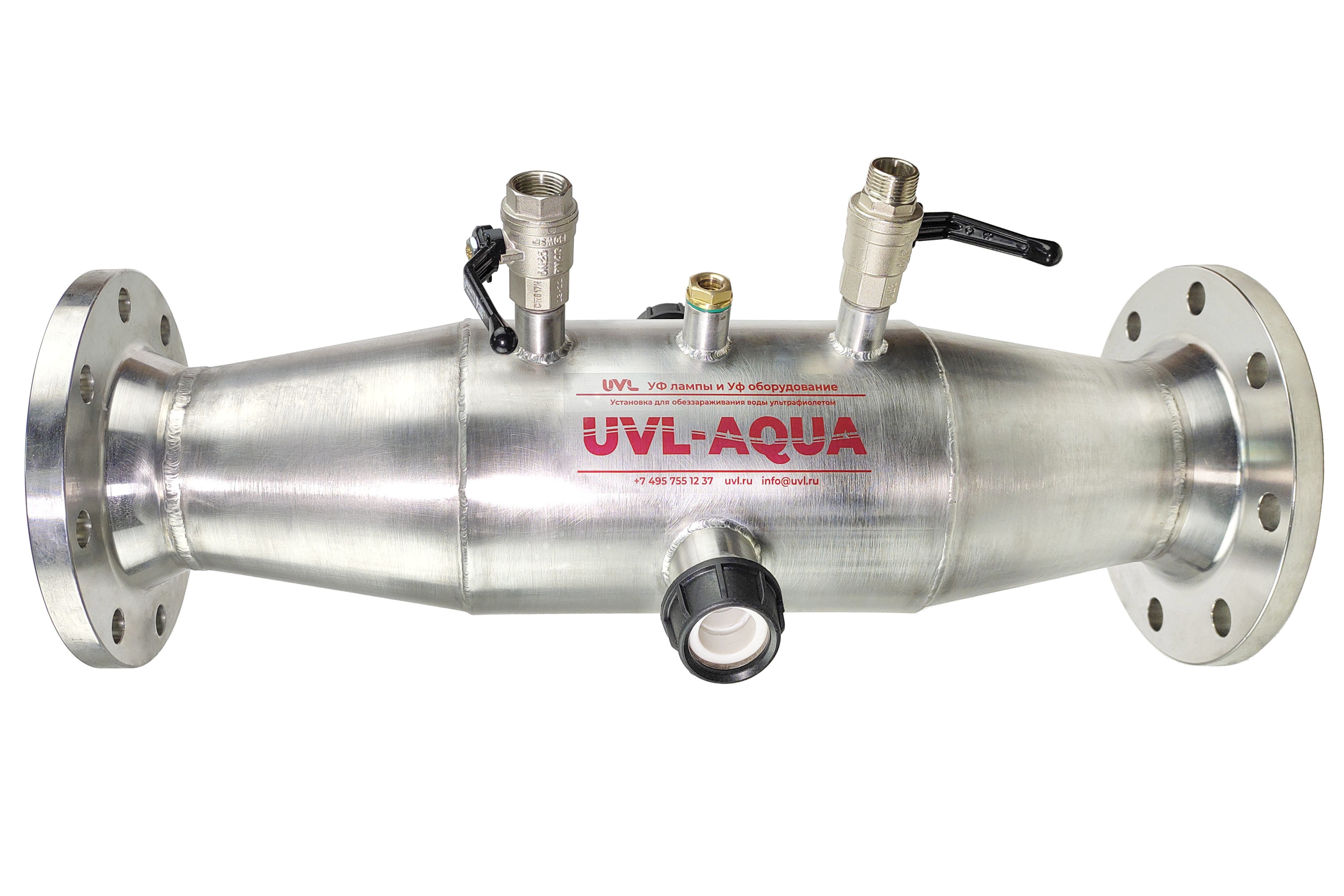
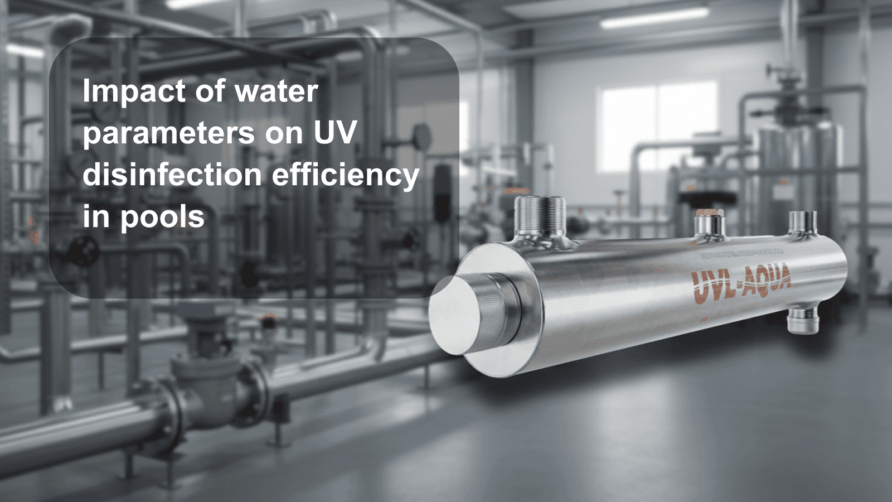
Medium pressure UV units in a stainless steel housing, used in areas where water treatment with ultraviolet radiation in the range of 200 to 400 nm is required. Designed for larger swimming pools. Ultraviolet light helps to neutralize trichloramines (derivatives of chlorine), which significantly improves the quality of pool water.
Case study: Reduced UV sterilizer efficacy due to elevated organic content
Context:
A heavily used sports pool equipped with a medium-power UV sterilizer experienced rising microbial contamination despite stable equipment operation.
Symptoms:
- Turbidity increased to 3 NTU.
- Frequent quartz sleeve fouling and replacement.
- Post-UV treatment microbial counts rose.
- Elevated consumption of coagulants and chlorine.
- Declining UV lamp intensity.
Cause:
Accumulation of dissolved organic substances absorbed UV radiation, lowering disinfection dose and effectiveness. Insufficient pre-treatment and filtration allowed organics to build up, causing turbidity and equipment fouling.
Assessment checklist:
- Turbidity and optical density measurements.
- Organic carbon concentration analysis.
- Quartz sleeve condition inspection.
- Residual chlorine and chemical dosing levels.
- UV lamp intensity monitoring.
- Pressure and flow rate evaluation.
- Maintenance schedule review.
- Circulation and filtration system settings.
Actions taken:
- Installed additional activated carbon filtration.
- Optimized coagulant dosing to reduce organics.
- Increased quartz sleeve cleaning frequency.
- Implemented turbidity and chemical monitoring systems.
- Adjusted UV sterilizer operation parameters accordingly.
- Trained staff on water quality control and equipment maintenance.
Implementation steps:
- Procurement and installation of fine filtration units.
- Recalibration of chemical dosing systems.
- Establishment of routine quartz sleeve maintenance protocols.
- Integration of turbidity and organics sensors into control systems.
- Post-implementation performance testing.
- Staff training on updated procedures.
Results:
Turbidity dropped to 0.8 NTU, microbial load decreased by 85%, and UV lamp intensity stabilized. Maintenance costs declined, confirming the effectiveness of the technical measures.
Common mistakes in UV disinfection system deployment for pools
Many engineers and technologists overlook comprehensive water parameter analysis, focusing solely on UV system power and throughput. This often leads to improper equipment selection and reduced disinfection efficiency. Insufficient monitoring of turbidity and chemical composition causes premature lamp and sleeve degradation.
Temperature effects are frequently ignored, with no seasonal adjustment of UV operation modes. Lack of regular cleaning and equipment inspection protocols further diminishes disinfection quality. Additionally, poor integration of the UV unit into the circulation system can cause uneven water treatment.
These errors increase downtime, operational costs, and risk of failing sanitary standards.
Pre-installation checklist for UV disinfection systems in pools
- Measure water turbidity and optical transparency.
- Analyze chemical composition and organic content.
- Confirm water temperature within operational range.
- Provide appropriate pre-filtration systems.
- Calculate required UV dose with safety margin.
- Select lamps and quartz sleeves compatible with water parameters.
- Configure automated water parameter monitoring.
- Develop maintenance and cleaning schedules.
- Verify compatibility with circulation system pressure and flow.
- Train personnel in monitoring and maintenance procedures.
- Conduct efficacy testing post-installation.
- Implement microbial monitoring systems.
Frequently asked questions before procurement and implementation
How does turbidity affect UV sterilizer selection?
Higher turbidity reduces UV transparency, necessitating more powerful units and pre-filtration.
Which water parameters require regular monitoring?
Turbidity, organic matter, iron and manganese levels, residual chlorine, and temperature.
Can standard lamps be used with high organic content?
No; organic contamination shortens lamp lifespan and reduces efficiency, requiring adapted solutions or more frequent replacements.
How is adequate UV dose determined?
Through microbiological testing before and after UV treatment measuring microbial reduction.
What are the risks of neglecting maintenance schedules?
Reduced disinfection efficiency, increased repair costs, and potential regulatory non-compliance.
How does water temperature impact sterilizer function?
Low temperatures reduce UV output; high temperatures alter water optics, both decreasing disinfection performance.
Is it possible to integrate UV equipment into existing circulation systems?
Yes, but flow rate, pressure, and installation location must be optimized for uniform UV exposure.
Effective UV disinfection in pools depends on holistic consideration of water quality parameters and sound technical design. Transparency and chemical composition critically influence UV penetration and equipment longevity. The next steps involve site data collection, pilot testing, and establishing maintenance protocols reflecting real operational conditions.