In industrial UV disinfection systems, the quality of quartz sleeves plays a critical role in the effectiveness of air and water sterilization. Quartz sleeves protect amalgam UV lamps from environmental factors while ensuring maximum ultraviolet (UV) transparency. Poor-quality or contaminated sleeves reduce UV intensity, diminishing the disinfection performance of the equipment. For engineers and technicians, understanding how to select, inspect, and maintain replacement UV lamps and quartz sleeves is essential to prevent performance degradation and premature failure of costly components.
This article examines the physical factors affecting quartz sleeve quality, onsite inspection methods, common errors, and their operational consequences. For example, in a large industrial setting, a drop in UV intensity was traced to microcracks and contamination on sleeves, necessitating unscheduled lamp replacement and causing equipment downtime.
Who needs this information and when
- Operations engineers — to maintain required disinfection levels.
- Process technologists — to ensure consistent production stability.
- Service specialists — during scheduled maintenance activities.
- UV system designers — when selecting components and configurations.
- Procurement professionals — to evaluate the quality of replacement UV lamps.
- Quality control personnel — to monitor equipment condition during operation.
- Production managers — to minimize downtime risks and avoid inefficiencies.
Why quartz sleeve quality is critical for bactericidal UV lamps
The quartz sleeve functions as a transparent barrier between the UV light source—typically an amalgam UV lamp—and the external environment. It must maximize transmission of UV radiation, particularly in the 200–300 nm range where bactericidal effectiveness peaks, while protecting the lamp from dust, moisture, and mechanical damage.
Quartz glass is chosen for its high UV transparency in this spectral range. However, over time, sleeves accumulate deposits such as dust, oils, chemical residues, and may develop microcracks or clouding. These defects scatter or absorb UV rays, reducing the bactericidal flux and lowering disinfection performance. This is especially critical in air and water treatment applications where precise UV dosing is required.
Onsite sleeve quality assessment involves visual inspection for cracks, cloudiness, and contamination layers, combined with bactericidal flux measurement using specialized UV radiometers. If measured intensity falls significantly below lamp specifications, cleaning or replacement of the sleeve is necessary.
Neglecting sleeve condition leads to reduced disinfection efficiency, increased microbial load, and potential process disruptions. Lamps operate under higher stress to compensate, shortening service life and increasing replacement costs.
Regular maintenance—including cleaning, integrity checks, and timely sleeve replacement—is recommended. Implementing inspection schedules and bactericidal flux measurement protocols improves operational reliability.
Effects of contamination and damage on quartz sleeves and UV output
Contaminants on quartz sleeves act as barriers to UV radiation, decreasing bactericidal flux. Dust, grease, scale, and chemical deposits accumulate on sleeve surfaces, causing scattering and absorption of UV light. In industrial environments such as wastewater treatment plants or ventilation ducts, such contamination is unavoidable.
Physically, contamination reduces UV transmittance, thereby lowering the disinfection capacity of amalgam UV lamps. Since bactericidal efficacy is proportional to UV intensity, even minor sleeve opacity can cause substantial performance loss.
To evaluate sleeve condition onsite:
- Visually inspect for visible contaminants and damage.
- Measure bactericidal flux with a UV radiometer.
- Compare results against lamp manufacturer’s specifications.
- Review maintenance and cleaning records.
Ignoring sleeve quality results in lamps operating below nominal power, leading to more frequent replacements and risk of insufficient disinfection. This is critical in processes requiring strict UV dose compliance.
It is advisable to perform regular cleaning with appropriate solvents and to replace sleeves and lamps according to maintenance schedules to maintain stable bactericidal flux.
Technical specifics of amalgam UV lamps and sleeve influence
Amalgam UV lamps offer stable output and higher power compared to conventional mercury lamps. The mercury is bound in an amalgam alloy, enhancing environmental safety and resistance to temperature fluctuations.
However, lamp efficacy depends heavily on quartz sleeve transparency. Sleeves must withstand thermal stresses without optical degradation. Defects such as cracks, clouding, or contamination reduce UV flux and may cause localized lamp overheating.
Onsite assessment includes visual inspection and UV intensity measurements. Monitoring lamp power supply stability and ensuring correct lamp installation is also crucial, as improper fitting can damage sleeves.
Damaged or dirty sleeves reduce amalgam lamp efficiency, necessitating premature lamp replacement and increasing operational costs. Additionally, uneven UV emission compromises disinfection quality.
Maintaining lamp performance requires using manufacturer-approved replacement UV lamps and quartz sleeves, along with regular monitoring of sleeve condition and cooling systems.
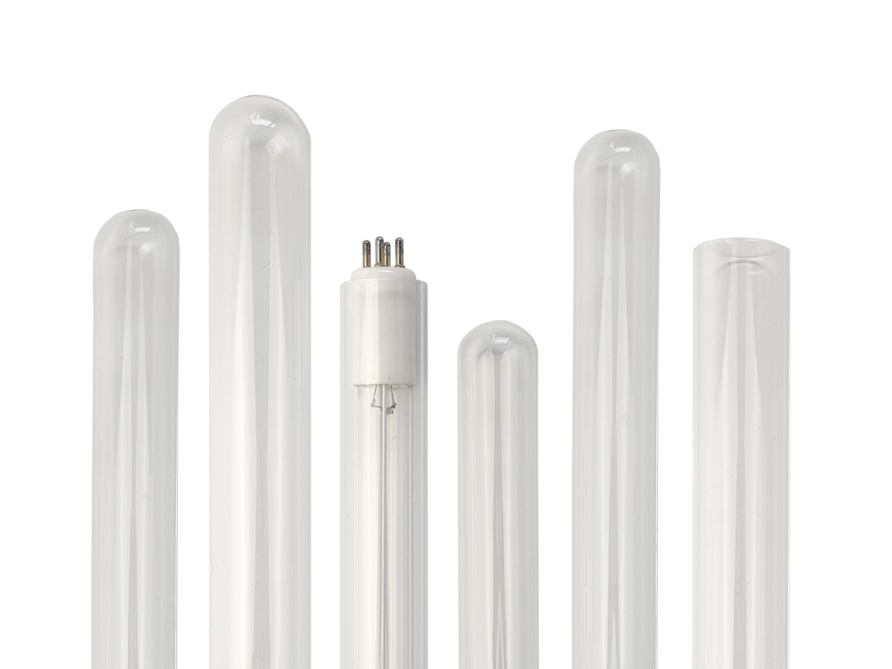
In our company, you can purchase quartz covers for UV sterilizers. These components protect the UV lamps and ensure their efficient operation. The UVL catalog offers a wide range of quartz flasks suitable for various models of UV systems, ensuring reliable and long-lasting performance.
Case study: bactericidal flux reduction due to quartz sleeve contamination
Background
An industrial facility employing UV systems for process air sterilization experienced a decline in disinfection efficiency. The system used amalgam UV lamps with quartz sleeves.
Observed issues
- Bactericidal flux decreased by approximately 25% compared to specification.
- Extended air treatment times needed to achieve microbial reduction targets.
- Elevated lamp temperatures and frequent equipment interruptions.
- Visible cloudiness and deposits on quartz sleeves.
Root cause
Accumulated contamination and microcracks on quartz sleeves, caused by mechanical and thermal stresses, reduced UV transmission and impaired lamp cooling. The absence of a formal cleaning and inspection regimen exacerbated the problem.
Recommended checks
- Visual inspection of quartz sleeves for contamination and damage.
- Bactericidal flux measurement with UV radiometers.
- Verification of lamp cooling system functionality.
- Comparison of measured UV intensity with lamp datasheets.
- Review of maintenance and cleaning schedules.
- Confirmation of proper lamp installation.
- Assessment of environmental conditions (temperature, humidity, dust).
- Monitoring of lamp power supply voltage and stability.
Corrective actions
- Thorough cleaning of quartz sleeves using specialized cleaning agents.
- Replacement of damaged sleeves meeting technical specifications.
- Installation of new amalgam UV lamps.
- Implementation of a regular maintenance and cleaning plan.
- Adjustment of cooling systems to prevent overheating.
- Ensuring stable power supply and voltage monitoring.
Implementation
- Training personnel on sleeve maintenance and inspection procedures.
- Scheduling regular bactericidal flux measurements with record keeping.
- Establishing lamp replacement intervals based on actual wear.
- Continuous monitoring of cooling system performance.
- Setting up alerts for declining UV output.
- Developing safe lamp replacement protocols.Outcome
Post-intervention, UV intensity stabilized at specification levels. Air treatment times decreased, and equipment downtime was reduced. Regular monitoring enabled early detection of deviations, enhancing overall disinfection reliability.
Common mistakes in quartz sleeve management
Frequent errors include neglecting routine cleaning, leading to contaminant buildup and reduced UV flux. Failure to replace sleeves upon detection of microcracks or clouding is another common issue. Incorrect installation of replacement UV lamps can damage sleeves and lower efficiency. Lack of power supply and cooling system monitoring exacerbates overheating and accelerates lamp degradation. Underestimating environmental impacts such as high humidity and dust shortens equipment lifespan. Finally, absence of systematic UV intensity monitoring delays detection of performance decline.
Pre-implementation checklist
- Verify quartz sleeve transparency and structural integrity.
- Establish regular cleaning and visual inspection protocols.
- Confirm quality and compatibility of replacement UV lamps.
- Ensure stable power supply voltage within ±10% of nominal.
- Monitor UV lamp cooling system operation.
- Introduce onsite bactericidal flux measurement.
- Define lamp replacement schedules based on wear.
- Assess environmental conditions—humidity, dust, temperature.
- Train staff in maintenance and replacement procedures.
- Develop emergency procedures for lamp or sleeve damage.
- Implement data collection and analysis on system performance.
- Set criteria for sleeve and lamp replacement decisions.
Frequently asked questions before purchase and implementation
How to determine when a quartz sleeve needs replacement?
Visible cracks, cloudiness, or a bactericidal flux reduction exceeding 15% from specification indicate replacement is necessary.
Can universal replacement UV lamps be used?
It is recommended to use lamps certified for the specific equipment to ensure compatibility and optimal performance.
How often should quartz sleeves be cleaned?
Cleaning frequency depends on operating conditions but generally should occur at least quarterly or when contamination is observed.
What actions to take if an amalgam lamp’s quartz sleeve is damaged?
Immediate replacement of the sleeve or lamp is required to maintain efficiency and prevent further equipment damage.
How does ambient temperature affect lamp and sleeve operation?
Temperatures below +10 °C can hinder lamp ignition, reduce bactericidal flux, and increase risk of mechanical sleeve damage.
What power supply parameters are critical for amalgam lamps?
Voltage must remain within ±10% of nominal; deviations reduce lamp life and cause unstable operation.
Is it safe to replace lamps while the equipment is running?
No, equipment must be powered down to ensure safety and prevent damage during lamp replacement.
Conclusion
Quartz sleeve quality is a key determinant of bactericidal amalgam UV lamp performance in industrial UV equipment. Sleeve transparency and integrity directly impact UV radiation output and disinfection effectiveness. Regular inspection, cleaning, and timely replacement of sleeves and UV lamps prevent reductions in bactericidal flux and help maintain stable process conditions. The next steps involve systematic data collection on equipment condition, pilot testing of maintenance procedures, and development of operational protocols to support optimal UV system performance.