Ventilation systems equipped with bactericidal sections and UV lamps are widely used to disinfect air and reduce microbial contamination in industrial and public environments. However, in modern industrial practice, engineers frequently observe a decline in system performance. A primary cause is the accumulation of dust and contaminants on the internal surfaces of the UV sections and lamps. This buildup reduces UV radiation intensity, diminishes the disinfection effect, and can lead to increased microbial growth within ductwork.
For engineering professionals, it is critical to understand how contamination affects bactericidal sections, which inspection and maintenance methods preserve efficiency, and what common implementation errors reduce performance. This article explores the underlying physical processes, practical on-site verification techniques, and typical case studies.
Who needs this information and when?
- Ventilation engineers selecting and configuring bactericidal sections.
- Food industry technologists ensuring air sanitary safety.
- Maintenance specialists performing timely UV equipment servicing.
- Industrial facility designers integrating UV modules into existing ducts.
- Agricultural complex managers maintaining animal health via clean air.
- Medical facility engineers designing air disinfection systems.
- Service providers diagnosing and addressing UV section performance loss.
Why does contamination reduce bactericidal section efficiency?
Ultraviolet radiation disinfects air as it passes through the bactericidal section. The intensity of UV radiation depends directly on the cleanliness of lamps and reflective surfaces inside the section. Dust, soot, grease, and other deposits on lamps and reflectors absorb and scatter UV rays, lowering the dose received by the airflow.
Additionally, dirt accumulation causes localized overheating of lamps and electrical components, shortening their lifespan and increasing failure risk. Deposited dust and microorganisms create conditions for biofilm formation, further degrading air quality and necessitating more frequent cleaning.
On-site assessment includes visual inspection of internal components and measuring UV intensity with lux meters or spectrometers. Monitoring airflow parameters and section temperature is also important, as contamination reduces airflow capacity and promotes overheating.
If contamination is not addressed, disinfection efficiency declines, leading to higher microbial loads in ventilation, increased equipment downtime, and elevated repair costs.
Regular maintenance with cleaning of lamps and reflectors, combined with installation of pre-filters, is recommended. UV intensity sensors and automated monitoring systems enhance operational control.
How does contamination affect lamps and reflectors in bactericidal sections?
Bactericidal lamps are made of quartz glass, transmitting UV radiation at specific wavelengths. Dust and contaminants on lamp surfaces partially block UV emission. Similarly, reflectors—typically high-reflectivity metal or mirror-coated surfaces—lose their reflective capability when dirty.
This results in a reduced overall bactericidal dose, as part of the UV radiation fails to reach the air stream. Ventilation systems with contaminated sections may require longer exposure times or higher lamp power, increasing energy consumption and sometimes being impractical.
On-site checks should include:
- Visual inspection of lamps and reflectors;
- UV intensity measurements at multiple points within the section;
- Comparison with factory specifications;
- Monitoring the section’s surface temperature.
If readings fall below standards, thorough cleaning and re-measurement are necessary.
Neglecting these procedures accelerates lamp failure and lowers air disinfection quality. In some cases, entire UV section modules must be replaced, increasing costs and downtime.
To maintain effectiveness, establish cleaning schedules, use coarse pre-filters on intake air, and monitor equipment status via built-in or external systems.
How does airborne dust impact bactericidal section performance?
Dust carried by ventilation airflow not only settles on bactericidal section components but also affects air disinfection quality. Dust particles can shield microorganisms from UV radiation, reducing the disinfection effect. Moreover, dust contains organic and mineral matter that creates shadow zones and promotes biofilm development.
In environments with high dust loads—such as metallurgy, agriculture, and food processing—bactericidal sections rapidly accumulate contamination without pre-filtration, leading to efficiency loss. Dust concentration measurements and filter condition assessments are essential on-site.
Without dust control, bactericidal sections require more frequent maintenance and lamp replacement, increasing operational expenses and reducing ventilation system reliability.
It is advisable to implement pre-filtration with filters rated at least G4, or finer filters like F7 when dust load is high. Ensuring access to sections for regular cleaning and lamp replacement is also critical.
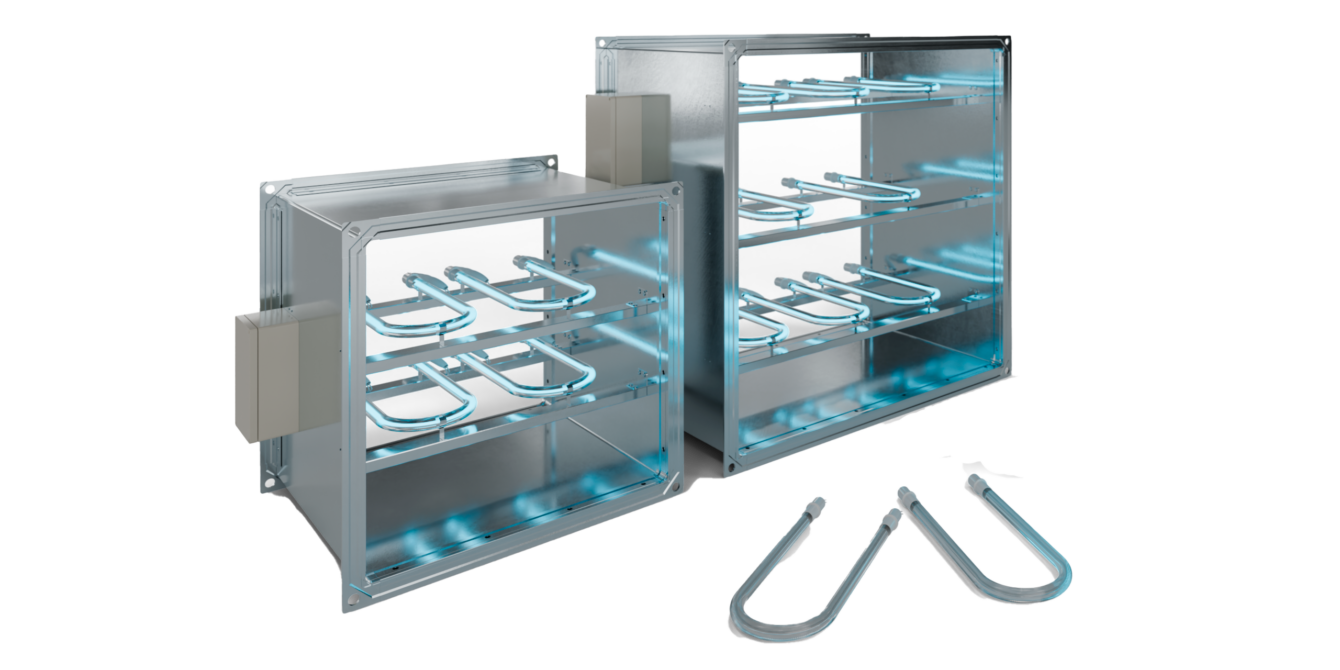
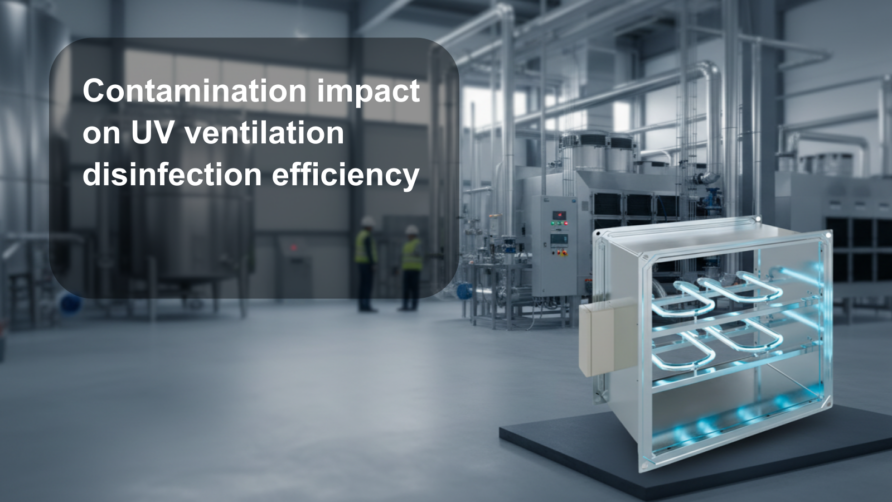
UVL-Vent bactericidal sections based on amalgam UV lamps for installation in ventilation and air conditioning channels in residential and industrial premises. They are used to equip existing or projected air ducts for neutralizing microorganisms: viruses, bacteria, mold spores, and fungi.
Case study: Reduced bactericidal section efficiency in a food processing plant
Initial conditions
A sauce packaging facility installed bactericidal sections with amalgam UV lamps integrated into the existing ventilation system without duct modifications. After six months, a decline in microbiological air safety was detected.
Symptoms
- UV radiation intensity decreased by 30%;
- Increased microbial contamination in the air;
- Dust and grease deposits on lamps;
- Elevated section temperature;
- Frequent activation of fault alarms.
Root causes
High concentrations of dust and aerosolized grease formed deposits on lamps and reflectors. Lack of pre-filtration and insufficient cleaning schedules reduced UV transmission and caused equipment overheating. Placement of sections in high airflow zones without additional protection accelerated contamination.
Inspection checklist
- Lamp and reflector cleanliness;
- UV intensity compared to technical specifications;
- Presence and condition of pre-filters;
- Temperature inside the bactericidal section;
- Proper installation and airtightness;
- Lamp power compliance with design;
- Maintenance frequency and quality;
- Airflow and dust load parameters.
Corrective actions
- Deep cleaning of lamps and reflectors;
- Installation of coarse intake air filters;
- Revision of maintenance intervals with increased cleaning frequency;
- Lamp replacement as needed;
- Optimization of section installation to reduce contamination;
- Implementation of UV intensity monitoring systems.
Implementation steps
- Coordinate updated requirements with ventilation designers;
- Train personnel on UV section maintenance;
- Plan regular inspections and UV intensity measurements;
- Establish documentation and control systems for equipment status;
- Maintain spare lamps and components inventory;
- Monitor effectiveness through laboratory microbial load testing.
Outcome control
Following these measures, UV intensity stabilized at design levels, microbial contamination decreased to acceptable limits, lamp lifespan extended, and equipment faults reduced.
Common errors in bactericidal section operation
Performance decline often stems from inadequate maintenance and improper equipment integration. Frequent mistakes include:
- Irregular or absent cleaning of lamps and reflectors;
- Neglecting pre-filtration of intake air;
- Using UV lamp power inconsistent with air volume requirements;
- Installing sections in heavily contaminated zones without protection;
- Insufficient temperature control and overheating prevention;
- Lack of regular UV intensity measurements;
- Ignoring manufacturer guidelines for lamp replacement intervals.
Each error reduces disinfection capability and increases microbial contamination risks.
Pre-installation checklist for bactericidal sections
- Calculate required bactericidal UV dose for airflow volume.
- Design pre-filtration system for intake air.
- Verify compatibility with duct cross-section and materials.
- Assess accessibility for maintenance and cleaning.
- Plan UV intensity monitoring system.
- Confirm proper installation and airtightness.
- Agree on maintenance schedules.
- Ensure availability of spare lamps and parts on-site.
- Validate lamp power matches design specifications.
- Evaluate operational conditions: temperature, humidity, dust load.
- Train staff on operation and maintenance.
- Implement alarm and monitoring systems.
Frequently asked questions before purchase and installation
How does contamination affect UV lamp lifespan?
Contamination increases lamp heating and reduces UV output, accelerating lamp failure and requiring more frequent replacement.
Can bactericidal sections be installed in existing ducts without modification?
Yes, provided dimensions, accessibility, and pre-filtration are adequate to minimize contamination.
How often should lamps and reflectors be cleaned?
Recommended intervals are every 3–6 months, depending on operating conditions and dust levels.
What if UV intensity drops but lamps appear clean?
Check reflectors for hidden contamination and verify electrical connections.
Which filters are optimal for protecting bactericidal sections?
Filters rated at minimum G4 are standard; for higher dust loads, finer filters like F7 are advisable.
How to verify disinfection effectiveness on-site?
Use specialized UV dose meters and laboratory microbial air quality tests.
Can sections operate under high humidity?
Yes, if designed for such conditions; otherwise, corrosion and efficiency loss may occur.
What are risks of improper bactericidal section operation?
Reduced disinfection quality, increased microbial contamination, equipment failure, and higher maintenance costs.
How to organize bactericidal section performance control?
Regular UV intensity measurements, visual inspections, temperature monitoring, and adherence to maintenance protocols.
In summary, contamination and dust are major factors reducing the efficiency of bactericidal sections in ventilation systems. The key to successful operation is maintaining lamp and reflector cleanliness and ensuring effective pre-filtration of intake air. The next steps involve collecting equipment condition data on-site, conducting pilot tests, and developing maintenance regulations. This approach sustains high disinfection performance and extends UV equipment lifespan.