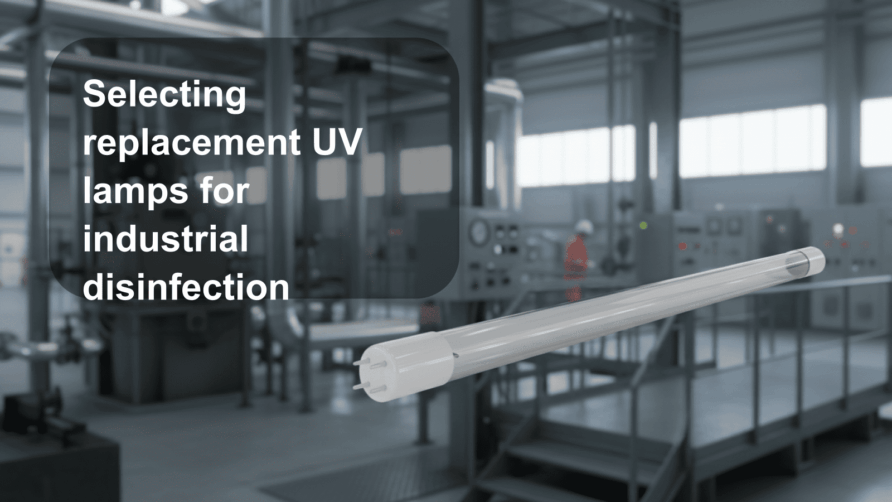
In industrial UV equipment, the quality and efficiency of disinfection depend directly on the correct selection of replacement lamps. Changing UV lamps is not merely a routine task but an engineering decision that requires careful consideration of technical parameters and operating conditions. An improperly selected lamp reduces ultraviolet radiation intensity, resulting in insufficient air or water disinfection, increased microbial load, and higher maintenance costs. This article guides engineers and technologists on the critical parameters for selecting replacement lamps, how to verify compliance on-site, and how to avoid common mistakes. For example, choosing a lamp with incorrect power or incompatible base type can shorten service life and degrade disinfection performance. In one case study, incorrect lamp selection caused frequent equipment downtime and excessive energy consumption.
Who needs this and when
- UV equipment operators — to ensure timely and safe lamp replacement.
- Production technologists with air and water disinfection requirements — to maintain compliance.
- Maintenance specialists — for planning preventive servicing.
- UV disinfection system designers — when selecting components for new installations.
- Industrial procurement professionals — to avoid ordering errors for replacement lamps.
- Production managers — to control costs and minimize operational risks.
- Environmental safety officers — for proper disposal of amalgam lamps.
Key technical parameters affecting replacement lamp selection
A UV lamp is a source of germicidal radiation that disinfects air or water primarily by emitting at approximately 254 nm. The main parameter is the UV output power in the bactericidal range, measured in watts (W). Amalgam UV lamps differ from mercury vapor lamps by containing mercury in a solid phase, enhancing operational stability and safety.
When selecting a replacement lamp, consider not only nominal power but also:
- Dimensions and base design to ensure proper fit in the socket.
- Electrical parameters: voltage and current matching the ballast (control gear).
- Useful service life, after which UV output drops by more than 20%.
- Operating conditions: ambient temperature and duty cycle (continuous or intermittent).
On-site verification includes visual inspection of lamp markings, voltage measurement at the lamp, and UV intensity assessment using specialized meters. If parameters do not align with equipment specifications, disinfection effectiveness declines.
Incorrect choice leads to premature lamp failure, reduced germicidal efficiency, and increased repair costs. Therefore, use only factory-certified replacement lamps specified for the equipment model.
Recommendation: always verify lamp markings against equipment documentation, monitor ballast condition, and record lamp operating hours for timely replacement.
Characteristics and advantages of amalgam UV lamps
Amalgam lamps represent the current industrial standard. Mercury is bound in a solid alloy, eliminating contamination risks if the bulb is broken—critical for facilities with strict environmental and downtime requirements.
Technologically, amalgam lamps maintain stable UV output across a wide temperature range, essential for systems operating under variable conditions. High power ratings up to 500 W enable disinfection of large air or water volumes.
On-site inspection includes:
- Confirming bulb and base integrity.
- Checking markings and production date.
- Measuring current and voltage under operating conditions.
- Monitoring germicidal output with UV meters.
Replacing an amalgam lamp with a mercury vapor lamp or an incompatible model increases overheating risk, reduces service life, and diminishes disinfection capacity. Mercury lamp breakage also necessitates hazardous mercury cleanup, causing production downtime.
Use manufacturer-recommended amalgam lamps considering operating conditions and replacement intervals to ensure stable operation and safety.
Accounting for electrical parameters and ballast compatibility during replacement
Proper UV lamp replacement requires compatibility with the ballast (control gear). Electronic ballasts provide stable power, regulate starting current, and maintain optimal lamp operation.
Key checks include:
- Matching nominal voltage and current of the lamp with ballast specifications.
- Inspecting contacts and wiring for damage.
- Ensuring adequate cooling and absence of overheating.
Violating these criteria may cause unstable lamp operation, reduced service life, ballast damage, and decreased disinfection efficiency.
On-site testing involves measuring electrical parameters with multimeters and oscilloscopes, plus visual inspection of connections. Recording on/off cycling frequency is important, as frequent switching shortens lamp life.
Recommendations: use only compatible ballasts, maintain power supply integrity, and schedule lamp replacement based on operating hours, not solely visual inspection.
Impact of lamp dimensions and design features
UV lamps come in various form factors—length, bulb diameter, base type—all critical for installation and reliable operation. An incompatible lamp may not fit the socket or fail to establish proper contact, causing unstable ignition.
Bulb construction also affects emission spectrum and intensity. For instance, quartz glass lamps transmit more germicidal radiation than those with UV-filtering glass.
On-site checks include verifying lamp dimensions and markings, testing stable operation, and measuring germicidal output. Non-compliance reduces disinfection effectiveness and risks equipment damage.
Strict adherence to manufacturer specifications and using lamps with verified dimensions and characteristics is essential. When in doubt, conduct bench testing.
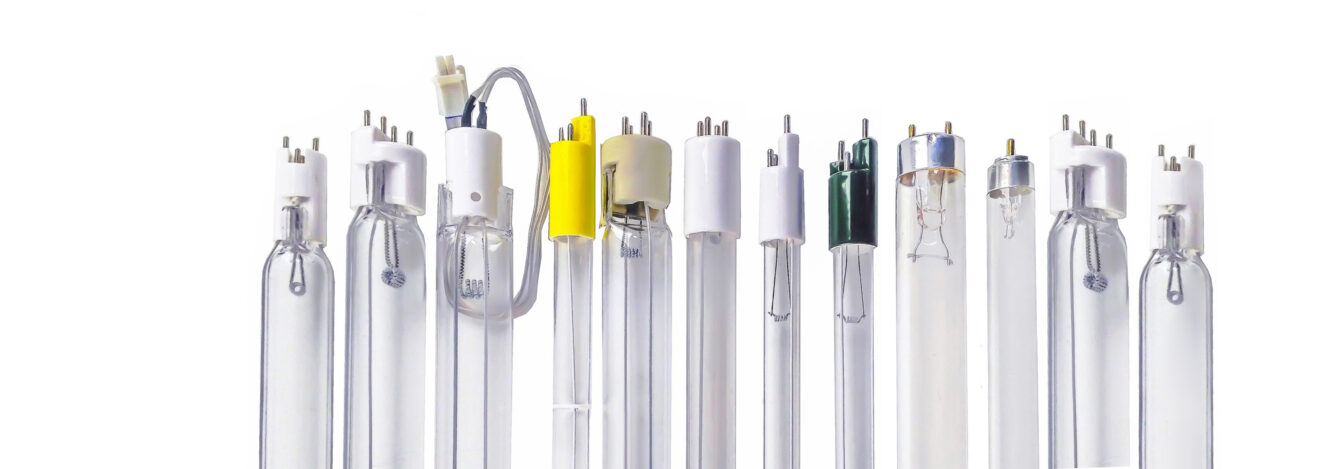
We manufacture mercury and amalgam ultraviolet lamps compatible with all types of UV disinfection systems. Use the filter to select a lamp with the required specifications or contact our manager via the feedback form for assistance. We produce lamps in any quantity within short lead times and ensure worldwide delivery, providing reliable UV solutions tailored to your needs.
Case study: error analysis of replacement lamp selection in production
Initial conditions: A food production facility uses air disinfection systems with 160 W amalgam UV lamps. During scheduled replacement, a lamp with the correct base but different power and unknown manufacturer was installed.
Symptoms:
- Decreased germicidal radiation intensity.
- Frequent ballast malfunctions.
- Increased equipment downtime.
- Elevated electricity consumption.
- Reduced lamp service life.
- Technologist complaints about disinfection quality.
Cause: The replacement lamp did not meet nominal ballast parameters and system technical requirements. Lower power reduced bactericidal efficiency. Electrical parameter mismatch caused ballast overload and unstable operation.
What to check:
- Lamp markings and technical specifications.
- Compatibility with ballast.
- Electrical parameters in operation.
- Base type and dimensions.
- Previous lamp operating time.
- Germicidal radiation level.
- Bulb integrity.
- Operating environment and temperature.
Solution:
- Reinstall original amalgam lamps with verified power.
- Inspect and replace ballast if necessary.
- Implement regular monitoring of lamp and equipment parameters.
- Introduce replacement schedules based on operating hours.
- Train personnel on correct lamp selection.
- Utilize UV meters to control emission intensity.
Implementation:
- Source lamps from trusted suppliers.
- Maintain logs of lamp operating hours.
- Conduct periodic ballast condition audits.
- Establish maintenance and replacement protocols.
- Optimize equipment on/off cycles.
- Monitor microbiological disinfection performance.
Result control: After these measures, steady germicidal output was maintained, downtime reduced, and energy costs lowered. Technologists confirmed improved disinfection quality, enhancing overall production safety.
Common mistakes in selecting replacement UV lamps
Engineers and technologists often face issues due to incorrect lamp choice. Typical errors include:
- Ignoring technical parameters: power, voltage, current.
- Using lamps with incompatible base or dimensions.
- Replacing amalgam lamps with mercury vapor lamps disregarding safety.
- Neglecting recommended replacement intervals.
- Failing to verify ballast compatibility.
- Overlooking operating conditions and temperature effects.
- Procuring lamps without certified quality assurance.
These mistakes reduce disinfection effectiveness, increase downtime, and raise repair costs.
Checklist before implementing a replacement UV lamp
- Confirm lamp markings match equipment technical requirements.
- Ensure compatibility with the ballast.
- Verify dimensions and base design.
- Check service life and previous lamp operating hours.
- Measure electrical parameters during operation.
- Monitor germicidal output levels.
- Guarantee correct installation and cooling.
- Prepare maintenance and replacement schedules.
- Purchase lamps from certified suppliers.
- Train staff on proper lamp selection.
- Track lamp operating times.
- Plan regular technical audits of equipment.
Frequently asked questions before purchase and installation
How to determine when a lamp needs replacement?
When UV output drops more than 20% below nominal or recommended operating hours are exceeded.
Can an amalgam lamp be replaced with a standard mercury vapor lamp?
No. Amalgam lamps provide stable, safer operation; mercury lamps require hazardous mercury cleanup if broken.
How to verify lamp compatibility with the ballast?
Compare nominal voltage and current ratings, and measure operating parameters on-site.
Does lamp size affect disinfection efficiency?
Yes. Incorrect dimensions can cause poor fit and reduced UV intensity.
What is the typical service life of an amalgam UV lamp?
Up to approximately 16,000 hours under proper operating conditions.
How to verify disinfection quality after lamp replacement?
Use UV meters to measure emission intensity and perform microbiological monitoring.
What if the lamp is damaged during transport?
Do not use it. Replace with a new lamp and follow hazardous waste disposal protocols for amalgam lamps.
Is switching frequency important?
Yes. Frequent on/off cycles reduce lamp life; minimize switching where possible.
Can lamps from other manufacturers be used?
Only if fully matching technical specifications and certifications; otherwise, risk of equipment failure increases.
In conclusion, selecting the correct replacement lamp is a critical factor for stable and effective operation of UV disinfection systems. The primary criterion is conformity between lamp and equipment technical specifications, including power, electrical parameters, and physical design. The next steps involve collecting accurate on-site data, performing test measurements, and implementing maintenance protocols. This approach prevents downtime, reduces operational costs, and ensures required disinfection levels.