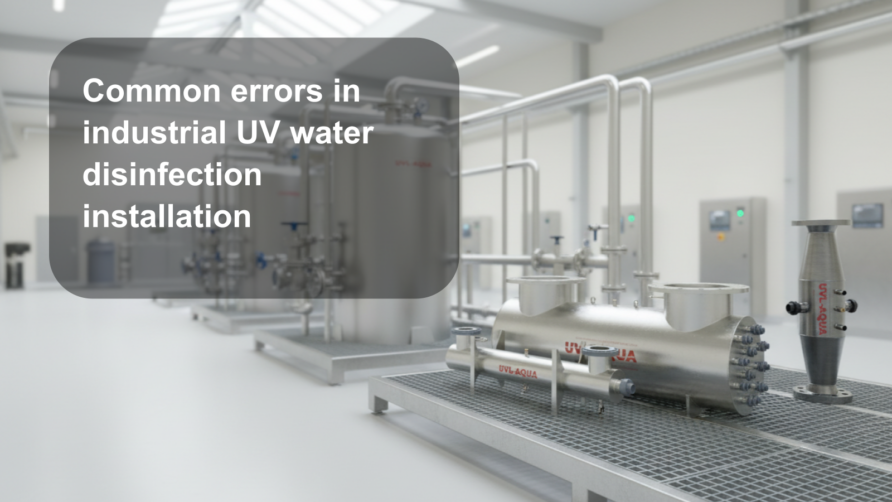
Correct installation and integration of flow-through UV water disinfection systems are critical steps that determine the effectiveness of microbial inactivation in both potable and process water treatment. Improper placement, connection errors, or failure to maintain operational parameters reduce bactericidal performance, negatively impacting water quality and process reliability. For engineers and technologists, understanding the causes of such errors, how to detect them onsite, and how to prevent problems is essential.
This article analyzes common mistakes using examples from industrial flow-through UV water sterilizers, explains the underlying physical and technological reasons, and provides practical recommendations for system verification and adjustment. For instance, it is frequently observed that a UV sterilizer lamp is installed without regard to proper flow direction or required UV intensity, resulting in incomplete water disinfection. Another common issue is selecting an inappropriate chamber length or flow velocity, which reduces UV exposure time. Ultimately, insufficient disinfection is detected during final product quality control.
Who needs this information and when
- Water system design engineers — to select and integrate UV filters correctly within process chains.
- Production technologists — to monitor UV disinfection quality and prevent sanitary non-compliance.
- Service engineers — during scheduled maintenance and repair of UV water systems.
- Operations personnel — for diagnosing and timely detection of UV sterilizer performance decline.
- Procurement managers — to understand technical requirements and avoid selection errors.
- Project teams — when implementing new engineering systems incorporating UV disinfection.
- Quality controllers — to verify compliance of water disinfection with established standards.
Key considerations for UV system installation and integration
Proper positioning and orientation of the UV sterilizer
UV water sterilizers function by exposing microorganisms to ultraviolet radiation, reducing microbial load. For flow-through systems, ensuring uniform water flow through the irradiation chamber is critical to guarantee sufficient UV exposure time for each volume unit. Physically, water must pass through the zone where the UV lamp generates a stable, uniform radiation field.
Correct installation can be verified by measuring flow velocity and reviewing the hydraulic layout onsite. Key checks include:
- Installation orientation relative to piping (horizontal or vertical).
- Water inlet and outlet strictly following design without backflow.
- Absence of air pockets inside the UV chamber.
- Flow velocity measurement compared with manufacturer specifications.
Ignoring these parameters results in partial bypass of water around the irradiation zone, reducing bactericidal efficiency. Consequently, UV disinfection is incomplete, microbial load remains elevated, potentially requiring reprocessing or abandonment of the system.
It is recommended to strictly follow design documentation for installation and connection, and to conduct commissioning tests measuring flow and radiation intensity. Ensuring chamber tightness to prevent air ingress is also crucial for stable UV lamp operation.
Errors in selecting UV lamp power and irradiation chamber length
The choice of UV system parameters directly affects disinfection efficiency. UV lamp power and chamber length must be calculated to deliver a minimum UV dose—typically no less than 30 mJ/cm² for potable water. Flow velocity must not exceed design values to maintain adequate exposure time.
Verification onsite involves comparing system specifications with actual operating parameters:
- Measuring flow velocity versus design flow.
- Checking lamp rated power and current radiation intensity.
- Confirming chamber length matches process requirements.
- Assessing disinfection quality via microbiological analysis.
Selecting a system with insufficient chamber length or lamp power leads to ineffective disinfection, resulting in increased microbial contamination that can halt production, spoil products, or breach process standards. Conversely, oversizing the system increases energy consumption and operational costs without proportional benefits.
It is advisable to perform thorough parameter calculations during design, account for actual operating conditions, and maintain regular monitoring of lamp condition and flow.
Impact of water quality and pretreatment before UV disinfection
Ultraviolet disinfection is effective only if the water medium is sufficiently transparent. Suspended solids, turbidity, and organic compounds reduce UV penetration, decreasing disinfection efficiency. Therefore, mechanical and chemical pretreatment must precede the UV system.
Onsite checks include:
- Measuring turbidity and water transparency.
- Monitoring iron, manganese, and organic matter content.
- Evaluating pretreatment filtration quality.
- Verifying pretreatment system performance before the UV sterilizer.
Neglecting pretreatment leads to fouling of the UV lamp surface, diminished radiation intensity, and incomplete microorganism inactivation, increasing biological contamination risk and necessitating additional treatment stages. Regular cleaning and maintenance of the UV chamber are also required to sustain lamp performance and longevity.
Best practice is to install the UV filter downstream of all mechanical and chemical pretreatment stages and to implement routine cleaning protocols.
Case study: installation errors of a flow-through UV sterilizer in food production
Initial conditions:
A flow-through UV water disinfection system was installed at a food processing facility to treat process water. Installation was expedited without detailed review of design documentation. After one month, product quality complaints and increased microbial contamination arose.
Symptoms:
- Elevated water turbidity post-disinfection.
- Equipment failures due to biological fouling.
- Microbiological non-compliance in final product.
- Frequent UV lamp replacements caused by premature failure.
Root causes:
Flow direction was improperly set, allowing water to bypass irradiation zones through leaks. Flow velocity exceeded design limits, while chamber length was shorter than required for the lamp’s power. Water pretreatment was insufficient; suspended solids accumulated on lamps, reducing UV intensity.
What to check:
- Hydraulic scheme and flow direction.
- Water velocity in the UV system.
- Chamber integrity and tightness.
- Lamp condition and power output.
- Incoming water quality.
- Presence of air pockets.
- Chamber dimensions compliance.
- Microbiological test results after treatment.
Corrective actions:
- Reconfigure flow direction, eliminate bypass paths.
- Reduce flow velocity to design values.
- Enhance filtration before UV system.
- Replace UV lamps and implement scheduled maintenance.
- Strengthen chamber sealing and cleaning procedures.
- Establish regular disinfection quality monitoring.
Implementation steps:
- Train personnel on operation and maintenance.
- Develop maintenance and cleaning schedules.
- Install flow and pressure monitoring devices.
- Conduct routine microbiological testing.
- Set up rapid response protocols for performance drops.
- Update design documentation incorporating lessons learned.
Result control:
Following adjustments, disinfection quality stabilized, microbial loads returned to acceptable limits, production process reliability improved, and lamp replacement frequency decreased. Ongoing monitoring confirmed sustained system performance.
Common errors in UV system installation and integration
Beyond the case, other frequent mistakes reducing UV disinfection effectiveness include:
- Incorrect installation location causing mechanical damage or chamber contamination.
- Missing or improperly installed radiation intensity sensors.
- Neglecting grounding and electrical safety requirements.
- Delayed cleaning and lamp replacement reducing disinfection efficacy.
- Misconfiguration of automation and control systems.
- Insufficient water pretreatment before UV exposure.
- Lack of comprehensive monitoring and quality control post-installation.
Each error can degrade performance and increase maintenance costs.
Pre-implementation checklist for UV water disinfection systems
- Verify UV sterilizer parameters meet process requirements.
- Ensure correct flow direction and velocity.
- Confirm mechanical and chemical water pretreatment.
- Check irradiation chamber tightness and durability.
- Validate presence and functionality of radiation sensors.
- Implement grounding and electrical safety measures.
- Prepare maintenance schedules for lamp replacement and cleaning.
- Plan routine microbiological quality control.
- Train staff in operation and monitoring procedures.
- Confirm integration with overall automation systems.
- Enable rapid diagnostics and fault resolution.
- Document commissioning and testing protocols.
Frequently asked questions before purchase and implementation
How to select UV lamp power for my water volume?
Lamp power is chosen based on required UV dose and flow rate. Calculate the minimum dose (usually ≥30 mJ/cm²) and match with equipment specifications. Include a power margin to compensate for lamp aging and fouling.
Can a UV sterilizer be installed after any filter?
It is best positioned downstream of mechanical and chemical pretreatment to minimize turbidity and organics, ensuring maximum UV penetration and disinfection efficiency.
How to verify that the UV lamp operates effectively?
Use radiation intensity sensors and conduct periodic microbiological water analyses. Declining performance indicates need for lamp replacement or chamber cleaning.
What if the water has high suspended solids?
Pretreatment with filtration is necessary to prevent lamp fouling, which reduces effectiveness and lamp lifespan.
How to check installation tightness?
Visually inspect for leaks and air pockets and perform pressure tests. A sealed chamber ensures stable operation and safety.
Can UV systems operate with unstable power supply?
Power fluctuations can cause lamp burnout and performance loss. Use stabilizers and protective devices.
What are maintenance requirements for UV systems?
Regular chamber cleaning, timely lamp replacement, and inspection of control systems and sensors maintain consistent disinfection.
How to integrate UV systems into automation?
Ensure interface compatibility, connect monitoring sensors, and configure alarms for performance drops.
What to do if microbiological parameters deteriorate?
Check lamp condition, water quality, flow rate, and chamber sealing. Perform cleaning and maintenance as needed.
Conclusion
Installation and integration errors in UV water disinfection systems directly impact UV treatment effectiveness and water quality in industrial processes. The key to success lies in adhering to technological parameters: proper flow, adequate lamp power, thorough water pretreatment, and continuous monitoring. The next steps include gathering operational data, performing commissioning tests, and implementing maintenance protocols to ensure reliable system performance.