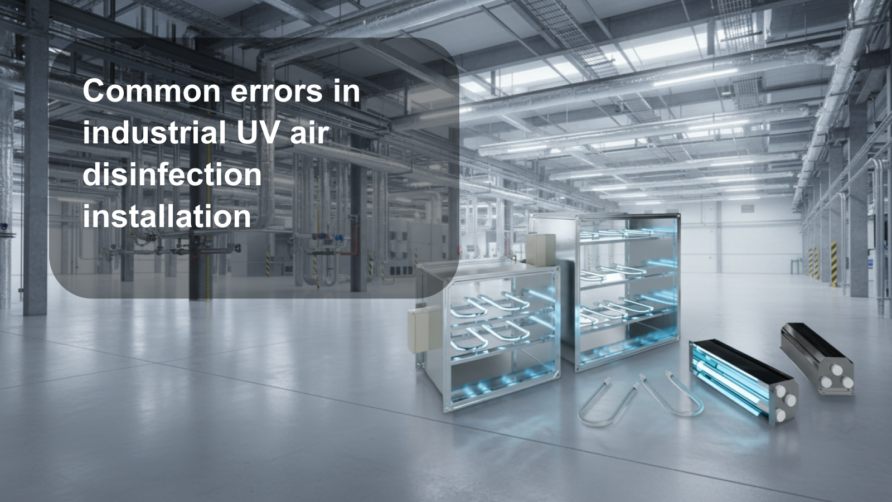
The integration of bactericidal UV air disinfection units in industrial production facilities is a proven method to reduce microbial contamination and maintain sanitary standards. However, errors during installation and commissioning can significantly undermine the effectiveness of the technology. Engineers and process specialists must understand how to correctly select, install, and operate UV air recirculators to ensure consistent air disinfection in workshop environments. This article reviews common issues encountered during startup and operation and provides practical recommendations for their prevention. For example, improper placement of UV units may cause uneven air disinfection, while ignoring microclimate parameters can reduce germicidal efficacy. In practice, these issues result in persistent microbial loads and potential non-compliance with hygiene requirements.
Who should pay attention and when?
- Ventilation engineers — to correctly integrate UV air disinfection units into existing HVAC systems.
- Production technologists — for air quality monitoring and compliance control.
- Sanitation and hygiene specialists — to assess disinfection effectiveness.
- Engineering system designers — when selecting equipment and calculating installation parameters.
- Production managers — for scheduling preventive maintenance.
- Installation teams — to ensure proper mounting and setup.
- Service engineers — for technical maintenance and performance verification.
Key considerations during installation: maintaining correct technology
A bactericidal UV air disinfection unit is a complex device emitting ultraviolet radiation at a specific wavelength (typically 254 nm) that neutralizes airborne microorganisms. Proper installation requires ensuring the correct airflow direction and sufficient UV intensity within the treatment zone. If the unit is mounted at an incorrect angle or in an area with low air movement, disinfection efficiency declines due to inadequate microbial exposure to UV radiation.
On-site verification should include measuring UV intensity at critical points using specialized radiometers and assessing airflow velocity and direction through the unit. It is also essential to confirm that the unit is not obstructed by structural elements or equipment that could block UV rays.
Neglecting these requirements leads to reduced bactericidal performance, persistent pathogenic flora, and sanitary violations. In addition, inefficient operation may cause excessive energy consumption and accelerated lamp wear.
Recommendations include positioning UV units in alignment with airflow patterns, adhering to manufacturer guidelines on distance to treated surfaces, and monitoring microclimate parameters such as temperature and air velocity. Mounting hardware should ensure rigid fixation with the possibility of positional adjustments.
Commissioning and startup: essential pre-operational checks
A technically sound startup begins with verifying electrical and mechanical parameters. Confirm that power supply matches the equipment specifications and that control and automation systems respond correctly to on/off commands. Presence sensors, if installed, must function reliably to prevent operation in occupied areas for open-type units.
On-site inspections should verify:
- Voltage and frequency compatibility with power supply.
- Integrity and correct wiring of UV lamps.
- Ventilation system operation to maintain proper air throughput through the recirculator.
- Absence of airflow obstructions.
- Functionality of safety interlocks and alarms.
- System response to control commands.
Failure to conduct these checks can lead to premature lamp failure, system malfunction, or hazardous situations. For example, a UV air recirculator started without ventilation will not process sufficient air volume, leaving bacteria in the workshop atmosphere.
It is advisable to launch equipment only after comprehensive system testing and to document operational parameters. Adjustments should be made as necessary to adapt to actual working conditions.
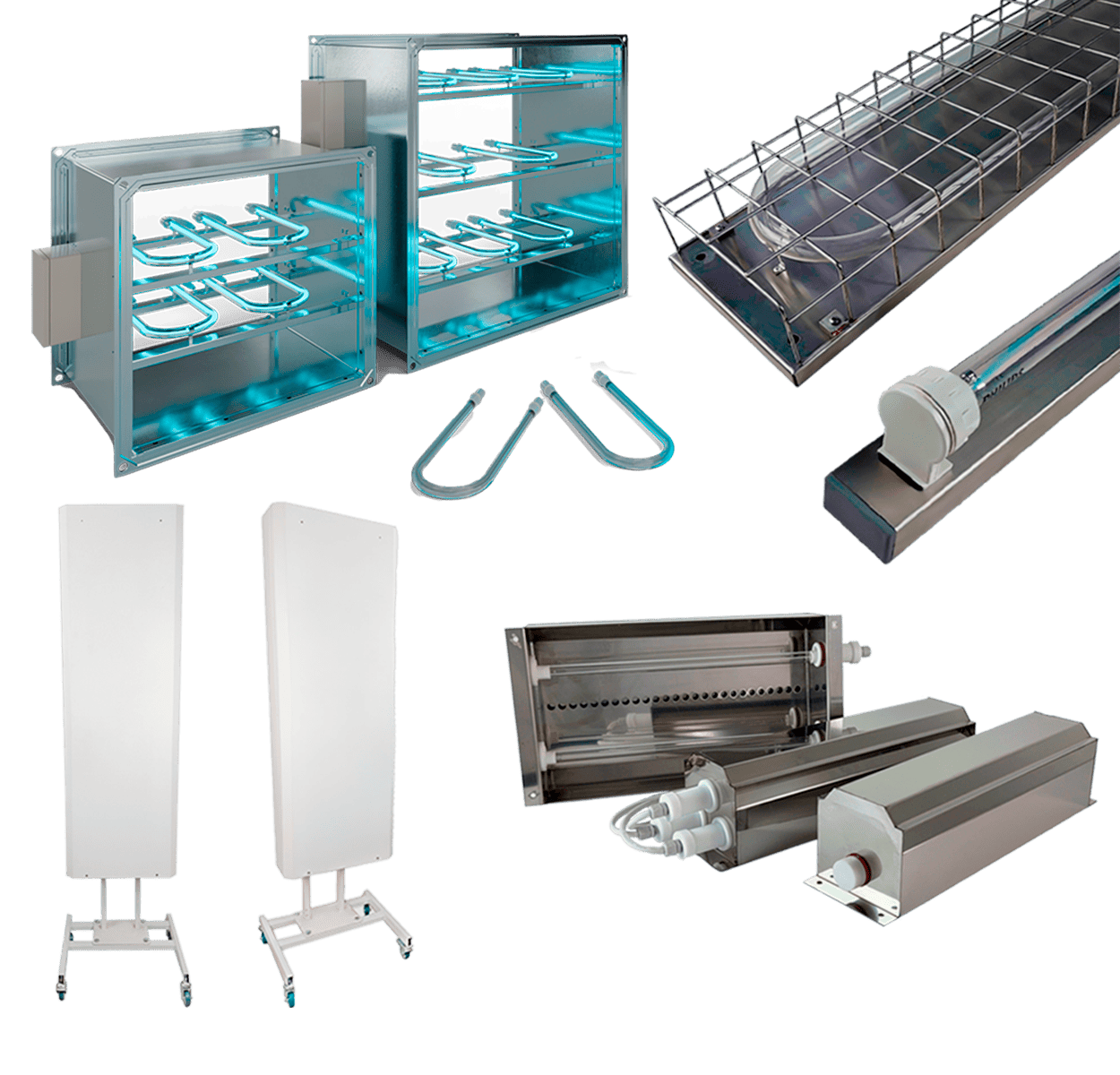
UV disinfection systems for air and surfaces
Case study: incorrect UV unit placement in a meat processing workshop
Scenario: A large meat processing plant installed several bactericidal UV air recirculators with a combined capacity of 9000 m³/h to disinfect air in slaughter and product handling areas. Installation ignored airflow direction and process features.
Observed issues:
- Air microbiological parameters failed to meet standards.
- High microorganism concentrations persisted in certain zones.
- UV units operated continuously without improvement.
- Increased lamp wear and frequent replacements.
- Complaints about odor and air quality from technologists.
Root cause: Units were placed in stagnant airflow zones, resulting in insufficient air passage through UV treatment areas. Temperature and humidity conditions were not accounted for, reducing lamp germicidal efficacy. Lack of UV intensity monitoring and inadequate maintenance worsened the problem.
Recommended checks:
- UV unit positioning relative to airflow.
- Air velocity and direction in the installation zone.
- Lamp operating parameters (power, runtime).
- Temperature and humidity levels.
- Lamp and reflector cleanliness and integrity.
- Presence of airflow obstructions.
- Correct electrical connections.
- Ventilation system performance.
Solutions implemented:
- Relocated units to active airflow zones.
- Adjusted ventilation to ensure triple air recirculation.
- Established regular UV intensity and microclimate monitoring.
- Scheduled preventive maintenance and lamp replacement.
- Trained personnel in correct operation.
- Installed fault detection alarms.
After implementation:
- Microbial load measurements showed sustained reduction, meeting sanitary standards.
- Lamp consumption and equipment downtime decreased.
Common installation and commissioning mistakes
In industrial practice, recurring errors reduce UV air disinfection effectiveness:
- Incorrect choice of UV unit type (open vs. recirculator).
- Ignoring microclimate parameters (temperature, air velocity).
- Installation in low-circulation zones or obstructed areas.
- Lack of UV intensity and lamp condition monitoring.
- Safety violations, including operation in occupied spaces with open units.
- Electrical wiring and automation setup errors.
- Insufficient training of maintenance personnel.
These errors degrade bactericidal performance and risk regulatory non-compliance.
Pre-implementation checklist
- Verify UV unit type suitability for space requirements.
- Plan installation considering airflow patterns.
- Confirm electrical supply and automation compatibility.
- Ensure microclimate conditions meet equipment specifications.
- Implement UV intensity monitoring systems.
- Optimize ventilation for adequate air throughput.
- Train staff on operational and safety procedures.
- Schedule regular technical maintenance.
- Develop commissioning and adjustment protocols.
- Check for potential UV radiation obstructions.
- Ensure safety interlocks prevent operation with personnel present (for open units).
- Document all installation and commissioning stages.
Frequently asked questions before purchase and deployment
How to choose between open UV units and air recirculators?
Open units disinfect spaces only when unoccupied, typically during scheduled disinfection periods. Recirculators treat air internally and can operate safely in occupied areas.
Which air parameters affect UV disinfection efficiency?
Temperature and air velocity critically impact lamp output and exposure dose. High velocity reduces UV dose; unsuitable temperature lowers lamp intensity.
How to verify effective operation?
Through microbiological air sampling and UV intensity measurements using specialized instruments.
Is it safe to operate open UV units with personnel present?
No. UV radiation poses risks to skin and eyes. Such units must have interlocks and operate only in absence of people.
How often should UV lamps be replaced?
Typically every 8000–9000 operating hours. Lamp output should be regularly monitored as it decreases over time.
What to do if microbial contamination persists despite UV treatment?
Check installation correctness, ventilation performance, UV intensity, lamp condition, and consider process-specific factors.
How to ensure safety during operation?
Use protective housings, control interlocks, and provide regular personnel training.
Can UV units be integrated into existing ventilation systems?
Yes. Both recirculators and built-in UV units are designed for integration with HVAC to disinfect supplied air.
Conclusions
Errors in the installation and commissioning of bactericidal UV air disinfection units lead to reduced disinfection efficiency and potential sanitary non-compliance. Success depends on accounting for facility-specific conditions, selecting and positioning equipment correctly, and maintaining continuous operational monitoring. Initial steps should include gathering microclimate and airflow data, performing pilot installations, and developing operational protocols. This approach ensures stable air disinfection and lowers microbial contamination levels in industrial workshops.