Disinfecting water in high-throughput swimming pools is a complex engineering challenge that requires precise technical solutions. Ultraviolet (UV) disinfection systems play a critical role by neutralizing microbial contaminants and maintaining sanitary standards without chemical additives. For engineers and process specialists, understanding how to select and integrate UV sterilizers correctly is essential to ensure stable and effective operation.
This article outlines fundamental design principles for UV systems, equipment selection criteria, and on-site performance verification methods. Common pitfalls and strategies to avoid them are also discussed. In practice, improper power selection or incorrect installation often reduces disinfection efficiency, resulting in increased microbial load and higher chemical consumption.
These insights will help technologists prevent typical issues and enable engineers to design and implement UV sterilizers tailored to operational demands and flow characteristics.
Who needs this and when
- Pool system designers handling high flow rates — for optimal UV unit sizing.
- Water treatment technologists — to monitor disinfection quality and reduce chemical use.
- Maintenance engineers — for correct integration and servicing of UV sterilizers.
- Sanitary control specialists — to evaluate disinfection effectiveness.
- Production managers — to maintain stable microbiological parameters.
- Engineering system integrators — to coordinate UV equipment with existing infrastructure.
- Companies upgrading pools — to enhance safety and lower operational costs.
Principles of UV disinfection and parameter impact on effectiveness
UV disinfection in pools relies on bactericidal radiation that damages microbial DNA, preventing reproduction. The key parameter is UV dose, measured in mJ/cm², which must be sufficient to inactivate pathogens at the given flow rate.
At high water throughput, flow velocity increases and UV exposure time decreases. This requires increasing sterilizer power or installing multiple units in series. Water clarity (turbidity) is also critical, as suspended solids and dissolved substances absorb UV radiation, reducing efficacy.
System performance can be verified onsite by measuring UV dose at the sterilizer outlet and monitoring microbial load before and after treatment. Flow rate and pipeline pressure control are essential to maintain stable operating conditions.
Insufficient sterilizer power or exceeding design flow parameters sharply reduces disinfection efficiency, leading to higher microbial contamination, increased chemical dosing, and elevated costs and compliance risks.
It is recommended to design UV systems with a 15–20% power margin, consider source water quality, and allow adjustable flow rates. Regular maintenance — lamp replacement and quartz sleeve cleaning — directly affects disinfection stability.
Key factors in selecting UV sterilizers for high-capacity pools
Choosing a UV sterilizer for large flow pools requires assessing several parameters. Primarily, hydraulic capacity (m³/h) and lamp power must align to deliver the required UV dose. For example, a medium-pressure lamp system around 2400 W can disinfect approximately 150 m³/h at about 60 mJ/cm² dose.
Reactor construction and housing materials impact durability and reliability. Stainless steel AISI-316 housings resist corrosion and suit demanding pool environments. Compatibility with existing piping and automation systems is also important.
Onsite verification starts with measuring water flow and pressure, comparing these to equipment specifications, and assessing UV dose. Specialized sensors measuring radiation intensity enable real-time disinfection control.
Ignoring these criteria may cause insufficient disinfection, accelerated lamp wear, and higher operational costs. Incorrect equipment selection increases failure risks and shortens system lifespan.
Selecting sterilizers with scalable power options and integrated monitoring and alarm systems is advised. This allows adapting to variable loads and promptly addressing operational deviations.
Technical aspects of installing and integrating UV systems into existing pool infrastructure
Installing UV sterilizers requires adherence to technical guidelines to ensure efficiency and safety. Proper equipment placement in pipelines guarantees uniform water exposure and prevents cavitation.
Ensuring leak-tight connections and compliance with operating pressure (typically up to 6 bar) is critical. Flow sensors and automatic lamp shutdown in case of no flow prevent overheating and equipment damage.
Installation quality can be checked by absence of leaks, stable pressure and flow, and correct operation of automation and alarms. Measuring UV dose post-installation confirms system performance.
Improper installation can reduce disinfection efficiency, cause premature lamp failure, and increase repair costs. Faulty automation wiring risks malfunctions and downtime.
Engaging experienced specialists for installation, following technical documentation, and conducting commissioning with operator training on system monitoring are strongly recommended.
Case study: mistakes during UV system upgrade in a high-load sports pool
Initial conditions:
A sports pool with up to 150 m³/h flow replaced an outdated UV system with a higher-power medium-pressure installation. Despite new lamps and reactors, disinfection quality failed to meet standards after commissioning.
Symptoms:
- UV dose below design values;
- Increased microbial load post-sterilizer;
- Frequent shutdowns triggered by flow sensors;
- Higher chemical reagent consumption;
- Rising maintenance and repair costs.
Cause analysis:
Incorrect power selection and mismatch between pipe diameter and equipment requirements. Reactors installed on undersized pipes increased flow velocity, reducing UV exposure time. Automation was not adjusted to new parameters, causing false alarms. Water turbidity was underestimated, limiting UV penetration.
Checklist for verification:
- Confirm pipe diameter matches UV system specifications;
- Measure actual flow and system pressure;
- Assess water turbidity and clarity;
- Test flow sensors and automation functionality;
- Inspect quartz sleeves and lamp condition;
- Review sterilizer placement relative to pumps;
- Check installation and setup protocols;
- Verify maintenance schedules.
Solution steps:
- Redesign pipeline section with larger diameter;
- Reconfigure automation settings for new parameters;
- Add filtration to reduce turbidity;
- Perform recommissioning with UV dose measurement;
- Train personnel on monitoring and maintenance;
- Implement regular lamp replacement and sleeve cleaning.
Implementation:
- Coordinate changes with designers and installers;
- Replace pipeline components as needed;
- Conduct comprehensive system testing;
- Deploy UV radiation monitoring tools;
- Document procedures and maintenance regulations;
- Train service staff.
Outcome control:
Post-implementation, UV dose stabilized at design levels, microbial contamination dropped, chemical usage decreased, and automation faults ceased, improving reliability and lowering operating costs.
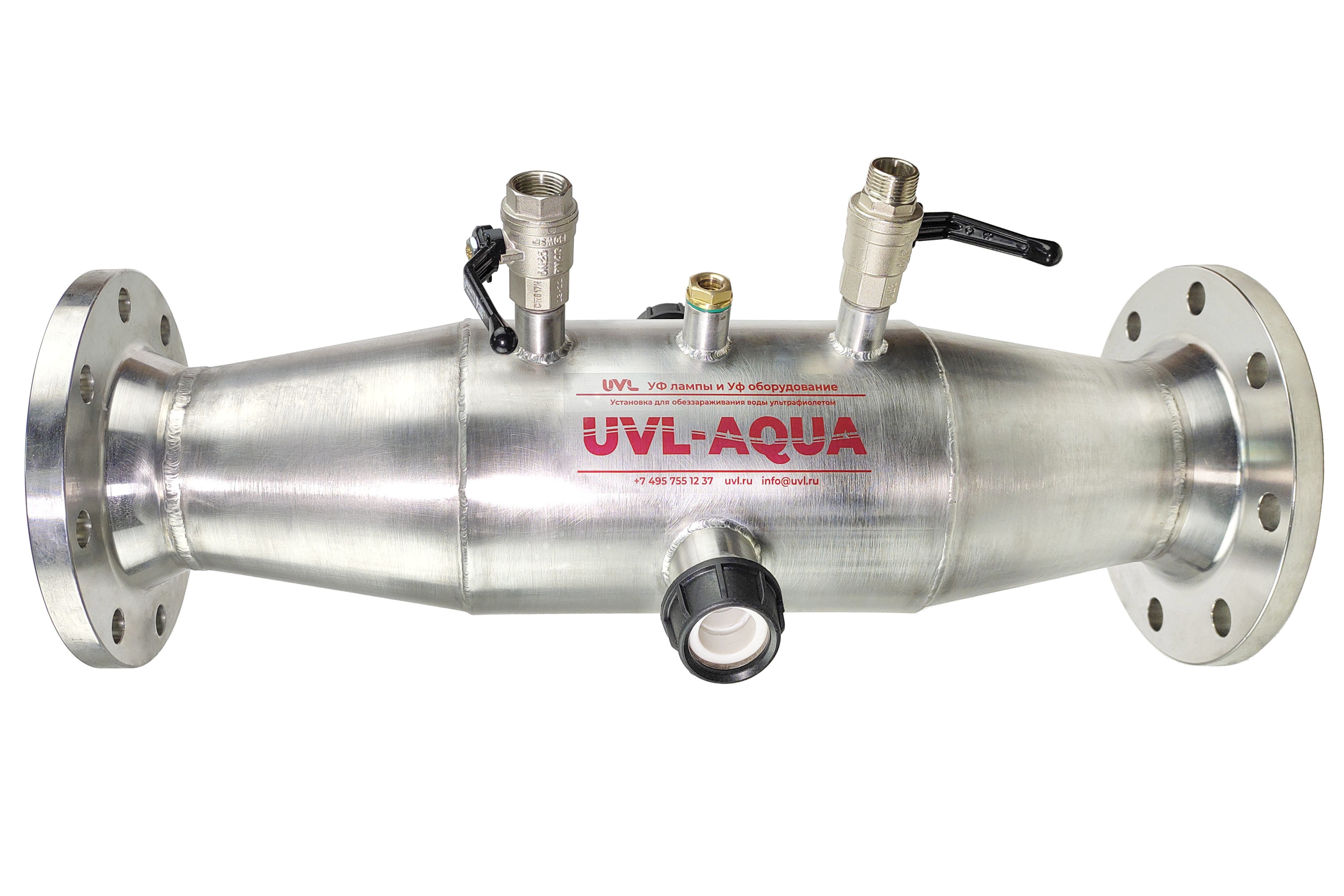
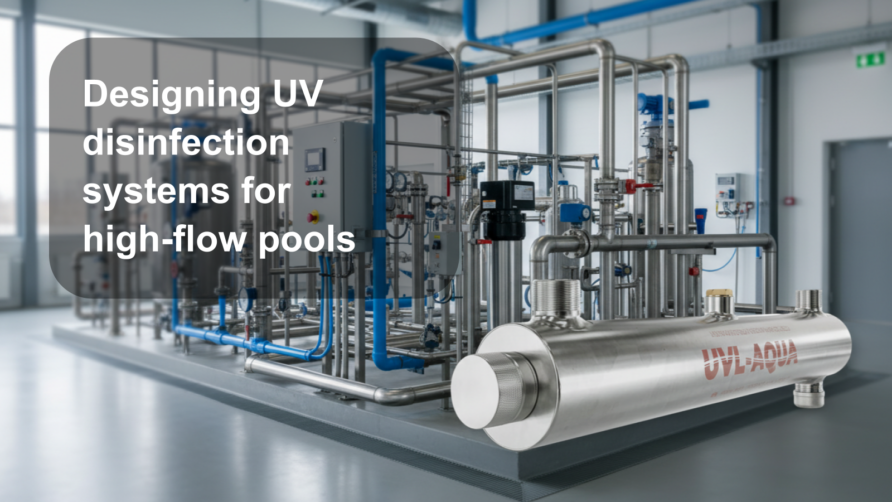
Medium pressure UV units in a stainless steel housing, used in areas where water treatment with ultraviolet radiation in the range of 200 to 400 nm is required. Designed for larger swimming pools. Ultraviolet light helps to neutralize trichloramines (derivatives of chlorine), which significantly improves the quality of pool water.
Common errors in UV system design and operation for pools
A frequent mistake is insufficient power margin during equipment selection, causing reduced disinfection at peak flows. Ignoring source water quality diminishes UV penetration.
Installation errors such as incorrect lamp placement or poor sealing shorten equipment life and cause failures. Lack of routine maintenance leads to fouled quartz sleeves and decreased UV intensity.
Inadequate integration with automation and sensors lowers control and safety levels. Poor operator training results in misuse and maintenance lapses.
Collectively, these factors increase microbial contamination risk and operational expenses.
Pre-implementation checklist for pool UV disinfection systems
- Verify UV system capacity matches calculated water flow.
- Include at least 15% UV dose power margin.
- Ensure pipe diameter matches equipment specs.
- Evaluate source water quality — turbidity and suspended solids.
- Confirm correct connection of automation and protection systems.
- Plan installation to meet sealing and pressure requirements.
- Organize regular maintenance — lamp replacement and sleeve cleaning.
- Set up UV radiation monitoring and alarms.
- Train personnel on operation and parameter control.
- Prepare documentation and operational protocols.
- Conduct commissioning with UV dose measurement.
- Schedule periodic audits and parameter adjustments.
Frequently asked questions before purchasing and implementing UV systems
How to determine the required UV sterilizer power?
Calculated based on maximum water flow and necessary UV dose for microbial inactivation, with a recommended 15–20% power margin.
Can standard lamps be used for all pools?
No. Selection depends on water volume, turbidity, and dose requirements. Medium-pressure ozone-free lamps are preferred for pools with living organisms.
How to monitor disinfection effectiveness onsite?
By measuring UV dose at the sterilizer outlet and performing regular microbiological water analysis.
What to do if water turbidity is high?
Enhance pre-treatment filtration to improve UV disinfection efficiency.
How often should lamps be replaced and quartz sleeves cleaned?
Lamps are typically replaced annually or per manufacturer guidelines; quartz sleeves should be cleaned at least quarterly.
What errors most commonly reduce effectiveness?
Incorrect power sizing, installation faults, lack of maintenance, and improper automation integration.
Is it possible to integrate UV systems into existing pool management controls?
Yes, with appropriate equipment selection supporting standard protocols and proper automation setup.
UV water disinfection in high-throughput pools demands a comprehensive engineering approach. The critical factors are correct power selection and quality integration considering flow and water quality parameters. The next steps include gathering operational data, conducting pilot projects, and developing operational protocols. This approach ensures stable, effective water disinfection with minimized costs and downtime.