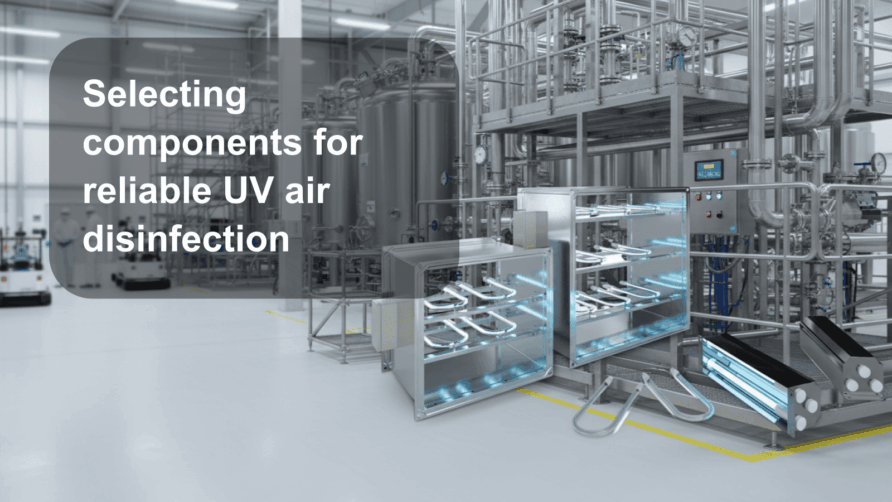
In industrial air disinfection, ultraviolet (UV) irradiators play a crucial role in reducing microbial contamination and maintaining hygiene standards. However, the quality and configuration of components directly affect the disinfection effectiveness and operational lifespan of the system. For engineers and technologists, understanding that component selection is not merely procurement but a factor defining stable operation and safe use is essential. Incorrectly matched lamps, power supplies, or reflectors can lead to decreased UV intensity, overheating, or premature equipment failure.
This article discusses how to properly select components for open UV irradiators and air recirculators, what to consider during installation and maintenance, and how to identify and resolve common issues. In practice, these problems manifest as reduced disinfecting performance, frequent breakdowns, and increased power consumption. For example, on a beverage production line, mismatched power supplies caused lamps to operate unstably, diminishing the disinfection capacity of the bactericidal UV air recirculator.
Who needs this information and when
- Operation engineers — to ensure stable equipment performance and plan maintenance.
- Production technologists — to guarantee compliance with hygiene standards and maintain the microclimate.
- HVAC system designers — when integrating UV irradiators into ventilation and air handling units.
- Safety specialists — to assess risks and ensure compliance with UV radiation requirements.
- Procurement professionals — to avoid purchasing low-quality or incompatible components.
- Quality managers — to monitor air disinfection effectiveness.
- Service engineers — for prompt diagnostics and troubleshooting.
Impact of lamp and power supply quality on UV irradiator performance
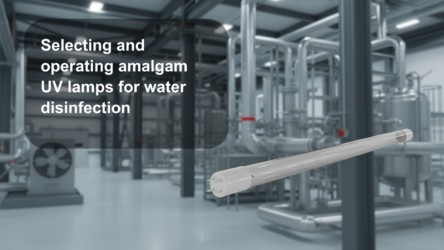
UV lamps are the primary source of bactericidal radiation in UV air recirculators. Inside the lamp, mercury excitation by electric current generates UV-C radiation at approximately 254 nm wavelength, optimal for disinfection. Lamp quality determines emission intensity and stability, while the power supply ensures steady current delivery and protection against voltage fluctuations.
At the facility, lamp and power supply condition can be verified by measuring UV intensity at a 2-meter distance from the UV air irradiator using a specialized lux meter or UV radiometer. Monitoring power parameters—voltage stability, current consistency, and absence of pulsations—is also critical, as fluctuations reduce lamp lifespan. Protective circuits in the power supply prevent overheating and premature burnout.
Using lamps with incorrect power ratings or unstable power supplies noticeably reduces disinfection efficiency. In severe cases, equipment may fail prematurely, causing unplanned downtime and additional costs. Improper configurations can also increase ozone generation and degrade the indoor microclimate.
It is recommended to select lamps and power supplies with certified specifications and quality certificates. Operational parameters such as humidity, temperature, and dust presence must be considered, as they affect component stability. Regular parameter monitoring and scheduled maintenance ensure optimal performance.
Role of reflectors and quartz sleeves in stable irradiator operation
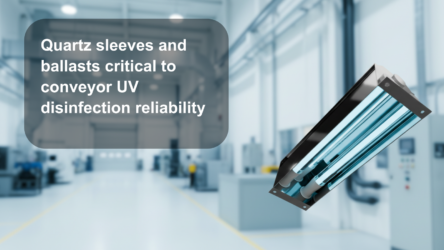
Reflectors inside the UV air recirculator’s housing direct and amplify UV radiation, minimizing energy losses. The reflector’s material and geometry determine the intensity distribution within the air treatment volume. Quartz sleeves protect lamps from contamination and mechanical damage without reducing UV transmittance.
Effectiveness of reflectors can be inspected visually for wear, corrosion, or dirt, and by measuring UV intensity at various points inside the irradiation chamber. Checking quartz sleeve integrity is essential during maintenance, as cracks or cloudiness reduce UV transmission and increase lamp failure risk.
Poor-quality or dirty reflectors lower UV intensity, diminishing disinfection effectiveness. Similarly, damaged or opaque quartz sleeves decrease UV throughput, requiring longer operation times, which increases energy consumption and accelerates component wear.
For reliable operation, use anodized aluminum reflectors with high reflectance, and clean them regularly from dust and oils. Quartz sleeves should be replaced according to manufacturer recommendations and operating conditions. Mechanical damage must be avoided during installation and service.
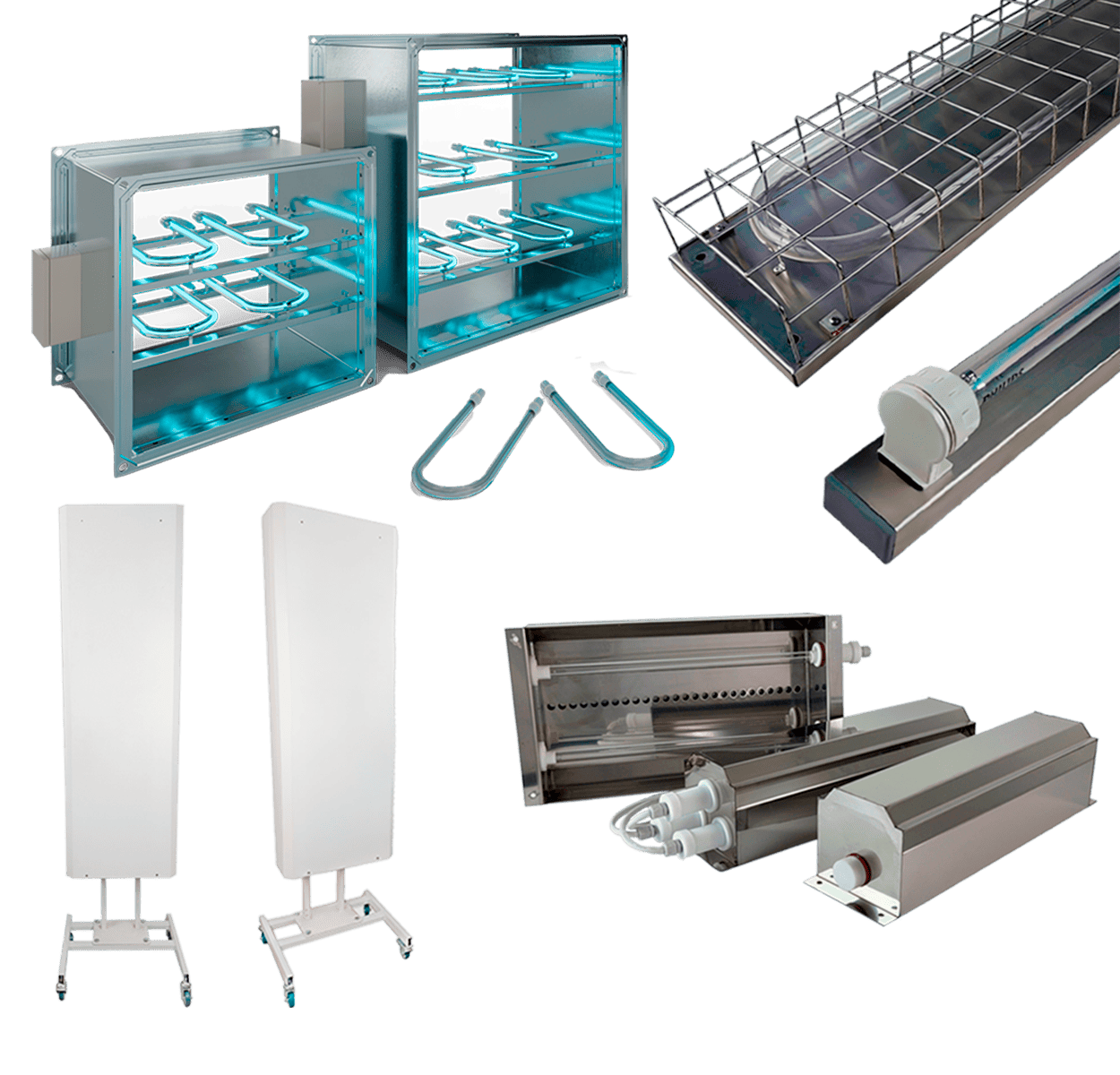
UV disinfection systems for air and surfaces
Case study: reduced recirculator efficiency due to improper power supply selection
Scenario: Several bactericidal UV air recirculators were installed in a beverage bottling plant to reduce microbial load. After six months, increased airborne contamination was detected despite regular equipment operation.
Symptoms:
- Decreased UV lamp intensity;
- Frequent lamp burnout;
- Unstable power supply operation (overheating, shutdowns);
- Increased power consumption;
- Noticeable ozone odor;
- Deteriorating indoor air quality.
Cause: Power supplies were selected without considering lamp specifications and environmental conditions, lacking protection against voltage spikes and overheating. This caused unstable current delivery, reducing UV intensity and accelerating lamp degradation. Absence of protective circuitry led to ozone formation and worsened microclimate.
What to check:
- Compliance of power supply ratings with lamp specifications;
- Voltage and current stability in the supply circuit;
- Presence of protective functions (overheat, short circuit);
- Lamp condition and quartz sleeve integrity;
- Reflector cleanliness;
- Correct installation and wiring;
- Indoor microclimate parameters.
Solution:
- Replace power supplies with certified models featuring overload protection;
- Install voltage stabilizers;
- Clean and replace quartz sleeves;
- Adjust installation and ensure proper grounding;
- Implement scheduled monitoring of power and UV emission parameters;
- Train personnel on maintenance procedures.
Implementation steps:
- Audit components across all units;
- Define power supply requirements in technical specifications;
- Organize regular UV intensity monitoring;
- Develop maintenance protocols;
- Implement fault alert systems;
- Maintain spare parts inventory.
Post-implementation results showed stable UV intensity matching specifications, reduced microbial contamination, normalized power consumption, and fewer unscheduled repairs.
Common mistakes in component selection and maintenance
One frequent error is purchasing lamps without verifying spectral characteristics and service life, leading to reduced disinfection efficiency. Power supplies are often chosen based on cost, ignoring current stability and protective features. Neglecting regular cleaning of reflectors and quartz sleeves causes significant UV emission loss.
Incorrect installation, especially lack of proper grounding and voltage surge protection, results in premature component failure. Environmental factors—temperature, humidity, dust—are often overlooked, though they critically affect lamps and power supplies. Finally, absence of monitoring and planned maintenance delays problem detection until costly repairs are needed.
Pre-installation checklist for UV irradiators
- Verify lamp and power supply compliance with technical requirements.
- Ensure protection against voltage surges and overheating.
- Confirm component certification.
- Inspect quartz sleeves and reflectors for integrity.
- Assess operating conditions (temperature, humidity, dust).
- Plan regular monitoring of UV intensity.
- Train personnel on maintenance and safety.
- Implement fault alarm systems.
- Verify correct installation and grounding.
- Maintain spare parts inventory.
- Develop maintenance schedules.
- Conduct equipment testing under actual conditions.
Frequently asked questions before purchase and deployment
Which lamp parameters are most important for selection?
UV-C emission intensity, service life, and stable operation under specified microclimate conditions.
How to verify power supply compatibility with a lamp?
Compare voltage and current ratings against lamp specifications, ensure presence of protective functions and stable power delivery.
What to do if UV intensity decreases over time?
Check lamp condition, quartz sleeves, reflectors, and power supply parameters; perform cleaning and replace worn components.
Can UV irradiators operate in occupied spaces?
Only enclosed units and recirculators with appropriate certification and protective systems are suitable for operation in the presence of personnel.
How often should components be serviced?
Planned maintenance at least every six months; more frequent servicing in high-contamination environments.
Does reflector contamination affect disinfection efficiency?
Yes, it reduces reflectivity, lowers UV intensity, and decreases disinfection effectiveness.
Which environmental factors are critical for components?
Temperature, humidity, and dust influence lamp and power supply stability, as well as quartz sleeve longevity.
In conclusion, selecting and properly operating components for UV irradiators directly determines equipment reliability and disinfection efficiency. The key criterion is matching lamp and power supply technical parameters to operational conditions and safety requirements. The next steps include gathering site data, conducting pilot tests, and developing maintenance protocols to ensure stable air disinfection system performance.