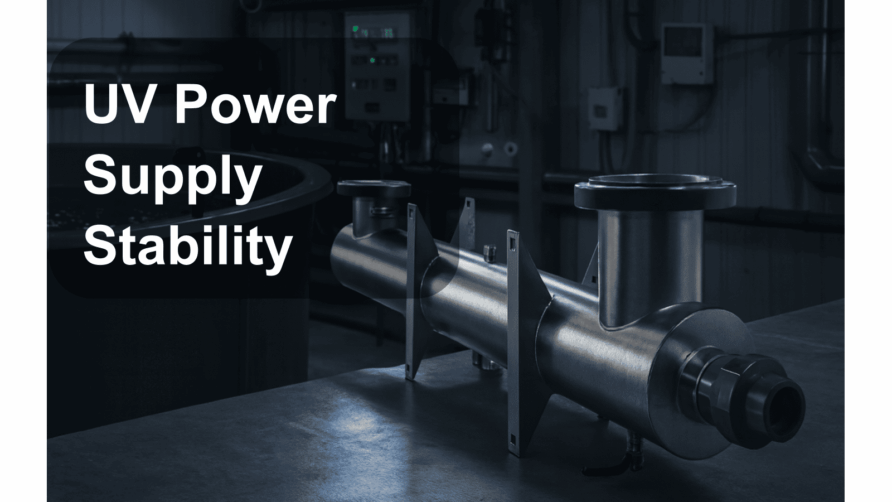
In recirculating aquaculture systems (RAS), ultraviolet (UV) water sterilizers play a crucial role in disinfecting and sanitizing water to maintain microbiological purity and a stable environment for fish cultivation. The performance of UV lamps is directly dependent on the quality and stability of their power supply. Improper electrical feeding leads to reduced bactericidal output, shortened lamp lifespan, and disruption of the technological process. It is essential for engineers and process technologists to understand the critical power supply parameters, how to monitor them on-site, and common operational errors. This article outlines the technical requirements for powering UV lamps in RAS, practical methods for verification, and analyzes a real-world case study highlighting typical faults and corrective actions. These insights help minimize downtime, reduce maintenance costs, and ensure consistent water disinfection.
Who Needs This and When
- RAS Operations Engineers — to maintain stable operation of UV sterilizers.
- Aquaculture Technologists — to ensure sanitary safety of the closed water circuit.
- UV Disinfection System Designers — for correct selection and integration of UV lamps and power supplies.
- Service Engineers — to diagnose and prevent electrical equipment failures.
- Automation Managers — for real-time configuration and monitoring of power parameters.
- Procurement Specialists — to assess technical specifications and compatibility of components.
- Production Managers — to plan maintenance schedules and lamp replacements.
Impact of Voltage Stability on UV Lamp Performance in RAS
Low-pressure UV lamps used in RAS operate at strictly specified voltage and current values. Their bactericidal effectiveness—the key parameter defining disinfection quality—is highly sensitive to power supply stability. Voltage deviations exceeding ±10% from nominal lead to at least a 15% reduction in bactericidal output, noticeably lowering disinfection efficiency. Additionally, irregular or unstable power causes frequent lamp restarts, accelerating electrode wear and shortening equipment lifespan.
On-site power stability verification involves measuring voltage and current at the power supply input and directly at the lamp electrodes using digital voltmeters and ammeters. It is important to perform measurements under different operating conditions—peak loads and normal operation. If available, an oscilloscope should be used to assess signal waveform quality, as distortions can negatively affect lamp ignition and stable burning.
Ignoring power supply requirements results in decreased bactericidal flux and incomplete disinfection, promoting pathogen proliferation and infection risks within RAS. Accelerated wear of lamps and electronic components increases replacement and repair costs, while frequent faults cause production downtime.
Specialized electronic ballasts (Electronic Power Regulation Apparatus, EPRA) are recommended because they stabilize current and protect against voltage fluctuations. Implementing a monitoring system with automatic alerts for parameter deviations is advisable. Temperature conditions must also be considered: ignition difficulty arises below +10 °C, and bactericidal output decreases above +40 °C.
Current and Voltage: Correct Selection and Monitoring
The current flowing through a UV lamp determines the intensity of ultraviolet radiation. Typically, low-pressure lamps operate at nominal currents up to 6.4 A and voltages around 100–120 V per lamp. Supplying current below nominal reduces radiation power and disinfection efficacy, while exceeding current ratings causes overheating and rapid lamp failure.
In practice, current and voltage are measured at the EPRA input and lamp terminals, compared against manufacturer specifications. It is crucial to detect voltage drops during lamp startup and operation peaks. If the equipment has built-in current indicators, their readings should be validated with external instruments. Persistent current deviations indicate the need for maintenance.
Incorrect or uncontrolled current leads to “idle operation” with diminished radiation or overheating, accelerating degradation of the quartz envelope and electrodes. This decreases bactericidal output and increases lamp replacement and repair expenses. Worst case scenarios include sterilizer shutdowns and potential breaches of sanitary standards.
Use EPRA devices with current stabilization and short-circuit protection features. Design considerations must account for lamp specifications and environmental factors such as temperature fluctuations and humidity. Regular measurements using portable instruments and automated monitoring systems are recommended.
Influence of Temperature on Power Supply and UV Lamp Operation
Ambient temperature significantly affects UV lamp stability in RAS. Below +10 °C, lamp ignition becomes difficult, increasing power supply stress and electrode wear due to metal sputtering. Above +40 °C, bactericidal output drops by approximately 10%, reducing disinfection effectiveness.
Temperature monitoring at the UV equipment location is essential, especially when power supplies and lamps are installed outside heated areas. Thermometers or integrated temperature sensors linked to automation systems are commonly used. Exceeding recommended temperature ranges requires mitigation measures such as insulation, ventilation, or climate-controlled enclosures.
Neglecting temperature control leads to unstable lamp operation, increased restarts, premature failure, and reduced bactericidal flux. Thermal fluctuations also jeopardize EPRA and component reliability.
Protective measures against temperature swings and continuous temperature monitoring are advised. Selecting EPRA units with wide operating temperature ranges and built-in safeguards is critical during system design.
Case Study: Resolving Unstable Power Supply Issues at an Aquaculture Facility
Initial Conditions: A RAS facility was equipped with a UV system using two lamps for closed-loop water disinfection. Operational issues emerged, including frequent lamp outages and reduced bactericidal efficiency.
Symptoms:
- Fluctuating bactericidal output recorded by automation.
- Frequent lamp restarts.
- Increased microbial load in water.
- Accelerated lamp wear requiring premature replacement.
- Power supply overheating.
- Unstable voltage at equipment input.
Root Cause: Power supply instability with voltage deviations exceeding 15% due to inadequate filtering and lack of voltage stabilizers. Power supplies lacked built-in surge protection, causing frequent failures and reduced lamp lifespan. Additionally, ambient temperature often dropped below +10 °C, complicating ignition and accelerating electrode degradation.
Inspection Checklist:
- Measure supply voltage stability at various times.
- Verify current and voltage parameters at lamps and EPRA.
- Confirm presence of protective devices and stabilizers.
- Assess ambient temperature conditions.
- Inspect wiring and contact integrity.
- Evaluate automatic control and alarm system functionality.
- Check compatibility of power supplies with lamps.
- Review installation quality and seal integrity.
Corrective Actions:
- Install voltage stabilizers with surge protection.
- Replace EPRA units with models featuring current stabilization and diagnostics.
- Implement continuous voltage and temperature monitoring.
- Provide heating or insulation for equipment rooms.
- Train personnel on parameter monitoring and fault diagnosis.
- Establish scheduled maintenance and lamp replacement protocols.
Implementation Steps:
- Install stabilizers and new EPRA with minimal production downtime.
- Configure monitoring systems and integrate with existing automation.
- Perform test measurements and adjust parameters.
- Train operators and technical staff.
- Introduce control and maintenance routines.
- Plan inventory of spare lamps and components.
Results: Post-implementation monitoring showed stable voltage and current, elimination of ignition failures, reduced microbial contamination, and extended lamp lifespan. Production stabilized, and maintenance costs decreased significantly.
Common Errors in Organizing UV Lamp Power Supply in RAS
- Absence of voltage stabilizers leading to frequent power parameter fluctuations.
- Selecting power supplies without matching lamp specifications, reducing effectiveness.
- Ignoring temperature effects and lacking environmental control, accelerating wear and failures.
- Failure to conduct regular parameter measurement and monitoring, delaying fault detection.
- Poor installation quality and inadequate sealing causing contact failures.
- Insufficient staff training, complicating troubleshooting and maintenance.
Checklist Before Implementing UV Lamp Power Supply in RAS
- Verify supply network parameters for stability and compliance.
- Plan installation of voltage stabilizers.
- Select EPRA units matching lamp technical specifications.
- Ensure equipment protection against temperature fluctuations.
- Set up voltage and current monitoring systems.
- Schedule regular measurements and maintenance.
- Check installation quality and connection sealing.
- Train personnel on operation and diagnostics.
- Maintain spare lamps and components in inventory.
- Integrate automatic alarms for parameter deviations.
- Calculate electrical load considering all modules.
- Confirm compatibility of all system components.
Frequently Asked Questions Before Purchasing and Implementation
What power supply parameters are critical for UV lamps in RAS?
Stable voltage within ±10% of nominal and current matching lamp specifications are critical. Deviations affect bactericidal output and lamp lifespan.
How to verify power supply stability on-site?
Use digital voltmeters and ammeters to measure voltage and current at EPRA input and lamp terminals. An oscilloscope helps assess signal waveform quality.
What happens if an unsuitable power supply is used?
Reduced bactericidal effect, frequent lamp faults, accelerated wear, and higher repair costs.
How do temperature conditions affect UV lamp operation?
Below +10 °C, ignition is difficult; above +40 °C, bactericidal output decreases. Both impact power stability and lamp durability.
Is a monitoring system necessary?
Yes, automated control enables timely detection of deviations and prevents equipment failures.
How often should lamps be replaced and power supply checked?
Lamps typically require replacement every 1.5–2 years; power supply parameters should be checked regularly, especially after process changes or fault detection.
Can one power supply system serve multiple lamps?
Yes, but load calculations and parameter stability must be ensured for each lamp.
What measures address frequent voltage fluctuations?
Install voltage stabilizers, use EPRA with protective functions, and consider backup power sources.
How to ensure equipment compatibility during modernization?
Verify technical specifications and consult equipment manufacturers regarding power supply and lamp parameters.
Conclusion
Selecting and organizing the power supply for UV lamps in RAS is a critical step directly influencing disinfection effectiveness and system reliability. The key criterion is maintaining stable voltage and current within specified limits, considering temperature conditions and lamp characteristics. The process involves thorough electrical network assessment, pilot testing of selected equipment, and implementing monitoring and maintenance protocols to ensure long-term operational stability.