Ultraviolet (UV) disinfection of wastewater is a critical stage in modern industrial and municipal water treatment processes. For engineers and technologists, it is not enough to simply install UV equipment; it is essential to ensure stable and effective UV disinfection tailored to the specific characteristics of the wastewater stream. Incorrect selection of multi-lamp UV sterilizers can lead to insufficient microbial inactivation, excessive energy consumption, and premature lamp degradation. This article explores how to select and implement multi-lamp UV disinfection systems for wastewater, highlighting operational and quality control aspects. Practical recommendations and a case study illustrating the consequences of non-compliance with fundamental requirements are also provided.
In industrial practice, it is common to observe persistent microbiological parameter exceedances or frequent lamp replacements following UV sterilizer installation. These issues typically indicate improper equipment selection or operational errors. A thorough understanding of the physicochemical and technological principles of UV disinfection, coupled with verification of key parameters on-site, helps avoid such problems and optimizes total cost of ownership.
Who Needs This and When
- Water treatment engineers and technologists selecting effective UV disinfection equipment for wastewater.
- Design organizations developing new treatment systems requiring multi-lamp UV sterilizers.
- Operation and maintenance specialists responsible for monitoring and maintaining disinfection performance.
- Production managers overseeing industrial effluents and evaluating the economic feasibility of UV technology.
- Engineering system integrators handling comprehensive water treatment and disinfection solutions.
- Environmental and industrial safety professionals ensuring compliance with discharge regulations.
- Equipment suppliers preparing technical specifications aligned with site-specific conditions.
Fundamental Principles of UV Wastewater Disinfection and Multi-Lamp System Selection
UV disinfection relies on the germicidal effect of UV radiation within the 200–280 nm wavelength range, which damages the DNA and RNA of microorganisms, preventing their reproduction. Multi-lamp systems are employed to treat large volumes of wastewater with significant microbial loads. The primary design parameter is the UV dose, expressed in mJ/cm², which must be sufficient to reduce microbial contamination to regulatory levels.
Wastewater contains suspended solids, turbidity, and organic matter that affect UV light penetration and disinfection efficiency. Increased turbidity requires higher lamp power or longer retention time within the UV reactor. Multi-lamp configurations enable more uniform distribution of UV energy, compensate for individual lamp power decline, and provide a safety margin for dose delivery.
On-site disinfection effectiveness can be verified by measuring UV intensity using sensors installed inside the reactor chamber and correlating these readings with lamp parameters. Regular monitoring of influent turbidity and water transparency is also critical, as deviations from design values reduce disinfection performance.
Incorrect sizing of lamp quantity or power can lead either to inadequate disinfection levels or unnecessary energy consumption and shortened equipment lifespan. Insufficient UV dose risks non-compliance with sanitary standards, while excessive dosing results in higher operational costs and more frequent lamp replacements.
It is recommended to carefully analyze influent water characteristics, consider dynamic load variations, and implement automatic lamp power regulation via UV sensors. This approach maintains optimal operating conditions and lowers operational expenses.
Design and Characteristics of Multi-Lamp UV Sterilizers
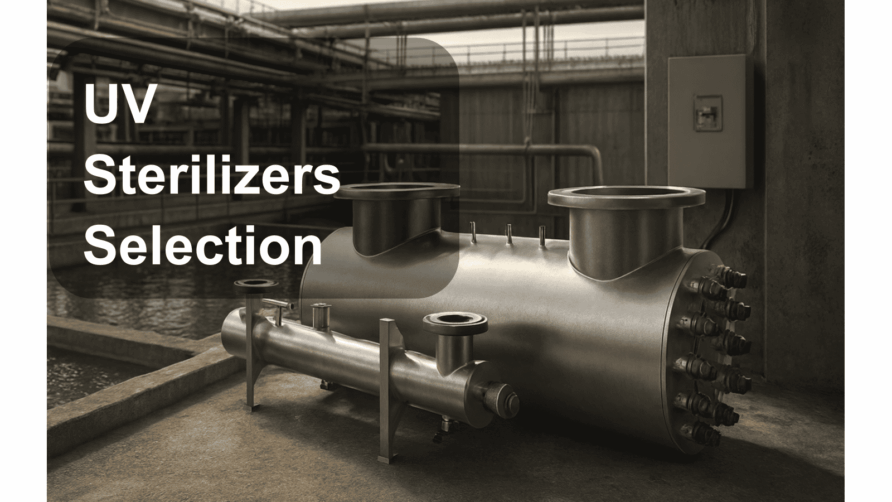
Multi-lamp UV sterilizers consist of a housing containing several parallel UV lamps enclosed in protective quartz sleeves. Wastewater flows around the lamps, receiving UV exposure. The design must ensure even flow distribution and minimize shadow zones.
The physical length of the reactor chamber determines the contact time between water and UV radiation. Longer chambers and uniform flow improve disinfection efficiency but increase hydraulic resistance and footprint.
On-site, flow uniformity and absence of dead zones are verified using visual or laser-based methods, alongside pressure and velocity measurements. UV intensity is monitored via built-in or external sensors that provide real-time data on lamp output and condition.
Poor sealing or improper installation can cause water bypass around the lamps, reducing effectiveness. Incorrect lamp positioning leads to uneven UV distribution and insufficient disinfection. Failure of individual components without timely repair lowers overall UV output.
Recommended practices include using corrosion-resistant materials with good thermal conductivity for reactor construction, ensuring tight sealing and proper installation, and integrating automated monitoring and alarm systems.
Case Study: Decreased UV Disinfection Efficiency at an Industrial Facility
Initial Conditions:
A large industrial wastewater treatment plant installed a multi-lamp UV system rated for 85 m³/h. One month after commissioning, microbial counts above permissible limits were detected in the effluent.
Symptoms:
- Frequent alarms related to lamp power output
- Low UV intensity readings from sensors
- Increased influent turbidity
- Higher lamp replacement frequency
- Operator reports of system instability
Root Causes:
Analysis revealed that seasonal increases in influent turbidity were not compensated by adjustments in lamp power. The reactor chamber length was insufficient to deliver the required UV dose under these conditions. Additionally, some lamps were improperly installed, causing shadowing and uneven UV intensity.
Operational shortcomings and lack of automatic control led to reduced disinfection efficiency. Elevated turbidity without UV dose adaptation allowed microbial passage.
Inspection Checklist:
- Influent water transparency and turbidity levels.
- Correct lamp installation and quartz sleeve integrity.
- UV intensity via internal sensors.
- Flow uniformity and absence of dead zones.
- Functionality of automatic lamp power control.
- Hydraulic parameters: pressure and flow velocity.
- Lamp condition and remaining service life.
- Reactor chamber sealing.
Corrective Actions:
- Install turbidity sensors integrated with the control system.
- Redesign the reactor to increase chamber length.
- Reinstall lamps with verification of proper positioning.
- Implement automatic lamp power adjustment.
- Train operational staff on best practices.
- Establish regular cleaning and maintenance protocols.
Implementation:
- Conduct commissioning with UV dose measurements.
- Configure alarm and reporting systems.
- Set up real-time parameter monitoring.
- Develop maintenance schedules.
- Plan lamp replacement based on condition monitoring.
- Provide comprehensive staff training.
Outcome:
Post-implementation, microbial loads stabilized within regulatory limits. Monitoring data confirmed consistent UV intensity and reduced lamp replacement costs. Operation became predictable and cost-efficient.
Common Mistakes in Selecting and Operating Multi-Lamp UV Sterilizers
Frequently, engineers underestimate the impact of turbidity and organic content on UV penetration, resulting in insufficient disinfection. Incorrect sizing of lamp power or quantity leads to energy inefficiency and reduced equipment lifespan. Installation errors such as poor sealing or improper lamp placement diminish effectiveness. Lack of automatic control and power adjustment causes suboptimal operation. Irregular maintenance results in fouling of quartz sleeves, impairing UV transmission. Neglecting operator training lowers operational quality. Failure to monitor water and equipment parameters leads to unnoticed declines in disinfection performance.
Pre-Implementation Checklist for Multi-Lamp UV Wastewater Disinfection
- Assess wastewater turbidity and transparency.
- Determine required system capacity.
- Specify UV dose based on regulatory and microbiological targets.
- Select reactor chamber with appropriate length and corrosion-resistant materials.
- Design flow distribution for uniform exposure.
- Include automatic UV intensity monitoring and control.
- Ensure accessibility for lamp maintenance and replacement.
- Configure alarm and reporting systems.
- Train personnel in operation and maintenance.
- Develop scheduled maintenance procedures.
- Verify integration with overall treatment system hydraulics and controls.
- Plan ongoing monitoring and performance analysis.
Frequently Asked Questions Prior to Purchase and Implementation
How to determine the required lamp power and quantity?
Calculate based on wastewater volume, quality, required UV dose, and regulatory standards. Consider turbidity, flow rate, and microbial load in the design.
Are standard systems sufficient or is custom design necessary?
Standard units suit typical water quality and flow conditions. Complex scenarios or high capacities often require customized reactor design and parameters.
How to monitor disinfection effectiveness during operation?
Use UV sensors, monitor influent turbidity and transparency, and perform regular microbiological testing.
What actions are needed if water turbidity increases?
Increase UV dose by raising lamp power or reducing flow velocity, or improve pre-treatment to lower turbidity before UV exposure.
How often should lamps be replaced?
Lamp life depends on type and usage, typically 8,000–12,000 operating hours. Replacement should be condition-based using power output sensors.
Which materials are preferred for reactor construction?
Corrosion-resistant metals with good thermal conductivity and resistance to harsh environments are optimal.
Can UV systems be integrated into existing treatment lines?
Yes, provided hydraulic compatibility and control system integration are ensured.
What if lamps fail during operation?
Maintain easy access for rapid replacement, keep spare lamps on-site, and use alarm systems to notify of failures.
How to prevent shadowing and dead zones?
Design reactors with proper lamp placement and ensure uniform flow distribution through hydraulic modeling and flow control.
In conclusion, selecting multi-lamp UV sterilizers for wastewater disinfection requires careful evaluation of influent water characteristics and operational requirements. The key criterion is delivering an adequate UV dose accounting for water quality and flow volume. Incorporating automatic control and real-time adjustment, alongside regular maintenance, is essential for reliable and efficient operation. The next step involves gathering precise wastewater data and conducting pilot testing to validate the selected solution.