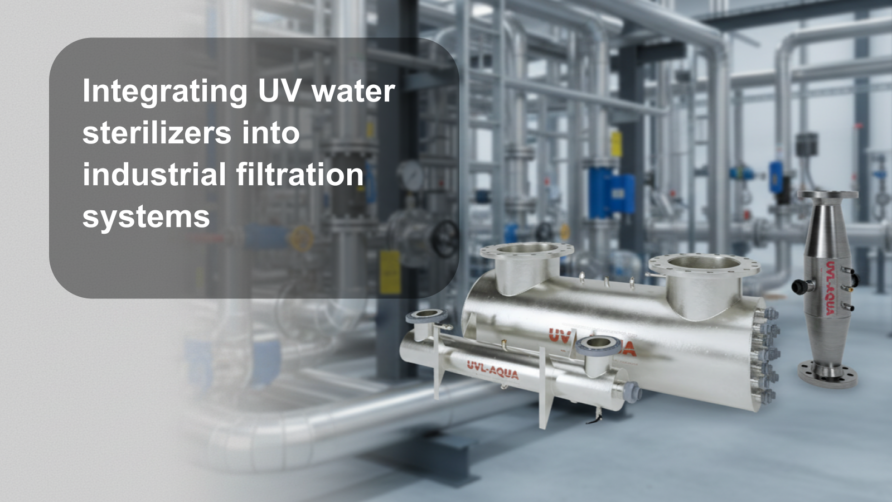
Water disinfection using ultraviolet (UV) radiation is a critical step in maintaining sanitary safety within industrial water treatment systems. This is especially important for facilities with continuous-flow installations where water circulates and undergoes treatment constantly. UV sterilizers effectively reduce microbial load by inactivating bacteria, viruses, and other pathogens without chemical agents. For engineers and process specialists, understanding how to correctly integrate UV units into the overall filtration loop is essential to preserve disinfection efficiency and minimize operational disruptions.
This article addresses key considerations when selecting and installing UV sterilizers for water treatment, how to monitor their performance, and common mistakes that can reduce disinfection quality. For instance, some facilities experience fluctuations in UV intensity due to improper lamp positioning or delayed maintenance. In other cases, insufficient flow capacity leads to incomplete disinfection, which is only detected through repeated laboratory testing.
Who Needs UV Sterilizer Integration and When?
- Industrial plants with continuous water treatment systems—to ensure ongoing chemical-free water disinfection.
- Aquaculture facilities with closed water recirculation—to prevent pathogen spread in biofilters and holding tanks.
- Food and pharmaceutical manufacturers—requiring stable potable water disinfection at all stages.
- Sites with high microbiological contamination risks—to minimize sanitary violations.
- Projects limiting chemical disinfectants—where UV sterilization is the preferred solution.
- Upgrades of outdated filtration systems—to enhance disinfection quality without major redesigns.
- Facilities demanding automation and disinfection monitoring—leveraging UV units integrated with control systems.
How UV Sterilizers Work and Selecting the Appropriate Power
UV sterilizers in a flow-through design inactivate microorganisms by damaging their DNA, preventing reproduction. Disinfection efficiency depends on UV intensity, exposure time, and water clarity. The flow-through configuration ensures uniform water passage through the irradiation zone; however, flow rate and filtration quality directly affect outcomes.
Key Parameters to Measure Onsite
To verify system performance onsite, engineers should measure:
- UV radiation intensity at the outlet (using lux meters or specialized sensors),
- water flow rate to confirm exposure time matches design specifications,
- water transparency (e.g., turbidity), since suspended solids reduce UV effectiveness.
Neglecting these parameters risks incomplete disinfection, causing recontamination and operational failures. For example, excessive flow velocity reduces UV dose, while fouled quartz sleeves diminish UV intensity.
Recommendations for Power and Design Selection
Recommendations for power and design selection include:
- accounting for water turbidity and color,
- ensuring laminar, uniform flow without turbulence,
- selecting lamps with power reserve to compensate for aging.
Installation and Integration of UV Units in Filtration Systems
Integrating UV sterilizers requires consideration of hydraulic characteristics and compatibility with upstream filters. Typically, UV units are installed after mechanical and adsorption filters when water is at peak clarity, maximizing UV penetration and lamp lifespan.
What to Check During Installation
During installation, ensure the housing is sealed and free of air pockets that disrupt flow. Also, provide easy access to lamps for maintenance without halting the entire system. Onsite checks should confirm:
- absence of leaks and airlocks,
- correct flow direction,
- stable power supply,
- presence of automatic shutdown when the housing is opened.
Incorrect installation may cause operational failures, increased equipment wear, and reduced disinfection quality. For example, air pockets reduce water contact with UV rays, and mechanical shocks during mounting can damage lamps.
Recommended Installation Practices
Recommended practices include using stainless steel housings with anti-corrosion coatings, installing viewing windows for visual lamp inspection, and integrating UV filters with radiation intensity monitoring systems. Installation planning should address:
- maintenance accessibility,
- protection from dust and moisture,
- ensuring uniform flow,
- reliable power supply with surge protection.
Maintenance and Performance Monitoring of UV Sterilizers
UV lamps require routine maintenance to sustain disinfection efficiency. A critical factor is timely lamp replacement based on operating hours since UV output declines even if lamps appear functional. Quartz sleeves must be cleaned regularly to remove deposits that block UV transmission.
What Should Be Checked During Routine Maintenance
Onsite inspections should cover:
- lamp operating hours logged meticulously,
- UV intensity monitored with sensors or lux meters,
- quartz sleeve condition assessed for fouling,
- housing integrity and leak prevention.
Skipping maintenance leads to reduced disinfection performance, increasing microbiological contamination risks. Fouled sleeves may cause lamp overheating and premature failure.
How to Improve System Reliability
It is advisable to maintain detailed maintenance logs and schedule preventive work considering operating conditions. Enhancing reliability may involve:
- automated parameter monitoring systems,
- staff training on proper lamp replacement,
- stocking spare lamps onsite,
- monitoring feedwater quality.
Case Study: Common Errors in UV Sterilizer Deployment at a Food Production Facility
Initial Conditions
A food processing plant installed a flow-through UV sterilizer downstream of mechanical filtration, with a capacity of 30 m³/h and feedwater turbidity of approximately 1.5 NTU. The system operated without regular UV intensity monitoring.
Observed Issues
- intermittent exceedances of microbiological limits in potable water,
- declining UV lamp intensity,
- malfunctions in automatic shutdown systems,
- deposits on quartz sleeves,
- unpleasant odors in the water supply.
Root Causes
Insufficient technical monitoring and water parameter mismatches. Turbidity above recommended levels reduced UV penetration; fouled quartz sleeves decreased UV output. Lack of timely lamp replacements and faulty automation caused periods of inadequate disinfection. Improper operation and insufficient staff training compounded the problem.
Checklist for Troubleshooting
- Measure water turbidity and transparency entering the UV unit.
- Inspect quartz sleeves for fouling and deposits.
- Assess UV lamp radiation intensity using sensors.
- Verify proper functioning of safety shutdown systems.
- Review lamp operating hours.
- Check power supply stability.
- Inspect for leaks and housing tightness.
- Analyze feedwater for organic contaminants.
Corrective Actions
- Install or upgrade pre-filters to reduce turbidity below 0.5 NTU.
- Clean and replace quartz sleeves as needed.
- Replace lamps based on operating hours.
- Calibrate and test safety automation.
- Implement regular UV intensity monitoring.
- Train personnel on operation and maintenance.
Implementation
- Introduce routine equipment and water parameter checks into maintenance schedules.
- Integrate remote monitoring and alert systems.
- Maintain inventory of spare parts and consumables.
- Keep detailed operation and maintenance logs.
- Conduct periodic operator training.
- Ensure technical support availability.
Results Monitoring
Following these measures, the facility observed sustained reduction of microbial contamination, stabilized UV output, and compliance with potable water standards. Continuous monitoring enabled prompt detection and correction of deviations, enhancing disinfection system reliability.
Common Mistakes to Avoid in UV Sterilizer Integration
Frequent errors include selecting lamp power insufficient for water volume and characteristics, leading to inadequate UV dosage and disinfection failure. Installing UV units without accounting for hydraulic resistance and air pocket formation disrupts uniform irradiation.
Neglecting regular maintenance—delayed lamp replacement, uncleaned quartz sleeves, and lack of UV intensity monitoring—causes gradual performance degradation without visible signs. Absence of automation and monitoring delays detection of problems.
Insufficient personnel training and lack of operational protocols contribute to improper use and accelerated equipment wear. A systematic engineering approach addressing technical and organizational factors is key to reliable operation.
Pre-Installation Checklist for UV Sterilizers
- Verify water volume and flow rate.
- Ensure pre-filtration to reduce turbidity and suspended solids.
- Calculate UV lamp power with margin for aging.
- Assess feedwater quality (color, turbidity, organics).
- Confirm equipment accessibility for maintenance.
- Guarantee housing sealing and environmental protection.
- Integrate UV intensity monitoring systems.
- Set up automatic shutdown on housing access.
- Train staff on operation and maintenance.
- Stock spare lamps and components onsite.
- Develop maintenance and control protocols.
- Check power supply stability and surge protection.
Frequently Asked Questions Before Purchasing and Implementing UV Sterilizers
How to Determine the Required UV Sterilizer Power?
Calculate based on water volume, flow rate, and turbidity parameters, including a power reserve to compensate for lamp aging.
Where Is the Optimal Installation Point for the UV Filter?
After mechanical and adsorption filtration, where water clarity is maximized for UV transmission.
How to Monitor Disinfection Effectiveness Onsite?
Use UV intensity sensors, maintain lamp operating hour logs, and perform periodic microbiological water testing.
What If Water Turbidity Exceeds Recommended Limits?
Improve or add pre-filtration; otherwise, UV disinfection efficiency will be compromised.
How Often Should UV Lamps Be Replaced?
Typically every 9–12 months, depending on operating conditions and manufacturer guidelines.
What Are the Most Common Installation Errors?
Incorrect lamp placement, inadequate sealing, air pocket formation, and improper electrical connections.
Is Integration With Automation Systems Possible?
Yes, modern units include sensors and interfaces for SCADA and monitoring system integration.
How to Minimize Downtime During Maintenance?
Use designs with quick lamp access and provide parallel or bypass lines.
What Material Requirements Exist for UV Sterilizer Housings?
Stainless steel with corrosion-resistant coatings, resistant to aggressive environments and mechanical stress.
Conclusion
In conclusion, integrating UV sterilizers into water filtration systems requires a comprehensive engineering approach considering water characteristics, equipment parameters, and operating conditions. The primary criterion for selection and configuration is matching UV unit power and design to water volume and quality. Next steps include data collection, pilot testing, and developing operational protocols to ensure stable and effective disinfection system performance.