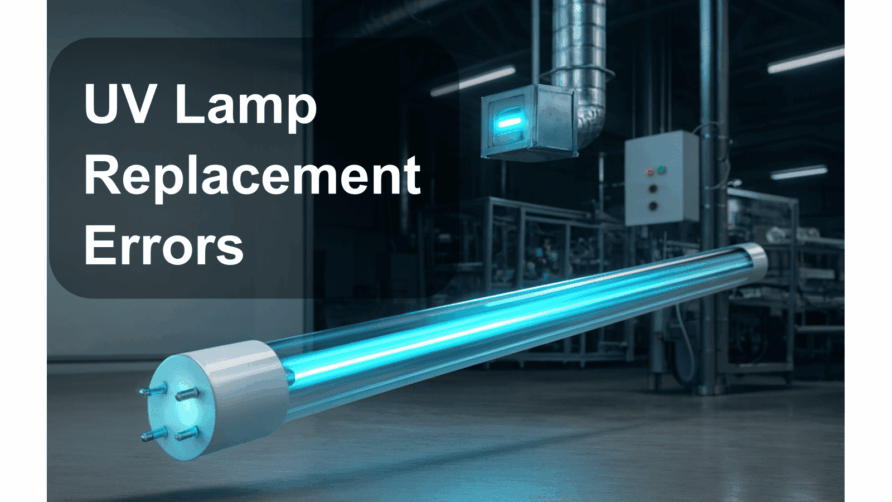
Replacing UV lamps in industrial disinfection systems is a precise process that demands a systematic approach. Incorrect replacement can reduce disinfection efficiency and lead to premature equipment failure. For engineers and technologists, it is crucial to understand how to correctly select and install replacement lamps, especially mercury amalgam bactericidal lamps, which currently dominate modern industrial practice. Common errors during replacement often manifest as decreased radiation power, unstable ballast operation, and even equipment damage.
This article explains why mercury amalgam UV lamps require special attention, how to verify correct replacement onsite, and what consequences arise from non-compliance with proper procedures. For example, improper installation causing reduced bactericidal output leads to insufficient air disinfection in production areas. Using replacement lamps with mismatched power ratings can overload ballasts, shortening their service life.
We will detail who needs to perform proper lamp replacement and when, outline typical mistakes with recommendations for engineers, and analyze a real-life case study. Finally, a checklist and FAQs will help make informed technical decisions and avoid downtime.
Who Needs Correct UV Lamp Replacement and When
- UV Equipment Operators — to ensure stable operation of disinfection systems.
- Production Technologists — to maintain required microbial load levels.
- Service Engineers — for proper replacement procedures and fault diagnostics.
- Disinfection System Designers — to select appropriate lamp types and equipment.
- Maintenance Managers — to plan replacement schedules and procurement.
- Occupational Safety Specialists — to minimize risks when handling UV lamps.
- Air Quality Engineers — to monitor disinfection performance and compliance.
Why Correct Replacement Lamp Selection Affects Disinfection Effectiveness
Mercury amalgam UV lamps are radiation sources known for high stability and extended service life. Unlike conventional mercury vapor lamps, amalgam lamps contain a solid mercury-metal alloy, which reduces contamination risk if damaged and extends operational life up to 16,000 hours. However, even slight deviations in replacement lamp characteristics—such as power or envelope length—alter radiation parameters.
Disinfection efficiency depends on UV intensity and spectral composition. Amalgam lamps emit predominantly at 254 nm, an optimal wavelength for air and surface disinfection. Maintaining lamp parameters during replacement is essential to preserve the specified disinfection dose. Incorrect lamp selection leads to reduced bactericidal output, directly impacting disinfection quality.
Onsite verification includes measuring lamp voltage and comparing it to manufacturer specifications. Visual inspection of the lamp envelope and correct mounting in the socket is also important. UV fluorescent sensors or specialized bactericidal flux meters are commonly used to monitor output. Incorrect installation often results in reduced radiation power, flickering, or unstable ballast operation.
Ignoring these requirements can cause serious issues: lowered disinfection efficiency, increased microbial contamination, premature electronic failures, and frequent repairs.
It is recommended to use only certified replacement lamps matching original specifications exactly. Proper installation should consider radiation direction and ensure reliable socket contact. Regular monitoring of bactericidal output and power supply parameters is essential.
Technical Features of Replacing Mercury Amalgam UV Lamps and Their Impact on Equipment Lifespan
Amalgam lamps deliver high power and stable emission but require careful handling during installation and operation. They do not contain liquid mercury, reducing environmental risks, but contain a solid amalgam alloy inside the envelope which can be damaged by improper mounting or vibrations.
Temperature sensitivity is a critical factor: ignition becomes difficult below +10 °C, while temperatures above +40 °C reduce bactericidal output. These effects stem from physical and chemical processes inside the lamp and influence service life and disinfection efficiency.
To verify correct replacement onsite: measure lamp supply voltage, check ambient temperature at installation site, inspect quartz protective sleeves for contamination or damage, ensure absence of vibrations and secure mounting, and verify ballast (control gear) operation.
Non-compliance with temperature and mounting requirements can cause unstable ignition, up to 30% reduction in bactericidal output, accelerated electrode wear, and shortened lamp lifespan. This results in more frequent replacements and increased operational costs.
To minimize risks, maintain stable ambient temperature, use protective quartz sleeves, and vibration-resistant mounts. Monitor supply voltage ensuring it stays within ±10% of nominal; a 10% voltage drop reduces bactericidal flux by approximately 15%.
Case Study: Premature Failure of Replacement Mercury Amalgam Lamps
Initial Conditions:
An industrial air disinfection system used 160 W amalgam lamps. During operation, lamp replacement became necessary. To reduce costs, replacement lamps were procured from a different supplier with similar but not identical technical specifications.
Symptoms:
- 25% decrease in bactericidal output within one month after replacement.
- Frequent lamp burnout and triggering of ballast protection devices.
- Elevated microbial contamination in the production area despite equipment operation.
- Flickering and unstable light output.
- Increased downtime for repairs.
Cause Analysis:
Mismatch in replacement lamp parameters disrupted power supply and radiation regime. Differences in envelope length and amalgam composition increased ballast load, causing overheating and lamp failure. Additionally, altered emission spectrum reduced disinfection effectiveness, leading to microbial growth. Installing lamps without recalibrating ballast and verifying parameters caused system instability.
What to Check:
- Power rating and lamp length conformity with originals.
- Condition of quartz protective sleeves.
- Voltage and current parameters at the lamp.
- Correct lamp connection and secure mounting.
- Ballast operational status.
- Ambient temperature at lamp location.
- Presence of vibrations or mechanical damage.
- Certification compliance of replacement lamps.
Solution:
- Replace with original certified mercury amalgam UV lamps with verified specifications.
- Calibrate and test ballast operation for new lamps.
- Install quartz protective sleeves and vibration-resistant mounts.
- Implement regular monitoring of voltage and temperature.
- Train personnel in proper replacement and maintenance procedures.
- Track lamp operating hours for timely replacement.
Implementation Steps:
- Audit existing equipment and documentation.
- Establish lamp replacement and inspection protocols.
- Procure lamps only from verified suppliers.
- Install devices to monitor bactericidal output.
- Provide technical training to staff.
- Implement quality control system for UV equipment operation.
Results:
Within three months post-implementation, bactericidal output stabilized at high levels with no premature lamp failures. Microbial contamination in the production area decreased to acceptable limits, and maintenance scheduling became transparent and efficient.
Common Mistakes When Replacing UV Lamps
- Using lamps with incompatible technical specifications, reducing disinfection efficiency.
- Neglecting power supply voltage verification, causing decreased bactericidal flux and unstable operation.
- Improper installation in lamp holders, absence of quartz protective sleeves, and lack of vibration-resistant mounts, accelerating wear and failure.
- Insufficient ambient temperature control leading to ignition issues or premature degradation.
- Failure to track lamp operating hours, delaying timely replacement.
- Lack of regular bactericidal output monitoring, preventing early detection of performance loss.
- Procuring replacement lamps without verifying certifications and compliance, increasing system risks.
Pre-Replacement UV Lamp Installation Checklist
- Confirm replacement lamp specifications match original equipment.
- Plan for measurement of lamp voltage and current after installation.
- Ensure availability of quartz protective sleeves and vibration-resistant mounts.
- Monitor ambient temperature at lamp installation site.
- Implement lamp operating hours logging with work time recording.
- Organize regular bactericidal output monitoring.
- Verify correct lamp connection and secure mounting.
- Provide staff training on lamp replacement and maintenance.
- Source lamps from certified, reputable suppliers.
- Establish technical maintenance and replacement procedures.
- Monitor ballast (control gear) performance.
- Conduct pilot runs of new lamp batches with parameter monitoring.
Frequently Asked Questions Before Purchasing and Implementing Replacement UV Lamps
1. How to determine when a UV lamp needs replacement?
Main indicators include a drop in bactericidal output exceeding 30% from nominal or reaching the lamp’s operational hour limit. Also consider unstable operation or visible damage.
2. Can lamps from other manufacturers be used?
Technically possible if power, length, and amalgam composition match originals. Mismatches reduce efficiency and risk equipment damage.
3. How to verify correct installation of a replacement lamp?
Measure voltage and current at the lamp, inspect mounting and protective sleeves, and monitor ballast stability and absence of flicker.
4. What factors affect mercury amalgam lamp lifespan?
Key factors are ambient temperature, supply voltage stability, proper mounting, and vibration absence.
5. What to do if the lamp envelope is damaged?
Unlike liquid mercury lamps, amalgam lamps do not require room decontamination, but the lamp must be replaced immediately to avoid efficiency loss and equipment risk.
6. How often should maintenance and replacement be performed?
Regular monitoring of operating hours with replacement at approximately 16,000 hours or when disinfection efficiency declines.
7. Does lamp power supply affect efficacy?
Yes, a 10% reduction in supply voltage results in about a 15% decrease in bactericidal output, critical for maintaining disinfection levels.
8. How to ensure environmental safety during lamp replacement?
Use mercury amalgam lamps with solid mercury alloy, which do not emit mercury vapor if broken, and dispose of used lamps according to hazard class III regulations.
9. What additional measures extend lamp service life?
Temperature control, vibration-resistant mounting, and regular cleaning of protective quartz sleeves.
In conclusion, correct UV lamp replacement is a key factor in maintaining the effectiveness of industrial disinfection systems. Selecting replacement lamps according to technical specifications and following proper installation procedures directly influence equipment lifespan and disinfection quality. A systematic approach with regular parameter monitoring and personnel training is recommended. The next steps include data collection from equipment, pilot lamp replacement projects, and development of maintenance regulations.