The integration of UV germicidal sections into ventilation systems is a critical step in ensuring microbiological air safety in industrial and production facilities. However, improper operation of these sections reduces disinfection efficiency and may lead to increased microbial contamination within air ducts. Engineers and process specialists must understand how to correctly select, install, and maintain UV germicidal sections to avoid common errors and ensure consistent air disinfection performance.
This article analyzes the physical and technical factors that reduce UV treatment effectiveness, methods for on-site equipment verification, and the consequences of improper operation. A practical case from an agro-industrial complex illustrates how installation and maintenance errors led to insufficient air disinfection. The insights provided will support informed engineering decisions and help implement UV germicidal sections with guaranteed performance.
Who Needs This and When
- Ventilation design engineers — to select and integrate UV germicidal sections properly into existing systems.
- Production technologists — to monitor air disinfection quality and minimize risks of secondary contamination.
- Maintenance specialists — to perform timely servicing and prevent UV lamp efficiency degradation.
- Industrial facility managers responsible for sanitary safety — to maintain regulatory microbiological air quality standards.
- Occupational health and industrial safety engineers — to reduce microbial spread risks via ventilation.
- Design organizations — when developing new ventilation systems with integrated germicidal sections.
- Equipment suppliers — for consultation and support during implementation under various operating conditions.
Impact of Operating Conditions on UV Air Disinfection Effectiveness
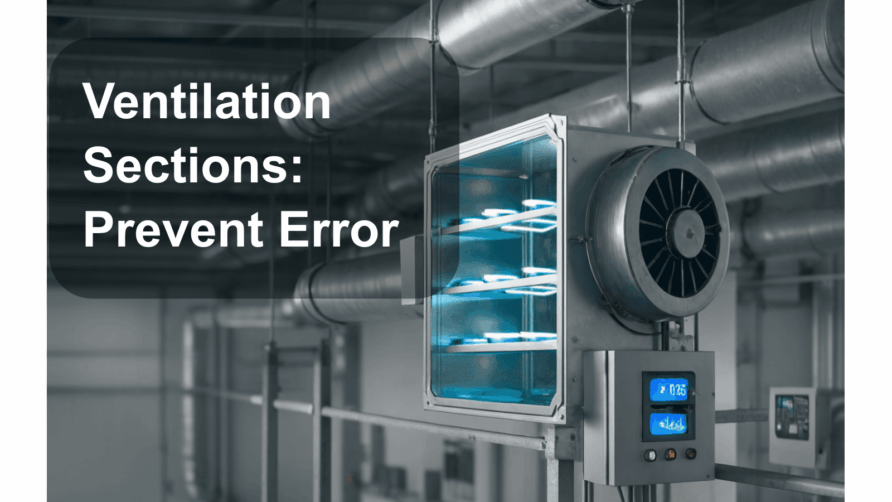
Air disinfection using UV germicidal sections relies on exposing airborne microorganisms to ultraviolet radiation of specific power and wavelength. Achieving the required disinfection dose depends on uniform irradiation of the entire air volume passing through the section.
In practice, effectiveness declines due to lamp contamination by dust and condensation, improper section layout, and airflow velocity deviations from design parameters. For example, excessive airflow velocity reduces UV exposure time, making disinfection insufficient. Contaminated lamps emit less UV radiation, further diminishing the germicidal effect.
On-site verification involves measuring UV intensity with specialized radiometers and visually inspecting lamp condition using technical tools. Monitoring airflow velocity and temperature inside the section is also essential, since overheating or cooling affects lamp lifespan and output power.
Neglecting these parameters results in decreased disinfection efficiency, increased microbial load in ducts, and higher risk of secondary contamination of products or premises. Regular maintenance—including lamp cleaning and operational parameter checks—is strongly recommended.
To improve system reliability, consider the following best practices:
- Maintain airflow velocity within design limits.
- Use amalgam UV lamps known for stable emission.
- Ensure easy access to the UV section for routine maintenance.
- Implement monitoring systems for key operating parameters.
Installation Errors and Their Consequences
Proper installation of UV germicidal sections is fundamental for effective air disinfection. Common mistakes include incorrect mounting location and failure to meet duct geometry requirements.
Technically, achieving the required UV dose demands a sufficiently long straight duct section to provide adequate exposure time. If the section is installed in a curved duct or near fans causing turbulent airflow, irradiation becomes uneven. Another frequent error is placing the section where air velocity is excessively high, shortening UV exposure duration.
Verification on-site should include visual inspection of section placement, airflow velocity measurements before and after installation, and UV intensity checks at multiple duct points. Confirm that the section is unobstructed and lamps are mounted according to technical specifications.
Improper installation prevents the germicidal section from delivering the necessary disinfection level. Consequently, microbial contamination remains high, risking sanitary deterioration and product spoilage. Correcting installation errors typically requires dismantling and reinstalling the section per design parameters.
Recommendations for design and installation include:
- Selecting straight duct segments long enough to ensure required UV exposure time.
- Controlling airflow velocity to avoid exceeding design values.
- Using mounting hardware that prevents lamp vibration and displacement.
- Planning for convenient inspection and maintenance access.
Maintenance and UV Lamp Replacement: Key Considerations
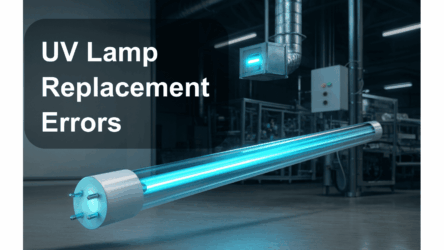
UV lamps are the core component of germicidal sections, emitting radiation that disinfects the air. Lamp lifespan is limited, and their output power decreases over time, directly impacting disinfection efficiency. Common causes of power loss include natural aging, surface contamination, and improper operating conditions.
Technically, lamps require regular cleaning from dust and condensation, as well as timely replacement according to maintenance schedules. On-site lamp condition checks involve visual inspection and UV intensity measurements. When emission falls below normative thresholds, lamp replacement is necessary.
Ignoring maintenance leads to reduced disinfection capacity, increased microbial load, and potential breaches of sanitary standards. Additionally, dirty lamps may overheat, shortening service life and increasing repair costs.
Recommended maintenance practices:
- Clean lamps using non-aggressive agents.
- Monitor UV intensity at least quarterly.
- Schedule lamp replacement per technical guidelines.
- Train personnel in proper operation and maintenance procedures.
Case Study: Operational Errors in a Germicidal Section at an Agro-Industrial Complex
Initial Conditions:
A UV germicidal section was installed to disinfect air in piglet rearing barns. Air volume was 20,000 m³/h, with circular ducts 820 mm in diameter. Required disinfection efficiency was at least 99% against Staphylococcus aureus.
Symptoms:
- Low disinfection efficiency detected via microbiological testing.
- Excessive lamp dust accumulation.
- Frequent equipment overheating.
- Malfunctions in electronic ballasts.
- Complaints about deteriorated indoor microclimate.
Root Causes:
The project underestimated airflow velocity, which exceeded design values by over 1.5 times, reducing UV exposure time. Lamps were operated without regular cleaning, lowering UV output. Mounting hardware was inadequate, causing vibrations and lamp displacement. Electronic ballasts were not adapted to high humidity, causing failures.
What to Check:
- Airflow velocity through the section.
- Lamp condition and contamination level.
- Integrity of lamp and section mounting.
- Functionality of electronic ballasts.
- Microclimate parameters inside the barn.
- Compliance of installation with project specifications.
- UV radiation intensity.
- Accessibility for maintenance.
Solutions Implemented:
- Recalculated and adjusted airflow velocity using control dampers.
- Cleaned and replaced lamps based on operational conditions.
- Reinforced mounting hardware and added vibration isolation.
- Replaced and adapted electronic ballasts for humid environments.
- Established standardized maintenance procedures.
- Installed UV intensity monitoring sensors.
Implementation:
- Conducted repeated airflow and UV intensity measurements.
- Trained personnel on equipment operation.
- Introduced monitoring and scheduled maintenance systems.
- Ensured compliance with design parameters.
- Performed regular audits of section status.
- Documented and updated operating procedures based on monitoring results.
Outcome:
Post-correction, air disinfection efficiency met required standards, microbiological indicators improved, and equipment malfunctions ceased. Ongoing monitoring maintained stable germicidal section performance and reduced secondary contamination risks.
Frequent Operational Mistakes with Germicidal Sections
Common issues include neglecting maintenance schedules, leading to reduced UV lamp power and disinfection effectiveness. Incorrect installation locations cause uneven air irradiation and performance loss. Ignoring airflow velocity and internal temperature parameters shortens lamp lifespan and increases microbial contamination. Lack of monitoring systems complicates early problem detection. Using inappropriate mounting materials and power components results in frequent breakdowns. Poor integration with existing ventilation systems reduces overall disinfection efficiency.
Pre-Implementation Checklist for Germicidal Sections
- Verify actual airflow velocity matches design parameters.
- Ensure a straight duct section of sufficient length for UV exposure is available.
- Confirm technical specifications of UV lamps and power supplies.
- Provide maintenance access for cleaning and servicing.
- Install UV intensity monitoring systems.
- Choose mounting hardware considering vibration and temperature conditions.
- Plan maintenance and lamp replacement schedules.
- Check compatibility with existing ventilation infrastructure.
- Evaluate microclimate conditions and their impact on equipment.
- Train personnel in operation and maintenance.
- Conduct post-installation testing and parameter adjustments.
- Document all implementation and operational stages.
Frequently Asked Questions Before Purchasing and Implementing
How to verify the effectiveness of a UV germicidal section on-site?
Measure UV intensity using a radiometer and perform microbiological air sampling before and after the section. Also, monitor airflow velocity and lamp condition.
What to do if UV lamp output decreases?
First, clean lamps to remove contaminants, then check power supplies. If output remains low, replace lamps according to maintenance guidelines.
Which air parameters affect germicidal section performance?
Airflow velocity, temperature, and humidity are critical. Deviations from design values reduce exposure time and disinfection efficiency.
Can germicidal sections be installed in systems with high turbulence?
No, turbulence disrupts uniform irradiation. Select straight duct sections with minimal airflow disturbances.
How often should germicidal sections be maintained?
Perform cleaning and inspections at least quarterly; replace lamps after 12,000–16,000 operating hours or as specified.
Which lamps are optimal for ventilation systems?
Amalgam UV lamps are preferable due to stable output and long service life.
What to do when electronic ballasts malfunction?
Check for moisture protection and voltage stability; replace ballasts with units adapted to operating conditions if necessary.
How to enable automatic monitoring of germicidal section performance?
Install UV intensity sensors integrated with ventilation control systems to provide timely alerts on efficiency drops.
In conclusion, proper selection and operation of UV germicidal sections within ventilation systems ensure stable air disinfection and reduce microbial contamination. The key effectiveness criteria are adherence to design airflow parameters and regular UV lamp maintenance. The next steps involve collecting on-site data, pilot commissioning, and developing operational protocols to integrate germicidal sections effectively for enhanced production safety and hygiene.