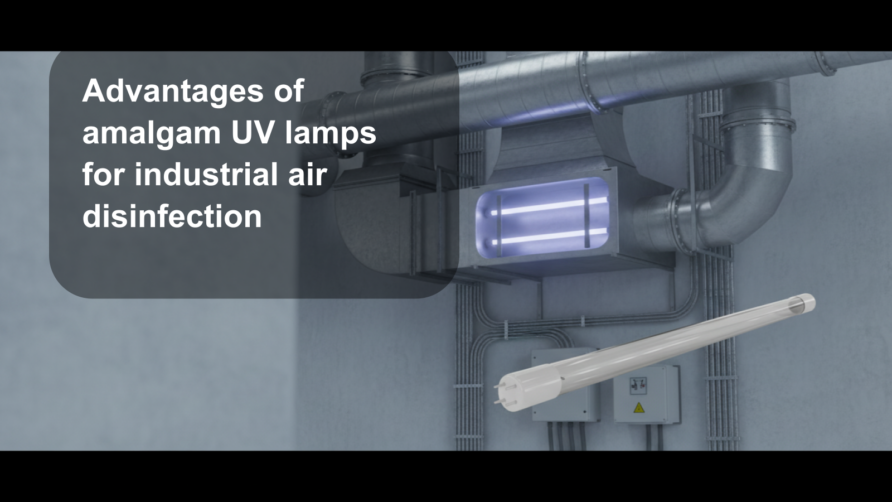
Air disinfection in industrial facilities is a critical component of maintaining sanitary standards and ensuring technological safety. Engineers and technologists must select effective disinfection methods and ensure reliable equipment operation with minimal risks. Among bactericidal UV light sources, amalgam ultraviolet lamps hold a distinct position due to their operational stability and safety. This article explains why amalgam UV lamps are preferable for air disinfection systems, how to properly select and replace UV lamps, and key considerations for installation and maintenance.
In industrial environments such as food processing or meatpacking plants, common challenges include irregular lamp replacement and improper installation, which reduce disinfection efficiency and may cause equipment downtime. We will explore how to prevent these issues to maintain stable and safe air disinfection system performance.
Who Needs This and When
- Ventilation and air conditioning engineers — for selecting reliable bactericidal sources and integrating them into ductwork.
- Food production technologists — to control microbiological air safety on packaging and filling lines.
- Sanitation and hygiene specialists — to ensure compliance with air disinfection standards.
- Service engineers — for correct UV lamp replacement and equipment maintenance.
- Disinfection system designers — to choose optimal lamp types based on operating conditions.
- Production facility managers — for scheduling maintenance and minimizing downtime risks.
- Environmental and occupational safety engineers — to reduce mercury contamination risks in case of lamp breakage.
Why Amalgam UV Lamps Are More Effective for Air Disinfection
Amalgam UV lamps differ from conventional mercury lamps by containing mercury in a solid amalgam alloy rather than in liquid form. This significantly reduces the risk of mercury contamination of air and production areas if a lamp is accidentally broken. Physically, amalgam lamps provide a stable bactericidal UV output due to more uniform temperature distribution within the lamp envelope, ensuring consistent emission spectrum and disinfection efficacy.
In practice, the resistance of amalgam lamps to temperature fluctuations and vibrations makes them well-suited for industrial environments with intensive ventilation and mechanical impacts. This durability reduces lamp replacement frequency and lowers service costs.
How to Check Lamp Performance Onsite
To verify lamp performance on-site, measure the bactericidal UV flux and compare it with the lamp’s specified values. Specialized UV radiometers with filters matching the lamp’s emission spectrum are used. Visual inspection for damage and checking the stability of current and voltage in the lamp circuit are also essential.
Using standard mercury lamps under high vibration or rapid temperature changes leads to rapid degradation and increased risk of mercury vapor release. Amalgam lamps offer longer service life and more stable operation, minimizing replacements and technical downtime.
Practical Recommendation
It is recommended to use amalgam UV lamps in air disinfection systems, especially in industrial settings with intensive ventilation and strict safety requirements. Regular monitoring of lamp parameters and timely replacement with original spare UV lamps is essential to maintain effectiveness.
Proper Procedure for Replacing UV Lamps in Disinfection Systems
Replacing UV lamps is a critical maintenance operation. Although amalgam UV lamps have extended service life, their disinfection efficiency drops sharply after end-of-life. Proper replacement technique is necessary to avoid lamp damage and reduced system performance.
First, power down the equipment and allow lamps to cool to a safe temperature. Use gloves during handling to prevent contamination of the lamp envelope with oils or dirt, which can cause localized overheating and premature failure. Before installation, inspect new spare UV lamps for integrity and compliance with technical specifications.
What to Check After Installation
After installation, verify stable current and voltage supply, and measure bactericidal UV flux to confirm correct operation. Deviations may indicate issues with the ballast or improper lamp seating.
Neglecting proper replacement procedures can cause premature lamp failure and reduced air disinfection quality, increasing microbial contamination risk and repair costs.
How to Organize Replacement Properly
To optimize replacement, establish clear step-by-step procedures and use only manufacturer-recommended spare UV lamps. Maintain a replacement log documenting lamp parameters and operating hours.
Safety Considerations When Using Amalgam Bactericidal Lamps
A major advantage of amalgam lamps is the minimized risk of mercury contamination in case of accidental breakage. Unlike liquid mercury lamps, amalgam lamps contain mercury in solid form, eliminating the need for costly and time-consuming mercury decontamination of premises.
This means that even if the lamp falls or is damaged, the likelihood of mercury vapor release and related production downtime is minimal. From an occupational safety perspective, this is especially important in food and pharmaceutical manufacturing.
What Safety Checks Are Required
Safety checks include visual inspection of lamp housings and sockets, as well as use of mercury sensors in rooms equipped with UV lamps. Regular integrity assessments of lamps and their mounts are recommended.
Using outdated mercury lamps risks extensive decontamination procedures requiring prolonged production halts and additional expenses. Moreover, amalgam lamps are easier and safer to dispose of, reducing the environmental burden on industrial facilities.
Recommended Safety Measures
It is advisable to implement amalgam lamps with protective housings and maintain regular technical condition monitoring to ensure personnel safety and uninterrupted production.
Case Study: Reduced Air Disinfection Efficiency Due to Improper UV Lamp Replacement in a Food Production Line
Initial Conditions
An air disinfection system with amalgam UV lamps was installed at a sauce packaging facility. Six months after commissioning, staff observed increased microbial contamination and deteriorated air quality in the packaging area.
Symptoms
- Decreased bactericidal UV flux as per measurements.
- Irregular UV lamp replacement.
- Elevated microbial air contamination.
- Increased equipment downtime.
- Complaints about sanitary conditions from technologists.
Root Cause
Non-compliance with lamp replacement schedules and improper installation. Lamps were operated beyond their specified service life, and some were not fully seated in sockets, causing unstable operation and reduced UV output. Electrical parameters were unchecked, leading to overheating and accelerated lamp wear.
Checklist for Investigation
- Condition and service life of spare UV lamps.
- Quality of lamp installation in sockets.
- Ballast parameters (current, voltage).
- Bactericidal UV flux measurements.
- Existence of replacement schedules and logs.
- Operating conditions (temperature, vibration).
- Visual inspection of equipment housings.
- Presence of protective covers.
Solution
- Replace all expired lamps with original amalgam UV lamps.
- Train personnel on correct lamp handling and replacement.
- Adjust and calibrate ballasts.
- Implement regular bactericidal flux monitoring.
- Establish replacement logs and maintenance protocols.
- Install vibration and impact protection for lamps.
Implementation Steps
- Coordinate replacement and maintenance plans with production.
- Procure verified spare UV lamps.
- Conduct training sessions for service teams.
- Define inspection and replacement intervals.
- Set up notification systems for lamp replacement.
- Monitor compliance with protocols and installation quality.
Outcome Control
Post-implementation, bactericidal flux stabilized at rated levels, microbial contamination decreased, and equipment downtime was reduced. Regular monitoring and correct lamp replacement ensured consistent air disinfection performance.
Common Operational Errors With Amalgam UV Lamps
A frequent mistake is using non-original spare UV lamps, resulting in lower bactericidal efficiency and shortened lamp life. Improper installation, such as incomplete seating in sockets, causes unstable operation and overheating.
Ignoring replacement schedules leads to operation with worn lamps and reduced disinfection quality. Failure to monitor electrical parameters like current and voltage accelerates lamp failure.
Additionally, environmental factors such as high humidity, vibration, or temperature extremes negatively impact lamp lifespan if protective housings are not used.
Insufficient attention to safety—lack of regular inspections of lamp integrity and protective covers—increases the risk of incidents and production downtime.
Checklist Before Implementing Amalgam UV Lamps in Disinfection Systems
- Verify lamp technical specifications match operating conditions.
- Ensure proper mounting and secure seating of spare UV lamps.
- Confirm compatibility with ballasts and control gear.
- Provide protection against vibration and mechanical damage.
- Agree on maintenance and replacement schedules.
- Prepare staff instructions for lamp replacement.
- Organize regular bactericidal flux monitoring.
- Confirm availability of safety and monitoring equipment.
- Implement system for recording lamp operating hours.
- Conduct commissioning with parameter measurements.
- Ensure proper storage conditions for spare lamps.
- Plan periodic audits of equipment technical status.
Frequently Asked Questions Before Purchasing and Deploying Amalgam UV Lamps
How to Distinguish an Amalgam Lamp From a Conventional Mercury Lamp?
Amalgam lamps contain mercury in a solid alloy, reducing leakage risk. They appear similar externally, but technical documentation and markings specify the type.
What Is the Typical Service Life of an Amalgam UV Lamp?
Generally ranges from 9,000 to 16,000 hours depending on operating mode and environment.
How Often Should Spare UV Lamps Be Replaced?
Replacement is recommended per manufacturer guidelines or when bactericidal UV flux falls below rated levels, typically every 12–18 months.
Can Non-Original Spare Lamps Be Used?
Non-original lamps do not guarantee stable bactericidal output and may cause premature equipment failure.
Which Parameters Should Be Monitored During Operation?
Regular measurement of current, voltage, bactericidal UV flux, and inspection of lamp and socket condition is essential.
What to Do if an Amalgam Lamp Is Damaged?
Damaged amalgam lamps pose minimal mercury contamination risk but should be carefully removed and disposed of following hazardous waste regulations.
How Do Operating Conditions Affect Lamp Lifespan?
High humidity, vibration, and temperature outside recommended ranges reduce lamp life and cause emission instability.
What Safety Measures Are Mandatory When Working With Lamps?
Use protective housings, perform regular inspections, follow lamp replacement procedures, and always work with equipment powered off.
Conclusion
Amalgam ultraviolet lamps represent an optimal choice for industrial air disinfection systems due to their safety, emission stability, and extended service life. The key to effective air disinfection lies in adhering to lamp replacement schedules and monitoring equipment parameters. The next steps include collecting operational data onsite, piloting installations, and developing maintenance protocols to ensure consistent and efficient air disinfection.